What I Know Now: Anne-Sophie Damelincourt
Each month, Simpson Carpenter’s Rhiannon Price asks some familiar faces in the MRX world what they have learned about themselves and the industry on their journey so far.
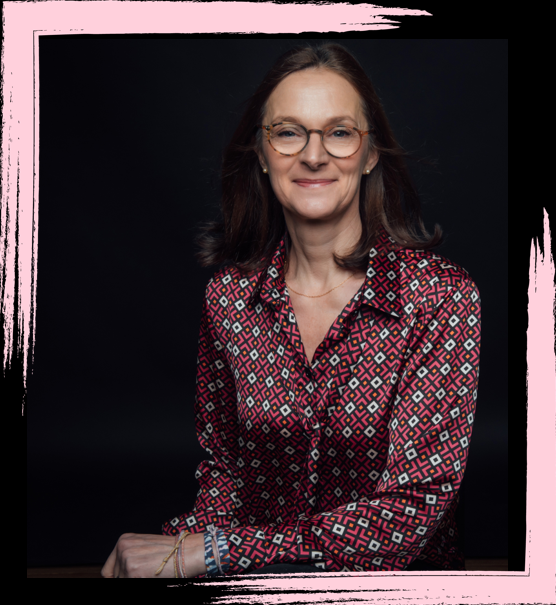
This month I spoke to Anne‑Sophie Damelincourt, a qualitative researcher, consultant, and the current President of Esomar. She explains how leadership shaped her from childhood, why people are at the centre of everything she does, and why closing the door on certainty is essential for navigating a transforming industry.
Let’s start with the big one at one…are you where you thought you would be today?
Yes, in terms of leadership. Leadership has been part of me since childhood. Even in non professional settings I was involved and often leading. My parents gave me confidence, which is a difficult thing for many young people today. I’m not saying I’m a super powerful woman, but I’ve never doubted opportunities. I believe in work: when you trust yourself and work hard, things happen. Those are core values for me.
So, you always felt you’d end up in some leadership position?
Yes, although maybe not in this industry. Maybe something in politics or journalism or international relations. But being a journalist is still being a researcher - you get information, you investigate, you bridge the gaps and make the most of it. I have always been passionate about people, different cultures, international relations and geopolitics. Understanding people, behaviours and having an impact on societies and lives is at the very heart of what we do as qual researchers and consultants.
You said you always had leadership qualities. What did that look like at different stages of your life?
Since I was a child, especially when travelling with friends or doing sport, I always had ideas and organised activities. Leadership requires observing and listening a lot before you make decisions to allow everyone to have a role and to drive a group.
Later, once I began working in large companies like Lactalis, Unilever and Nielsen, I was lucky to meet and work with great leaders and bosses. While I could keep a lot of autonomy, my managers taught me how to preserve a good balance between autonomy and collaboration, how to solve problems and how to manage crisis situations. Two of them have played a key role in my professional life.
Walk me through your journey, where you started and where you are now.
I started in marketing at Unilever and Lactalis. That’s where I fell in love with research, about 25 years ago. As a Brand Manager, part of my role was understanding consumer behaviour and market dynamics to drive the performance of the existing portfolio and to innovate. I loved that work; it was essential for building marketing plans and innovation. For me, research was a choice. It’s all about people, finding the sweet spot in a wide diversity of complex data.
After Lactalis I went to Nielsen, my first research role. I worked with clients like Nestlé, Danone and Yoplait. Then I moved to smaller and more specialised agencies to widen the scope of what I was doing of - adding consulting, qualitative skills as well as gaining insight into the demand side and the supply side.
That led me to creating my own agency, Blue Lemon in 2007.
Why did you start Blue Lemon?
It felt natural to be my own boss, make decisions, and have an impact. My expertise in branding and innovation felt specific enough that I believed I could bring something different. Esomar helped a lot by giving me knowledge of the industry and helping me build international partnerships. I still work with partners I met 20 years ago.
Research has always been a tool to reach an objective, to understand behaviours, rather that an end per se.
So, now you consult and you’re President of Esomar. What have you learned about yourself through all this?
Being the President of such an organisation - global and professional – requires a specific type of leadership since most of the work is done internally with Members who have been elected like me, to represent the largest global organisation for the Insight and Data industry.
The most exciting part of the job is having a true and positive impact on our Membership and industry. What I’ve learned most is how much leadership is shaped with others, with the permanent staff and Council Members. You never do it alone. Leadership and collaboration work together.
What made you run for Esomar President, and how did you feel when elected?
I deeply believe in Esomar. I’ve been a member for almost 20 years. The organisation has given me a lot, and it felt natural to give back. It’s an important role - both the visible part (meeting people, building relationships, having impact) and the less visible part (decision making, governance, leading the Executive Committee).
My campaign was very personal as I’m a consultant, so I didn’t have a big company behind me. I am proud to have been elected in this context.
We’re at a critical moment with AI, technology, data and collapsing trust in institutions, so we have a key role to play in helping the industry navigate this. Our three year term is dedicated to transforming Esomar so it can help members adapt - not just in practice, but legally and ethically.
Why do you think people chose you?
I care for people. I’m the same privately and professionally. Dan Foreman, a former Esomar President, told me recently: “Stay as you are. People like you because you’re approachable.” This is my management and leadership style – listening a lot, observing, discussing, making decisions. I have also been a visible figure of the organisation for years, working very closely to our community, country and region.
Who have been your mentors?
Laurent Flores, for his leadership and humanity, which go together. And also a former client, a Marketing Director at PepsiCo as we pushed each other to go further – to understand better and have more impact. Clients are not just clients, the boundaries between agency and client have blurred, it’s teamwork.
As a woman in leadership, have you faced barriers?
No, or perhaps they existed but I didn’t feel them. I grew up in a very female household and being a woman or a man was never a barrier. In our industry, especially in marketing and research, there are many women. I’ve never felt resistance professionally.
What’s the best advice you’ve received?
To keep your values. A woman I met through Rotary International told me: “you can have dreams that don’t work, ideas that fail, markets that aren’t ready - but the most important thing is to keep your values”. In a world where everything is changing, values remain your compass.
And the worst advice?
“Ignore people.” Terrible advice!
Do you have any habits or routines that keep you grounded?
I walk one hour every morning with my dog. It has become essential as time to myself - to feel nature, talk to friends, listen to podcasts. Morning is best as it makes me feel ready for the day.
I also read lots - international press, books, philosophy. Thinking differently is important. Recently I read Seneca’s Letters to Lucilius which are universal and accessible in short letters. I also read writers from a century ago, like Aragón, especially from the period after the First World War. After something terrible, societies reinvent themselves. I see parallels with today.
If you listen to just one podcast…?
Something from a leader, like someone from the United Nations or someone who fought for peace. I also listened to a long series on Greek mythology. Mythology is about human beings - values, behaviour, love and hate - told through the Gods. The stories were excellent.
If you follow just one person on social media…?
A sportsman or sportswoman. The values of sport are important and inspiring. After the Olympics we saw unity, then everything collapsed again. We struggle to keep those values alive.
And finally, if you remember just one thing…?
Love or friendship is the most important thing. Relationships between human beings. That’s what matters.