What I Know Now... Josephine Hansom
Each month, Simpson Carpenter’s Rhiannon Price asks some familiar faces in the MRX world what they have learned about themselves and the industry on their journey so far.
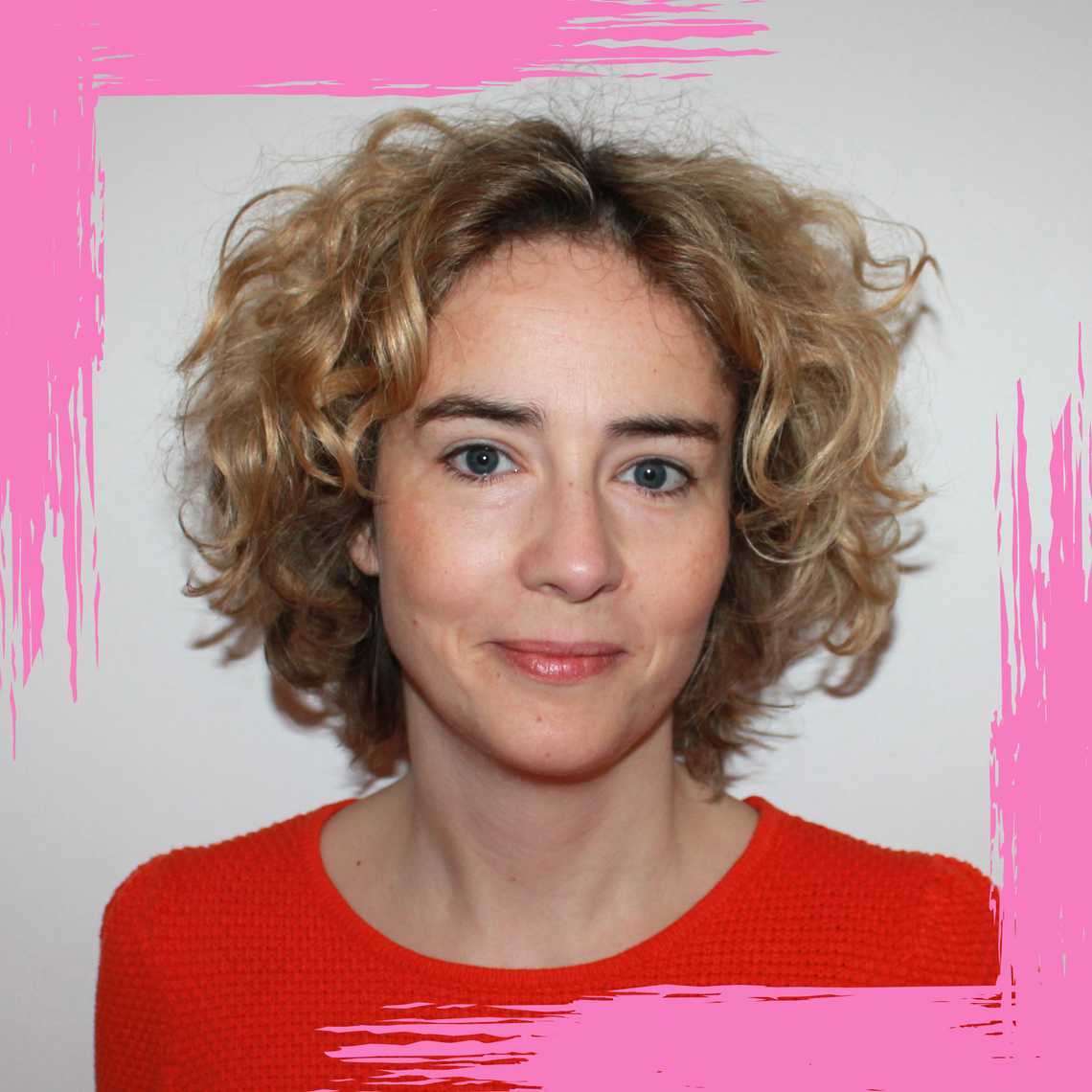
This month I spoke to Josephine Hansom, a Gen Z specialist, MRS Fellow and former MRS EDI Council Chair. She explains why work is broken for the next generation, why she'd rather listen than present (despite being a keynote speaker), and why closing the door to youth culture limits your life.
The big one at one…are you where you thought you would be today?
Um. Maybe not. I didn't realise how much of an employee I was until I became my own boss! I've just stepped out on my own to go independent, and even though I was the Managing Director of YouthSight Research, this feels completely different, much more personal. It turns out I like having a team around me. I like talking, bouncing ideas around, helping people get things done. It takes some getting used to.
Ha, what do you mean when you say you're such an employee?
I've always been a bit of a spokesperson wherever I've worked - for whoever or whatever I was doing - but there's a comfort blanket in it not being all on you. Right now, I'm going gently into this new world. I'm not making a lot of noise, mainly because I want my work to be about my work, not my personal brand. People crash and burn quickly when they make it all about them and I'm not that kind of person.
So, what is the new direction?
I started out with a proposition that I have put in the bin! I've done a complete 180. When I took voluntary redundancy and stepped out on my own, I spoke to about 90 people - just asking if anybody wanted to chat. I was determined to do something completely new, but people kept saying, you do what you do so well, maybe just consider continuing to do that. And everyone was right, obviously. I was wrong and that's fine. You know, we're researchers, we listen and we have to figure out what it all means. And that was really helpful.
So had you planned to completely shed your skin?
I saw it as an opportunity for a transition. I do love speaking and I often get commissioned to come into really random industry conferences. I think I did one about blockchain and farming which is very niche! But I come on just before or after lunch, like the light entertainment to tell everybody what young people are like and I blow their minds. Then they have something to talk about over lunch and then they can get back to the blockchain and farming chat!
That made me think "oh, I'm going to be a futurist talking about life in 2050 and the singularity" - but that's a different skill. Yes, I talk about the future, but I'm not a futurist. So, like people advised me, I decided to stick with what I do best - which is helping organisations futureproof their business by better understanding the next generation. So now I offer keynote talks, thought leadership, training and research.
I think there can sometimes be pressure when you're given an opportunity - like voluntary redundancy - to think “right, OK, this is my chance to do something completely fresh”. But actually, when you're so good at your job, it makes sense to carry on. But let’s rewind right to the beginning, where did your Market Research journey start?
I’m a second-generation market researcher and went to work in the family fieldwork agency straight out of university. I was scripting surveys and overseeing a telephone centre, a hall test venue and a viewing facility. This was all before online research – it was clipboards, ladies on the street or landline. I'm super old! And market research had such a different image at that point. As a 20-something I was not telling people what I did for a living at parties!
Then I went to work in Manchester for a small agency and got to be a researcher, designing and analysing projects. I loved it but I was made redundant which for a young person provided an interesting reflection point, one where I decided to specialise as a qualitative researcher.
I got a role at GfK and it was quite pivotal for me, opening so many doors. I was in the Social Research team and felt I was doing meaningful work. Helping the Government understand the lives of people who needed help. This was when I looked up and saw that almost every leader above me was a woman and it was really inspirational. I was lucky, it didn't feel like there was a glass ceiling.
At this point I was in my mid 20s and money was getting a bit tight. I’d heard that if you spoke at a conference representing GfK that you received a small bonus! My boss had already put me forward for one conference and I loved it, so I started a small side hustle at GfK, speaking at conferences to earn a bit of extra money. Of course, I had to share new and interesting thoughts with the audience, but that seemed to come naturally, it was the extra money that motivated me in those early years. As a result, I became a little ESOMAR famous, speaking at a few conferences around the world.
After a brief stint in the GfK Global Innovation team, I left to head up a team of my own at YouthSight. Looking back, I feel I was older then than I am now in terms of understanding youth culture. I think everybody goes through phases and when you are about 33 (according to science), you start to disconnect. You're like, 'oh, I don't know those songs and I don't know what’s fashionable’. But at that point people have a choice to either close that door or keep it open. If you close the door to youth culture, it makes you unnecessarily ‘old’ and worse – you become disconnected from what's going on in the world. Life is so exciting and fun, so by closing that door, you're just really limiting your life.
YouthSight was eventually acquired by Savanta in 2021 and my role changed to integrate the team, establish a global youth vertical and then leave. Let the work stand on its own.
That was obviously a huge undertaking - how did it feel to have achieved that and then to wave goodbye to it as well?
Goodbye was the hardest part. I'd taken the role to build something - to create this youth research vertical from the ground up - and we did that. But when you're an employee, even as MD, it's not really yours. You build it, you nurture it, you make it work - and then you hand it over and walk away. That's just how it works, but it doesn't make it easy. There was always a part of me thinking 'I could be doing this for myself' – but it’s scary. I was known as Josephine from YouthSight but without YouthSight what am I? It’s a big question as well as a bit of a silly question, but one that I’ve thought about a lot over the last 12 months.
It's interesting, there is a humbleness to you talking about doing your own thing, you’re not brash about it like others might be?
I’m a team player. I'm a good employee. I love rules. I like things to work, and I definitely don't like things that are broken. And I'm quite optimistic, so I like to hope I'm a good person to have around!
But it's so weird selling yourself, when it’s just you. The thing I really liked about YouthSight and specialising in youth was that I had a box around what I did. Research with under 10s was too young, research with over 30s was too old. A really nice remit that I understood and could get really good at. It was reassuring and grounding. Right now, everything's a bit fuzzy and I'm just finding my way - which is exciting, but…
I think it is really illuminating and refreshing to hear somebody as accomplished as you are, and a specialist in your field, admit it’s not easy putting yourself out there. What have you learned as you’ve gone through this process, and in your career so far?
I've learned that the hardest part of businesses are the people, not the work. And that's good and bad. I figured out how to be a manager - I think I'm quite motivating - but the move from manager into leader was really hard because you have to leave behind those day-to-day bits and trust other people. And I made a bad hiring decision once. Even though now, when I look back on it, I would have made the same choice, it didn't pan out how I thought it would. That's humbling - to be so obviously wrong in front of your team.
What else? Well, right now my team is AI! Claude and I are best friends! But what's curious is that the way I manage people works really well with AI too. I'm all about context. My teams have typically been young researchers - first job, maybe second job. If I just ask them to do a thing, they'll do exactly that. But if I explain why we're doing it and what we're trying to achieve, they might have a kernel of inspiration and add something that makes the difference.
I have a real passion for making it better for young people in the workplace, especially now when so many managers are struggling to understand how to motivate people in this hybrid environment. And I think there may be something in practising how you work with AI to improve your delegation skills.
That leads me onto my next question. Given you are so tapped into youth culture, what can we learn from Gen A and Gen Z to be better researchers or leaders?
They've taught me that work is broken. One in three junior staff would rather clean a toilet than ask a silly question at work - which tells you everything about how we're onboarding and training people. If you want young people to deliver good work, give them context and a proper briefing. Take responsibility for training them.
I actually have a whole talk about this - about how the workplace isn't working for the next generation and what we need to do differently. Because we can't just keep doing what we've always done and expect it to work for them.
It’s clear you love market research – but how did you get involved in the MRS and specifically MRS Pride?
I've always had huge respect for the MRS because it represents my industry, but I didn't know how you could be one of those people that were involved. And then they created MRS Pride. Up until that point, I don't think people at work knew I was gay. Typically, I would get somebody else to tell a new colleague. It's not like it's a big deal, but it's always awkward to bring up. But now I have a son, I own it. So when they put the call out for the steering group, I thought why not.
And that's when it changed. By that time I was the Managing Director of YouthSight, and when you're in a leadership position, it's really lonely. But through MRS Pride, I've made friends across the industry and found my people. So now we have this little band of friends who meet up for lunches, and it's nice - there's a shorthand with people who know your truth and people who know your work.
What's the vision for the MRS Pride steering group?
Well, we're a much more social group than any of the other ones! A lot of our purpose is about networking and bringing people together. We want to represent our community as well as get to know each other. We've run SHOW UP! conferences, created the OUTsights podcast - which I used to co-host - there's an MRS Pride Award for inclusive research, and we marched at London Pride for the first time this year. That was so magical.
Looking forward, we want to go beyond visibility and support our community by sharing what we know about being out and what we've learnt about our industry.
So, we have to talk about you speaking at the House of Lords - what an amazing thing to have done! How did that come about?
I got an email that I originally thought was spam! Why would the House of Lords be emailing me? It turned out to be the highlight of my career.
The House of Lords was a one-shot thing, and it was not my comfort zone at all.
I was watching all these other committees online to see how they work, but nothing really could have prepared me for it. I felt so alien in that room amongst these established voices - editors of The Economist and The Spectator - but the committee listened and asked me interesting questions based on what I said, which I took as meaning they were interested in what I was calling for – which is greater news literacy in schools and the ability to identify fake news through critical thinking. Oh, and it was broadcast live on Parliament TV. I was on TV! It was a real pinch myself moment.
I want to ask you about things that have defined you, what has been the hardest part of your journey so far?
Coming back from shared parental leave. And I know that's not a unique answer, but it really shocked me how hard it was. The leave itself is special - it's this protected time with your baby. But coming back? I lost all my confidence. In myself, in my ability to do my job, in whether I even still knew how to do my job. I didn't know what I'd missed or how to catch up.
And here's the thing - there's no real strategy for it. No pathway. No proper programme to help you through it. Whether you're in a big company or a small one, every woman I've spoken to has gone through something similar. We're just all quietly figuring it out on our own. That's something I feel really strongly about and I'll be doing more work on in the coming year. Because it shouldn't be this hard.
Can you share some of the best and worst advice that you have ever received?
A good piece of advice is from my mum, and it's stood the test of time. She always said if you're doing overtime either it's your fault because you can't do your job properly or it's your manager's fault because they're not doing their job properly. And it just cuts to the wick of the situation - boom.
The worst piece of advice is that you need to have a PowerPoint ready for every client meeting. My whole career has been about going into meetings to listen - finding out what's going on, identifying the issues, figuring out how to help. Not going in with a deck to present at them. Yes, I might have notes or an agenda, but I'm not hiding behind slides. It's about reading the room and having a real conversation.
I think that makes you brave though, Josephine, because I think a lot of people use an agenda and PowerPoint as a safety blanket - because they don't have the confidence to be able to read a person and understand they want.
OK so now time for the quick-fire recommendations!
If you read just one book…?
Inheritocracy by Dr Eliza Filby - it challenges the idea that meritocracy is real and suggests that the ability of parents to financially help their children as the real predictor of future success. We need to talk about the bank of Mum and Dad.
If you listen to just one podcast…?
I'm going to cheat and give you one for work and one for culture!
For work, the AQR Qualversations podcast has a series of female leaders talking about how they started their businesses which was super helpful when I was thinking of starting out on my own.
For culture, The Rest is Entertainment with Marina Hyde and Richard Osman. It's behind the scenes of all the pop culture that's going on - TV programmes, music, films and books. Marina Hyde is so funny in a dry, quick-witted kind of way, and Richard Osman is just a really dependable geek.
If you follow just one person…?
Again, one for work and one for culture!
For work, Elspeth Kirkman from NESTA who shares published research papers that challenge your thinking, but presents it in a really accessible way – like a mini debrief.
For culture, UK TikToker Joel Marlinarson. He's Gen Z and talks about brands and their social media strategy - he tells me what's cutting through and explains why.
If you remember just one thing…?
That everything changes and nothing stays the same. I think this is great advice to avoid taking things for granted, to stay plugged in, and not be afraid of change.