Totally Metamorphized: Takeaways from Esomar Global Congress 2026
What is changing in insights, and which changes matter most? Jack Miles reflects on Esomar Congress 2026 and argues that progress may come from looking beyond the biggest tools, brands and trends.
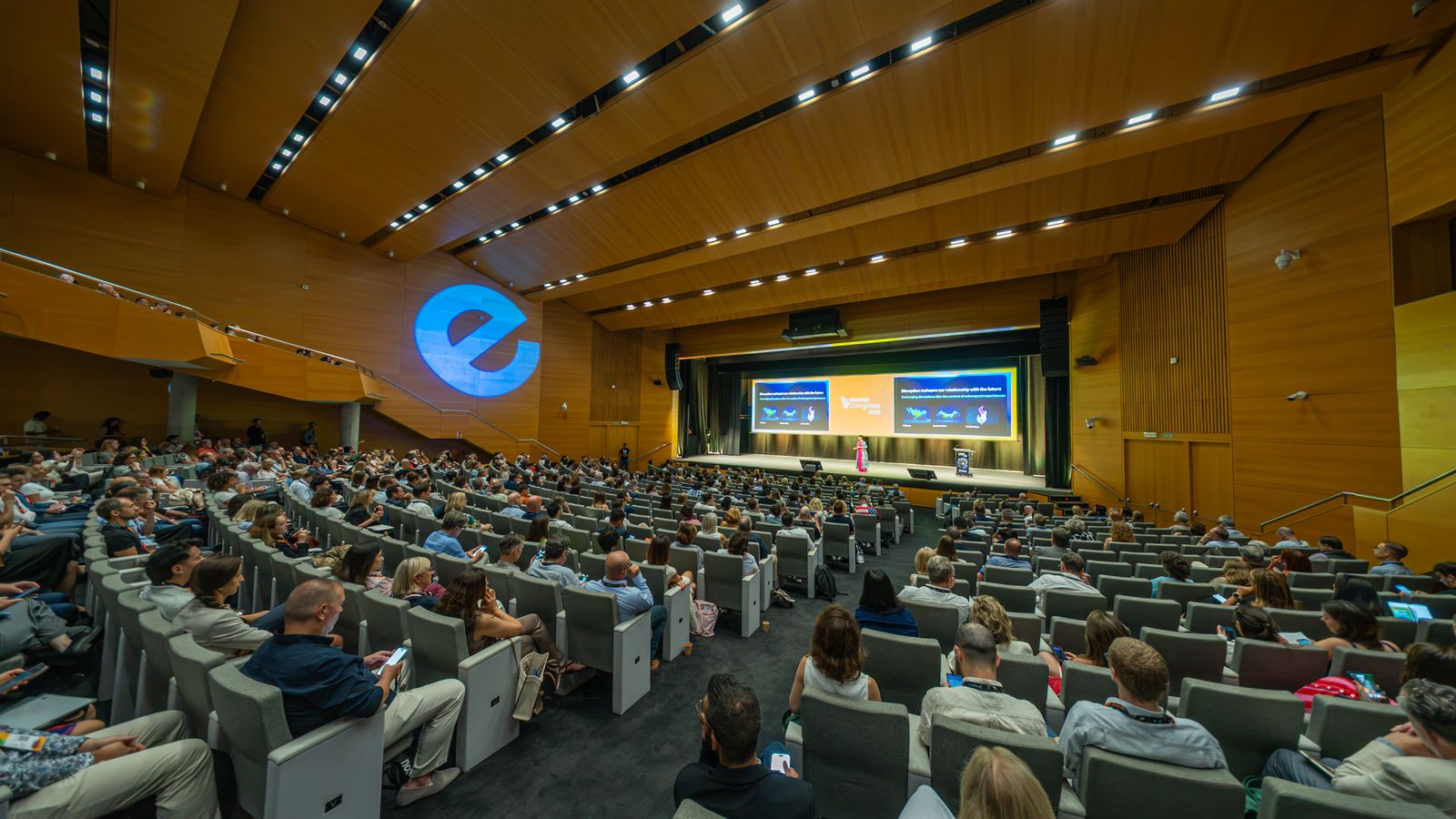
Esomar’s Global Congress in Valencia last week had 1,365 attendees from 80 countries, 3 main auditoriums, masterclasses, keynote speakers and much great thinking to take away.
These takeaways (from my perspective) fall into four areas: 1) technology. 2) the little picture. 3) client-side realities. 4) industry self-reflections.
1. The tech take-outs
The upside: from ideas to integration to impact
You can almost chart AI’s use in insights by how it has featured at past Congresses. In years gone by, AI talks focused on ideas, use cases and testing.
But this year brought a shift. Speakers showed the practical steps firms are taking to build AI into their insight workflows, and the impact it is having.
The downside: AI’s negative impact on innovation
In her fantastic keynote, Knatokie Ford, PhD asked: does the future harm creativity? Her logic: the future is uncertain. Uncertainty makes us risk-averse. And creativity is always risky.
One glance at the Congress schedule suggests not, thanks to the bold displays of how insight teams now use AI.
But signs suggest creativity elsewhere is slowing. Take how we share insight. Or bolder uses of gamification and behavioural science. These still work as insight approaches. But because they sit outside the AI-o-sphere, they feel riskier to back.
2. The little picture learnings
Micro matters as much as size of the prize
Insight work often focuses on scale. The biggest gains. The largest prizes. But two talks made a strong case for aiming insight and marketing away from “big is better” thinking.
Decathlon analysed millions of social posts to map the future of sport. But the posts that really mattered were the few that flagged new trends. Not the mass of them.
Nando’s showed how experiential marketers can grow brand love by fixing the smaller moments. In their case, by improving how staff serve drinks, so hunger never turns to hanger.
These cases should serve as a reminder: sometimes we can find the newest thinking and next areas of progress on the edges of the big picture vs. the middle.
Researching “the edges” has huge value
Many talks in Auditorium Three shared one thing. They showed the value of studying less researched groups and topics. And the feel-good factor that comes with doing so.
These talks ranged from the lives of 55-plus consumers, and what that means for brands. To the finer points of neurodiverse groups. To how research can make the internet safer for children.
The research limelight often goes to the biggest brands and the trendiest groups. But this set of talks showed that studying the less obvious parts of society is both: 1) good for the research subject, and 2) rewarding for researchers.
3. A review of reality
Clients face complexity we don’t always appreciate
Clients shared the challenges they face with candour at this year’s Congress. And it was a great gift to attendees. Examples included:
Philips sharing the realities of embedding AI into their workflows
IKEA on the challenge of migrating a 60-market brand tracker
Google’s openness about what their diverse customer base means for insight
In doing so, these clients (among others) gave everyone a clearer view of the practical, but vital, factors every insight provider must weigh.
Do we need to “have a meeting with ourselves”?
Rose Nyambura Mambo from Safaricom urged researchers to hold the “occasional meeting with themselves”. She said this meeting has two aims:
To make sure you’re giving the business something useful
To ensure the CMO can use our work
We’re all drawn to the newest news. In insight, that means AI for research.
But remember: insights that don’t move a business aren’t worth much. And to move a business, they must shift what stakeholders think and do.
So, we must match our zeal for tech with the (less sexy, but just as vital) craft of executive storytelling, companyculture and persuasion.
4. A summary of the industry’s self-reflections
We’re not perfect. And it’s ok
Across several talks, insight professionals were candid about what their methods can and can’t do.
In their titan’s debate, Simon Chadwick (who argued AI will never kill off surveys) and Stan Sthanunathan (who argued the opposite) agreed with each other’s points.
Mars and Ipsos were honest about the strengths and limits of digital twins. From how well synthetic data mirrors real people. Through to the fact that twins have no mood and no store of lived experience.
The more things change, the more they stay the same
Simon Patterson’s review of past winners of the Peter Cooper Award for Qualitative Excellence was a highlight of Congress 2026.
The review gave mixed signals. The 2017 winning paper used AI and automation, which shows that insight work sits ahead of the curve. It also opened the door for more tech-led methods to win in later years.
Yet many skills Simon named as must-haves for the next wave of qualitative researchers are the same ones Peter Cooper used in the 1960s and 70s. Context. Empathy. Psychology.
What next?
Metamorphosis has two meanings. 1) a change of physical form, structure, or substance especially by supernatural means. 2) a striking alteration in appearance, character, or circumstances.
Congress 2026 showed that research and insights are living through a mix of the two.
The substance of insights remains the same: to inform decisions that help brands grow.
But the structure, character and circumstances of the insights world are clearly changing. The 80th Esomar Congress in Montreal next year will show us how far they have moved.
Jack Miles
Editor in Chief at Research WorldJack specialises in quantitative research for international clients across an array of sectors. These studies have led him to work with brands such as Jaguar, Navistar and Volvo. His main research interests are brand research and consumer trends, with a focus on quantitative methods and the use of statistics to derive solid strategic planning for clients.
He has a particular focus on developing creative ad-hoc quantitative methods that use a range of data sources. He can also be found writing papers for a range of well-known publications such as Admap, Huffington Post and Research World.
Outside the office, Jack can be found training in martial arts, in which he holds a 3rd degree black belt in Taekwon-do, and partaking in various endurance sports.