What I Know Now... Debrah Harding
Each month, Simpson Carpenter’s Rhiannon Price asks some familiar faces in the MRX world what they have learned about themselves and the industry on their journey so far.
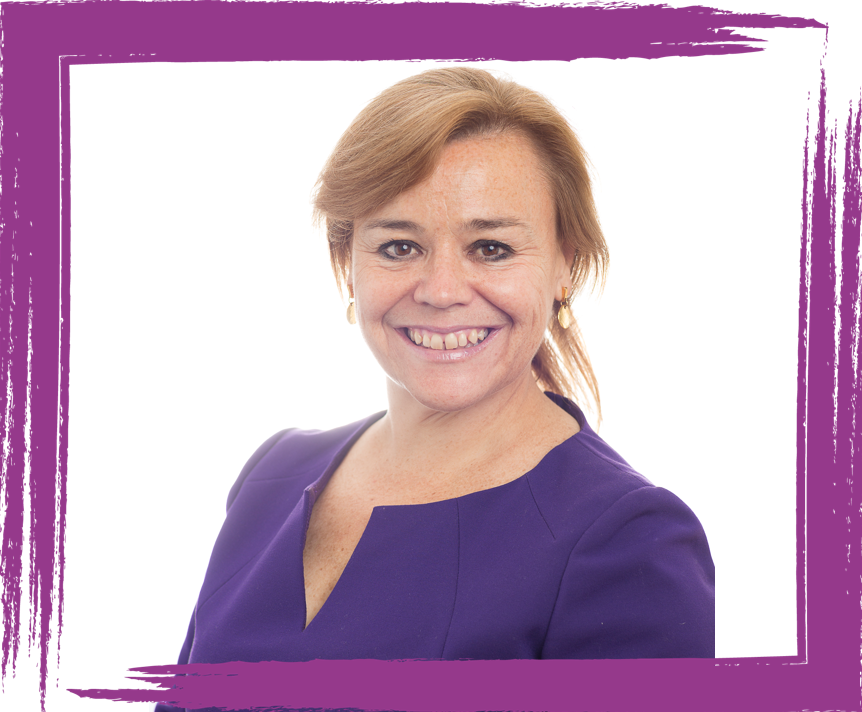
This month, I spoke to Debrah Harding, Managing Director of the MRS, standards champion, and a leader who has helped shape the research industry for over 25 years. In our conversation, Debrah discusses forging a career guided by public service and integrity, how standards underpin good research and societal impact, and what it means to lead through moments of crisis. She explains why curiosity, hard work, and a commitment to consensus have driven her journey, and how making room for serendipity, reflection, and diverse experiences has enriched both her professional and personal life.
The big one at one…are you where you thought you would be today?
No, not exactly. And I think that's probably true of most careers that are worth having. I didn't set out really with a fixed destination in mind, but I have always been drawn to work that sits at the intersection between evidence, standards, and public service. Looking back, I suppose the constants in my career have been a belief that good evidence and standards matter. My background is very much in standards and then I went into general management afterward with a real desire to help businesses, society and people to work well and responsibly together. So in that sense, I am where I hoped to be in a role because I can help shape the conditions for better research, which makes better decisions and it makes it a better world for participants. That way, I’ve landed where I wanted to be, but it certainly wasn’t by design.
So where did it all start?
When I graduated in 1991, the UK was in the middle of a recession. And I was told by the careers department at my university that I had four job opportunities: teaching, nursing, accountancy, and working for McDonald's! Anyone who knows me knows I’m really short, so I could never have been a teacher. The sight of blood? Not so sure. And I didn’t fancy McDonald’s. So, I went into accountancy. I did that for a couple of years and, whilst I learnt so much that’s been so beneficial to me in my professional life, I really didn’t want to be an accountant.
I was working in an audit function and one of the small audits I did was of a publication -doing a circulation audit rather than a financial audit- and it just so happened that the publication I worked on was Research Magazine, published by the Market Research Society. So that happened, and then I was encouraged to look at an opportunity with ABC, the Audit Bureau of Circulation, who do circulation audits. I got a role with them and, of course, drew heavily on the fact that I’d done this circulation audit for the Market Research Society!
I had five fabulous years at ABC. I really enjoyed it. I travelled around the world, talking to publications - business-to-business, business-to-consumer, exhibition organisers - about how to maximise their circulation and work within the rules, but also to leverage them. Then the role to set up a standards department at the Market Research Society was advertised, and I went along to that and spoke to the then Director General. It was a completely new role. I’d already got experience with MRS because I’d audited their magazine all those years previously.
And also, I was always interested in the standards side. The standard setting and standard creation. That’s how I joined MRS. After about a year, my role expanded to include policy and public affairs, and then, over time, I was promoted several times. The Director General at the time said, “Debrah, you’re really good at things like accountancy and staff management.” And, what do you want me to do, I wondered?!
So the standards side is still something I really enjoy, so I get to fulfil the things that really matter to me, while also working to make sure that MRS operates the way it should, delivers the way it should, and working with a great bunch of people.
So, you got involved in the research side of it quite early on, even if you didn’t start as a researcher. That’s a unique perspective. It might seem silly, but why has standards been something you’ve dedicated your whole career to, and why in the research area?
Not at all! The reason I’ve stayed at MRS, even though I’ve had five or six different roles while I’ve been here, is because the people within the profession are great. They’re curious, they’re dynamic, they’re interesting. If there hadn’t been great people, I wouldn’t have stayed. But also, research is such a fast-changing discipline. As a knowledge profession, at the forefront of technological innovation, it makes it intellectually exciting and practically important.
Although I work for the professional body rather than as a research practitioner, you get this privileged vantage point. I’ve been able to support the profession as it adapts to new methods, new technologies, new modes while helping ensure standards, ethics, and trust keep pace with that change. Research is a really exciting place to be if you’re into standards!
And why standards? Well, going back to what I said at the beginning, I have quite a strong sense of public service. I’ve always wanted to do something where it wasn’t just about commercial success but also societal success. If I hadn’t gone into a professional body, I probably would’ve looked towards Government or the public sector. For me, I have to feel what I’m doing is making a difference.
Have there been crossroads where you nearly diversified or changed path?
Oh, definitely! At ABC, I got involved in a fraud investigation in Hong Kong doing some undercover work to help the fraud investigators while also doing the audit. I was an expert witness at the fraud trial. The team out there said to me, “You know, you’d make a really good investigator!” And for a moment, I thought seriously about changing path. But I’d just met my partner – who was based in the UK - so I decided to stay. I’m still with my partner and we’ve been together over 30 years, so it definitely worked out!
Any change is not so much about veering away from MRS, it’s more about enhancing what I do. About 10 years ago, I started to build a bit of a portfolio career. I was a trustee, then treasurer, for a charity supporting electoral democracy while working full-time at MRS. I no longer do that but I’m now Non-executive Director and Senior Independent Director at IMPRESS (a media regulator), and I do a lot of work for the British Standards Institution. It’s about consolidating my experience and directing it to things I’m interested in. I get experience of other businesses, which stops me from becoming stale at MRS. I can give a lot, too, after 30 years of work. It’s busy - I work full-time at MRS, so my diary is packed - but I love having a lot of things to stimulate me. What I do with BSI, IMPRESS, and MRS are all very different, but my skill set works for all.
If you think about advice for people earlier in their careers, what’s the value in getting experiences outside your main job?
So many benefits! Especially in today’s job market, none of us will have a career for life. You don’t just leave university, get a career, and that’s it. The world is moving fast, so you have to continually invest in yourself, make yourself marketable through continuous learning and professional development. And not just exams or training - other experiences, too! It doesn’t have to be something huge, it could be being a school Governor, supporting your professional body, volunteering for a working group or the main board. Lots of opportunities that don’t mean working every hour God sends, but they give you a window into different experiences. Especially when you get senior, it’s all about governance, fiduciary duty, understanding employee issues. If you get a bit of board-level experience - even if it’s in a tiny organisation - it gives you a real window into how it all works, which can help you move toward C-level roles. It’s about making the most of your opportunities, leveraging contacts, and the art of the possible.
Are there any career highlights that stand out?
Definitely MRS’s response to COVID. The sector was facing colossal uncertainty; suddenly, all face-to-face data collection stopped. That’s a huge segment of people who suddenly couldn’t do what they were meant to do. MRS worked so hard to give practitioners practical, credible guidance so they could carry on operating safely and ethically while retaining public confidence. Interpreting fast-changing government rules that were different in England. Wales, Scotland and Northern Ireland, and then translating them into research-specific guidance.
We weren’t just firefighting, we were helping the sector navigate a genuinely difficult period, holding onto professional standards and public trust. Our relationship with the Government was excellent - we spoke to them daily, especially the Department for Business and Trade, who really wanted us to succeed but also had to make sure we were within the rules.
For MRS itself, tough times. Our model was based around lots of face-to-face delivery. We had to make some really tough calls, but we didn’t furlough staff - we stayed open, kept everyone working even though income was tough, because we knew it was important to support the profession.
Personally, what did you discover in that period?
I didn’t know I could work seventy hours a week, but apparently I can! It made me realise I had much more capacity than I’d thought. Also, that I’m blessed with good relationships - being able to step away and switch off is so important. The people around you, friends, partners, family, they provide the counterpoint. That taught me a lot.
What about another career high-five moment?
When I first got the role at MRS, we went out to celebrate in a restaurant - I remember thinking, “This is a great opportunity, a blank piece of paper, a new department.” Over 25 years later, I’m still here! So yes, that was a good call.
Now you’re MD, how does it feel being at the apex?
Well, particularly after so long you can shape the role to what you’re interested in and good at. I’m good at problem-solving, multitasking, context-switching - when you’re MD, one minute it’s finance, the next HR, then someone tells you the loo’s broken! And you have to deal with all of it. I was able to keep my standards responsibility, which is great because it lets me do international work. I work with EFAMRO on public affairs, I’m one of the leads for the Global Research Business Network, I chair the ISO Technical Committee responsible for the research standard ISO 20252. It lets me look at things from different angles which is very satisfying.
What is it about you that makes you good at your job and a good leader?
My parents always had a lot of faith in me, they were really encouraging. My dad once helped me get a job in a food factory as a teenager - packing tins, watching food bounce by. It was mucky but a great life lesson; I worked with loads of women from very different backgrounds. Most of whom left school without qualifications, and it was the only job they could get. It gave me experience of doing something really hard, working with and learning from lots of different people.
I’ve got a strong work ethic - my parents grafted, and so do I! If you’re going to do a job, do it well. At university, I worked all holidays. In one summer, I had four jobs at once: secretary in the morning, another secretarial role in the afternoon, debt-chasing for a bank in the evenings - which I hated - and working in a supermarket at weekends. I wanted independence and didn’t want to rack up too much debt.
But I also know when to switch off. Last week I had a wonderful holiday in the Outer Hebrides! I’ve lots of interests: cinema, ballet, opera, classical music. I love reading, I read at least a book a week, and I cannot walk past a second-hand bookshop. We probably have 3,000 books at home! It’s about making space for culture and thinking - in busy roles, you’re always reacting, but sometimes the best decisions need you to step back and reflect, check assumptions, then act. It helps my professional and personal wellbeing.
Do you have any concepts or theories that guide your life?
I did Geography at university and Maslow’s hierarchy of needs stuck with me. Especially in turbulent times, I always remember the importance of the basics - food, shelter, security. I still have my Maslow textbook! Another is Alain de Botton’s ‘Status Anxiety’. It really helps explain why people sometimes act irrationally as status anxiety often underpins it. That’s been super helpful, both for understanding others and reflecting on my own behaviour.
You mentioned clarity and reassurance as leadership pillars. What have you learned about yourself as a leader?
I would never ask anyone to do something I wouldn’t do myself. And I put real effort into understanding other people’s perspectives which is vital for resolving conflict and getting consensus. Consensus doesn’t mean complete agreement but enough to move forward. As chair on international standards work, that’s my job - to achieve consensus so everyone can get on with the job. It’s building an environment where you can get things done, and where people know you understand what you’re asking of them. That’s genuine authority.
Have you faced any challenges as a woman? And do you have any advice based on that?
Oh yes, absolutely. I had some difficult experiences when I started work. Working such a range of jobs as a teen made me resilient. There was one occasion where, years ago, traveling on business with a male colleague, someone booked us into a double room! I know! Put it like this, I had the double room and he was he was relegated to a single room that was the only other room left in the hotel. So yeah, I had horrible things like that happen. And early knocks made me conscious of how leaders impact people’s happiness and wellbeing. Jane Frost and I have both had our share of knocks - it’s made us very conscious of the culture at MRS. You have to take these experiences and channel them into doing better for others.
What about mentors? What have you learned from them?
I’ve been lucky to learn from several people, not just one. Richard Foan recruited me at ABC; David Barr was MRS Director General when I joined, and I learned loads from him - especially moving into general management: tough commercial stuff, negotiating, diplomacy, dealing with people with very different perspectives. Jane’s experience across big brands and Government has been fantastic to learn from as well. Good leadership isn’t a given - you have to work at it, make judgments, learn from mistakes. Trust is hard-won and easily lost.
Can you share a time when you stumbled and learned from it?
My first career choice, accountancy, really wasn’t for me. But I needed a job. At that time, you got in your lane with a graduate role and could get stuck. It was tough, but the experience I gained with finance, running an organisation, dealing with auditors was great. That tiny bit of experience auditing Research Magazine became my way into MRS, and I loved publishing. So, sometimes it’s a tiny adjacent thing that leads you forward. Serendipity plays a part!
Is there any advice you’ve held onto? Or advice you disagree with?
Stay calm, take time to reflect, provide clarity on complex topics or decisions. Sometimes rooms of people get stuck on complicated problems, going round and round, so getting everyone to calm down, break it into chunks, and build a plan is the most helpful thing you can do. I’m less keen on, “trust your gut”, instinct is useful but needs testing against evidence and potential consequences. The “move fast and break things, apologise later” attitude makes me nervous as sometimes when you break things, they can’t be put back together, especially with new tech. We need guardrails, standards, ethics as market forces alone won’t protect society.
OK so now time for the quick-fire recommendations!
If you read just one book…?
"Factfulness" by Hans Rosling would be a strong choice. It's a few years old now, but it’s incredibly useful because it challenges the instinct to see the world only through a pessimistic lens. With all the drama and division at the moment, it reminds us to test our assumptions against evidence. It's a really well-written and approachable book, encouraging a more balanced, fact-based way of thinking. Hans gives lots of examples showing that, although people often think things are getting worse, many things are actually better now than ever before. I think it's a great non-fiction book.
If I were to choose a fiction book, it would be "Persuasion" by Jane Austen. I love Jane Austen, in fact, I studied her at A level. "Persuasion" is about the reflections of a slightly more mature woman - though, relatively speaking, the protagonist is only about 28. As I’ve got older, I recognise the differences in how you view mistakes and choices, and the main character finds her way back after feeling she made a mistake. So that would be my fiction choice.
If you listen to just one podcast…?
Radio 3's "Unwind", definitely. Sometimes you just need that quiet space, that time to reflect - especially in this frantic, fast-paced world. The podcast offers exactly that: calm, perspective, and space to think. I listen to it a lot while working; it provides a very calm backdrop at home.
If you follow just one person…?
That’s an interesting question. I would say Dr. Hannah Fry. She spoke at an MRS annual conference a few years ago and was terrific. She brings intellectual seriousness - she’s a mathematician and incredibly bright - with a real curiosity for complex subjects. On TV, she’s broken-down everyday objects like a microwave into all its parts to see how it works, demonstrating true intellectual curiosity. She’s a natural, engaging communicator - never showy - and displays real integrity. So yes, she'd be my choice.
And finally, if you remember just one thing…?
Leave room for serendipity. Some of the most important opportunities, ideas, relationships, and networks in my life have arrived when I least expected them. You never know how a connection you’ve made might become meaningful years later.
Wonderful. And what a lovely note to end on, Debrah. It's been an absolute joy talking to you. Thank you so much.