What I Know Now: Tatenda Musesengwa
Each month, Simpson Carpenter’s Rhiannon Price asks some familiar faces in the MRX world what they have learned about themselves and the industry on their journey so far.
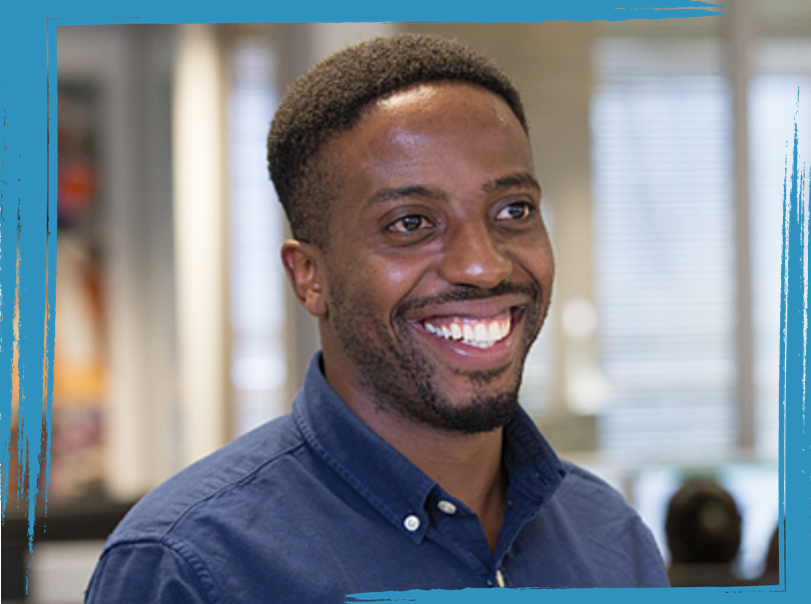
This month I spoke to Tatenda Musesengwa, a market research leader, panel specialist, and co-founder of Colour of Research. He reflects on falling into the industry and staying for the people, why participant experience is the biggest blind spot in research, and how taking responsibility - rather than staying comfortable - has shaped both his career and his leadership.
Let’s start with the big one. Are you where you thought you’d be today?
Probably not, in all honesty. I kind of fell into market research. It wasn’t a career I thought I’d end up in. When I went to university, I actually wanted to start a youth marketing agency.
I started interning at a youth research company called Opinion Panel, which later became YouthSight. They did youth research, so I thought it would be a good way to get insight into youth culture and then use that in the marketing company I wanted to start.
Like a lot of people, I just stayed because I enjoyed it and then never left.
That really is the classic story.
Yeah, it definitely is. I started running simple field and tab sampling projects, and I enjoyed that a lot. For me it was the combination of working with clients, doing the account management side, and managing projects from beginning to end. Spinning lots of plates was kind of my forte.
At the same time, the marketing company I wanted to start would have needed quite a lot of capital. YouthSight was small at the time – about 15 people – so if you did a good job, it was very easy to be seen.
After about two or three years I became Client Manager, managing all our agency-based clients. Two years after that I became Client Services Director.
Did you ever seriously think about leaving to start your own thing?
I did, yeah. There was a pivot point about a year and a half or two years in. I had to decide whether I was still going to push for the youth marketing agency or whether I wanted to stay in market research.
I realised I actually liked market research and could see myself one day running my own agency within this space. I was building up a client list and getting to know people quickly. It felt like somewhere I could stay.
From there, I just did keep staying. I was lucky – my career trajectory kept going up.
I started in 2010 as an intern, and by the time YouthSight was acquired by Savanta in 2022, I was Managing Director of Panel and Data Services.
What did that transition look like after the acquisition?
I became VP of Audience at Savanta. There were two main parts to the role. One was managing the team that ran Savanta’s panels – including the YouthSight panel they acquired and two other communities within the business.
The second part was more interesting for me. It was about helping consultants, project managers, and researchers find the best sources of audience for their projects. That meant balancing quality, price, and delivery.
A lot of it involved working with big suppliers, but also finding new partners. Things like niche databases or specialist groups where we could reach audiences that are traditionally hard to access.
I eventually left Savanta and took some time off and took a bit of a sabbatical…I didn’t have to wake up early. I did life admin. I did my house up. And during that time, I started having conversations with Prograd which I joined in April 2025. I then left Prograd and am now at Dscout which I’m thoroughly enjoying.
How did it feel going somewhere completely new after over a decade in one place?
It’s been exciting. Dscout is at the forefront of doing qualitative research at scale, so it’s been energising to join a company that’s genuinely innovating how the industry delivers qualitative insight.
A big part of my role focuses on participant experience, which gives me the chance to build on what I’ve learned from traditional research panels — and apply it in a place that’s pushing the boundaries of what qualitative research can be. There’s a lot to be excited about, and I’m really happy to be part of what’s next.
OK, now I really want to hear about Colour of Research. How did that start?
Colour of Research started around 2020, after the George Floyd murder. Some of us had already been having conversations about creating a special interest group around ethnicity in market research.
When I started my career, I used to go to conferences for business development, and there were very few ethnic minority faces there. If there were, they were often in ops or sales rather than research.
When we spoke to each other, we realised a lot of us felt the same way. The George Floyd incident created the spark to actually do something.
For us, it focused on three areas. The first was access – how do we get people from ethnic backgrounds to even consider market research as a career? A lot of people don’t know what it is, or they think it’s clipboards on the street.
The second was mentoring people already in the industry, especially early in their careers, so they can become future leaders. That’s about advice, mentorship, and giving people a platform.
The third was supporting the industry – helping agencies think about ethnicity properly in research and helping organisations navigate DEI issues internally.
That’s a huge amount to take on alongside full-time jobs.
We definitely underestimated it. We all do this voluntarily, and we all have full-time roles.
COVID helped at the beginning because everything slowed down. We had time and headspace. When work picked back up, that’s when it became challenging to sustain.
We expanded the team and created strands – mentorship, outreach, podcasts, lunch and learns – so people could focus on specific things rather than trying to do everything.
What has that taught you about the industry?
One thing is that we can be very stuck in methodology. Methodology is important, but sometimes it limits doing interesting or innovative things that could still generate insight.
I think that’s starting to change, especially with data companies and consultancies moving into the space.
About myself, I’ve learned I’m not very detail-oriented. That’s why I could never be a traditional researcher. I’m more big-picture. I work best when I’m partnered with people who are detail-focused.
What has the leadership side of all this taught you?
Leadership can be lonely. As you get more senior, you stop getting feedback unless something goes wrong. You’re expected to know what you’re doing.
One of the biggest things I’ve learned is that you need support. You need mentors.
I’ve been lucky to have two. One is Ben, who founded YouthSight. He’s very emotionally intelligent and thoughtful in how he gives feedback. He helped me understand where I was strong and where I wasn’t without knocking my confidence.
The other is Richard Sheldrake. He’s very direct. His advice to me was always: be decisive. Making no decision is often worse than making the wrong one.
Having both of those voices really helped me navigate senior leadership.
What stands out as your career highlight so far?
Helping grow YouthSight and supporting its sale. We grew revenue from around £600,000 to about £3 million.
Part of the acquisition value was the team. Clients told Savanta they loved working with us. That validation meant a lot.
And the hardest moment?
Probably going from being MD of a 20-person company to being one of many VPs in a company of hundreds.
That’s where I really learned how important internal allies are. Titles don’t protect you in big organisations. Internal stakeholder management becomes a huge part of the job.
If people don’t understand what you do, or you don’t have relationships internally, it’s very hard to get things done.
At the beginning, I went into my shell. I questioned myself. I lost some confidence. Looking back now, it was a huge learning experience, but at the time it was emotionally tough.
I’m going to finish with a few quick-fire questions. If someone were to read just one book, what would you recommend?
Sapiens by Yuval Noah Harari. It was weirdly transformative. It helped frame how humans have evolved and developed within society, and how little we actually change over time. Our circumstances shift, our comfort changes, but fundamentally we’re still driven by many of the same instincts.
If you work in market research, or anything that involves understanding people and culture, it gives you a really useful lens on human behaviour.
If they were to listen to just one podcast?
Lex Fridman. What I like about his podcast is that he comes at topics from a place of humility – he openly says he doesn’t know everything. That allows his guests to explain complex ideas in a very accessible way.
He covers a lot of history, science and technology, and I’m particularly interested in history. I like that the conversations don’t feel performative or overly polished – they’re about understanding rather than showing off expertise.
If they were to follow just one person on social media?
Probably Gary Lineker. I’m a big football fan, and I also respect that he’s willing to share his views rather than staying silent. You don’t have to agree with everything he says, but I think there’s value in people with a platform using it thoughtfully.
And finally, if there’s just one thing to remember or come back to, what would it be?
Be grateful. No matter how difficult things feel, there’s almost always someone else in a tougher situation. That mindset keeps me grounded, especially when work or life feels overwhelming. Gratitude helps you keep perspective.