What I Know Now... Martin Oxley
Each month, Simpson Carpenter’s Rhiannon Price asks some familiar faces in the MRX world what they have learned about themselves and the industry on their journey so far.
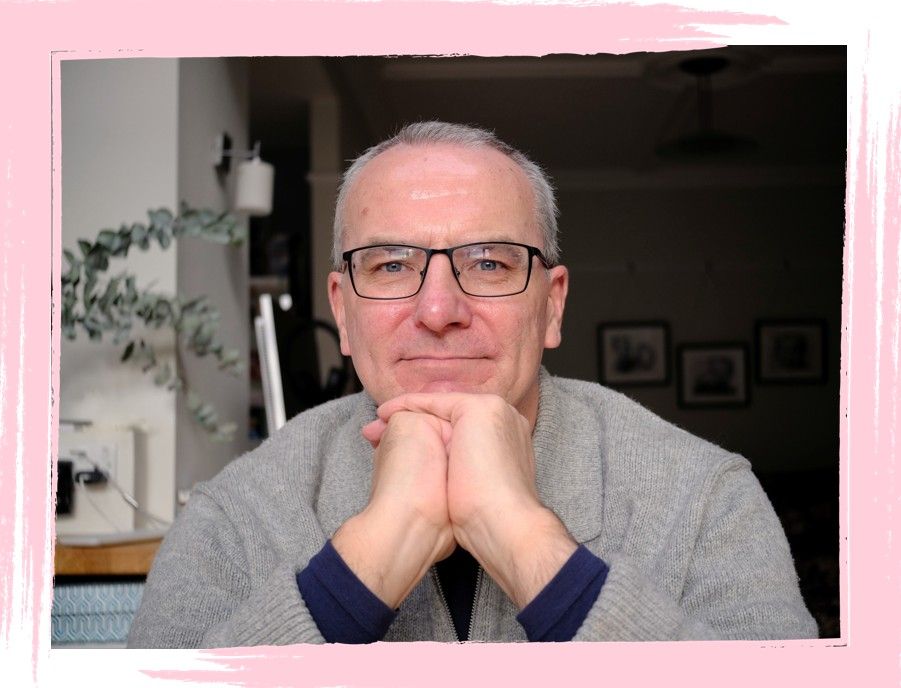
This month, I spoke to Martin Oxley, a seasoned research leader and mentor whose career spanned decades at the forefront of market research in Europe. In our conversation, Martin reflects on building success through curiosity, confidence, and the importance of authentic relationships - both in building and growing a thriving business and in mentoring the next generation. He also provides one of the best quotes I have had so far “I’m not religious, but I do believe in Bowie”. Read on to find out more!
The big one at one…are you where you thought you would be today?
Well, it’s funny as I'm retired. So, I guess I absolutely am because I always intended to retire at 60. That was a kind of hard stop for me. I read a book called Four Thousand Weeks which essentially says the average life of a person is about 4000 weeks.
Oh my gosh.
Exactly. When we finish this call, just go and count how many you’ve had! But I suppose it was realising there's more to life for me than work. Even though I enjoyed my work very much, I needed to have a bit of healthy life and health span and all of that. And if I didn't have a hard deadline, I would have never achieved it. So yes, I am where I am, and I look back actually very fondly on what I did. And I'm still doing some advisory work for a Portuguese company and a company based in the US, which doesn't take up much time, but it’s nice to still do that.
Was the hard stop at 60 something that got triggered partway through your career?
No, it’s always been clear. And then, you know, children and marriage and all those milestones. Having milestones has always been important, having things to achieve. When you get older, you look back and think, oh, they were just steps to something else.
But having those goals was very helpful. Because, you know that expression, you can only be lost if you know where you're going. And you're not really lost if you don't know where you're going, you're just wandering around.
I'll come back to retirement in a moment because I think it's an interesting time of life and I know it can be hard for some people. But when did you retire?
About a year and a half ago or something. I forget because time is an elastic idea, as you no doubt know. When I was working and younger, time was a different construct. Now, time is a weird thing. It isn't 24 hours a day, it's more and it's less than that. I know that sounds esoteric, but now there are a few restrictions, so you can lean into things. Sorry, I hate that expression!
What do you mean?
If it takes two hours to do a bit of gardening, it takes two hours. And it's a very nice feeling that time is not the same constraint, other than how long you've got left of course. Which, unless you're very special, you've got another 20, 30 years or whatever it is.
I was reading about Sommarøy, a small fishing island in Northern Norway, whose residents campaigned to become the world’s first time-free zone during the summer. They just wanted to be able to do what they wanted, when they wanted given it was 24-hour sunlight. And I thought that must be so liberating!
So overall, how has retired life been for you?
Honestly, awesome! I highly recommend it. For me, retiring at 60 was planned, so no shock. I lined up projects, leaned into voluntary work, did a little advisory stuff. You’ve got to dip your toes in first, just like the freezing sea at Skegness where we went on holidays when I was a child… but once you’re ready, go for it. The gift of time is the best part.
Ah that’s great. But I’m really interested to hear how you got there! Could you walk me through your journey to this point?
I'd worked at several big research companies - IPSOS, then NFO, then TNS. With those big companies, I realised I was becoming a bad accountant, with financial responsibilities and whatever. It wasn't particularly interesting. I realised I was doing what I wasn't interested in and wasn't very good at. I used to sit through financial management training thinking, really? We're trying to understand what makes consumers tick.
I left TNS just before WPP bought it. Then I moved to a connection, Brendan Light, who had seen the light of the internet and went to Buzzback, which I was at for 17 years. I set up the UK practice looking after Europe. That went well for 16 or 17 years, until it didn't. The founder, Carol, who I still regard highly, made me redundant. I was about and I asked myself-do I want to stop now or do I want to continue? I hadn't quite got to 60.
I was approached by one of the recruiters I used when I was recruiting, about this company in the Netherlands and unfortunately it wasn’t a good fit. And I thought to myself, this is silly - why, when I'd done 99.5% of my plan, would I end my career feeling miserable? So, I said, right, I'm finished now. It was nice to go out on my own terms, not from someone else's choice.
So going back to the start of it all, what pulled you into Market Research in the first place?
My degree was in econometrics - economics, maths, stats. Analytical and mathematical, but also about understanding people. When I graduated, I was pretty unsure, but I’d done social research with a charity in York which I liked because I've always had a social conscience. The issue was that very little was done with the work. You'd discover inequalities, write the report, and it would just sit there. That was more frustrating than not knowing. So, I went into commercial research and did the MRS diploma. It was useful to transition from academic to practical application. So that's how it started.
Ah you've broken the mould of people that just fell into market research then, Martin.
Well, I think there's an element of that too. That's the common one, isn't it? We should be careful of trusting anyone who says they always intended careers in it. Also, I remember going to a wedding years ago on Martha's Vineyard, so with lots of very wealthy Americans. They couldn't quite place me. When they asked what I did, I knew "market research" wouldn't get a positive reaction. But if you say you're working with Land Rover and BMW, they're suddenly interested. It's the difference between telling what you do and what you are.
Market research is hugely stigmatised, isn't it? And no one really understands what it is, even now when I think it's way more understood than it was when I first started.
Yeah, and usually people say, well, I had a friend who did groups, got 100 quid, smoked Dunhill cigarettes but didn’t and made it all up. That is infuriating.
Exactly! So you set up the European arm of Buzzback in your early 40s, which is a bigthing to do and must’ve taken some bravery. What did you learn from that process?
One of the successes was that the chemistry with the founder, Carol, was right. We had very different backgrounds and skills, so were complementary; I think it was a mutual respect, really. Having experienced the opposite and lots of negative energy in previous companie, that's the difference: getting the chemistry right, which you don’t really know until you've worked in pressured or successful situations. It's a leap in the dark, but you always land somewhere.
For years it was 90% positive. I’d only worked for managers, never owner-founders, and that's a different animal. Working with someone who had more drive and work ethic than I'd ever seen before that was a huge positive.
What do you think rubbed off on you?
I think I've been a bit braver, realising most people in the room aren't particularly bright or well-informed. My mother always said, "You've got a tongue in your head, ask the question." Don't assume they'll say no, make them say no.
That confidence came from being in an entrepreneurial environment. There’s an expression: hell knows no fury like a middle manager scorned. It’s always middle management getting in the way.
And when you like look back now with the reflection of retirement, which part do you look at and feel really made a difference?
Mentoring people and bringing people on, helping them build confidence. In the end, it's the people and how they made you feel - not what you did.
What advice would you give to younger people starting out in their career? What are some key things people should hold on to and have as their mantra?
It’s just my experience, but curiosity is key. Staying curious and reading a lot. I recently tried to give my books to a university, but no one wanted them! It’s important to want to know more rather than just doing the job. At Ipsos, they used to say, "We don't promote people, we just change their job title because they're already doing the role." Do the role, and you should be recognised.
But a real challenge now is being focused as there’s so much more information out there. But as researchers, anyone who isn’t curious isn’t in the right job.
But also believe in the power of serendipity in meeting people. That can open a lot of doors.
What have been some of the lows for you or the hardest points in your career?
One of the real low points was being asked to leave Buzzback that was tough. But it wasn't as bad as it could have been because by that point, my headspace was about where my next step was in life, rather than my career. I mean, I've had plenty of projects go off the rails. The way to handle it, I think, is to always be proactive. If something’s going wrong, don’t wait to see what happens - jump in and fix it, go to the client, explain what’s happened and what you’re doing about it, not just ask permission to fix it.
Sometimes when things go wrong, fixing them creates a better relationship. It’s honest. I had clients say, “Your job is to make me look good,” and that really stuck with me. It’s not about the research per se, it’s about their career, and our job is to support that.
But never say that to them! But those are the client relationships that last as they know you’ve got their back.
You've had a family along the way, too. If you were a woman, you'd be asked about how you balanced that, so I'm going to ask you, Martin!
Marry a superwoman! That's my advice. And find the right relationships at work, as well as at home. Supportive networks are critical, and by that I mean those where you’re complementary. It’s a cliché, but behind every successful person really is a great partner. Our fields overlapped enough so we understood each other's worlds just enough.
Do you have any rituals or routines that get you through?
Absolutely. First, walking. I'm from Sheffield, so walking in the Peak District is my happy place. Even with a busy career, I’d make time: morning, lunch, evening—13, 14,000 steps a day. There’s something about movement that clears your mind, especially when talking with others. During lockdown, audiobooks were a revelation: I could walk and read at the same time. That was wonderful.
But also live events like rugby and concerts are critical too. You’re in the moment, experiencing everything directly. The “flow state” you get from presenting, too, is something I loved; suddenly time stops existing.
It’s the same before running a group isn’t it? You always get that dip - why am I here? What am I doing? Then you’re up there, in flow!
Exactly, and then afterward, you get an incredible high! I didn’t run marathons or lift weights, but that kind of flow from being in the moment was my thing.
Can you talk to me about your mentors…
David Soulsby was my first big influence - a Cambridge mathematician, incredibly smart and, more importantly, a decent person. We got on very well, both being Northern with working class backgrounds. He had this rare mix of technical ability, great client management, and no ego, but everyone respected him. He was a real role model.
Then there is Winfred Hagenhoff at NFO who had a very different style. He ran operationsand was extremely rigorous; he taught me the discipline of process. It’s only after working together that I realised how much I’d learned from him.
Carol at Buzzback I’ve already talked about. And then Ken Parker who I met at IPSOS, who sadly passed away. He was a friend and a mentor. He had warmth, humour, and could motivate people by helping you find your own strength. He built a business and then sold it back to his team because they were the value. He made everyone feel valued. There’s rarely a day I don’t think of Ken. People would do anything for him because he was just so likeable, with strength and humility.
He was indeed a wonderful person who influenced me when I was a young researcher. And he was so heavily involved in trying to make the industry better. You’ve also been pretty involved in the industry too, why is that?
Yes, I’m a Fellow of the MRS, and have spoken at a lot of events in the UK and abroad. Sometimes I get frustrated as I feel we could have moved faster as an industry. Now, looking in from the outside, it feels like a perfect storm: AI, process, research tech. There’s an obsession with “the thing” rather than the result, which is understanding people.
I have to ask, what do you think about synthetic respondents?
For me, it inherently feels wrong, even when people show the data “proves” it works. No synthetic respondent has ever bought anything. I get the need for speed, but isn’t this a field about impact? Instead, immediacy has become the goal, and less about deep insights.
I remember a Ford car clinic once - there was this young guy who walks up to the car andturns his baseball cap around to peek into the engine. It was a tiny moment, but it captured everything about the product. Synthetic data would miss that. Those moments are at heart of what we do.
Ok I always end my interviews with some quickfire recommendations…
If you read just one book…?
Can I have two? Irrationality by Stuart Sutherland. An old book, but still relevant, fun, full of good stories and insights about why people don’t behave rationally. If you want to understand how people tick, it’s a great way in. The other is John Fowles’ novel The Magus. Not related to research, but a novel that left a distinct feeling I can’t really explain. Worth reading if you want something thought-provoking.
If you listen to just one podcast…?
Revisionist History by Malcolm Gladwell. He’s brilliant - smart, articulate, and makes you see the world differently every time. His books started a whole genre, but his podcast is my favourite. He finds obscure psychology and makes it accessible and fun.
If you had to follow just one person on social media?
David Bowie. He was the man who changed the world. If people don’t know why, they need to look into it. I’m not religious, but I do believe in Bowie.
And if we remember one thing?
Roy Langmaid, a proper genius, used to talk about “listening with your listening”. Which means really listening, not just waiting for your turn to talk. It’s about active, deep listening to truly understand, not just react.
Thank you so much, Martin. It’s been a real pleasure!