How Small Businesses Can Master Content Personalization and Win Loyal Customers
Personalization is vital for small business growth, helping brands stand out and connect with audiences personally. By customising digital experiences, businesses convert browsers into repeat customers and foster loyalty.

Personalization has become a cornerstone of small business growth. It’s how local brands and emerging companies cut through algorithmic noise and connect with audiences on a personal level. By tailoring experiences across every digital touchpoint, businesses can turn passive browsers into repeat buyers and build long-term loyalty in the process.
Quick Takes
● How to design a personalization strategy that scales with your small business.
● Why omnichannel experiences create deeper engagement and customer loyalty.
● The essential data and tools needed to deliver relevant, real-time content.
● How to avoid common personalization pitfalls that reduce trust and performance.
Ground-Level Wins: Practical Scenarios for Inspiration
Let’s start with what works in the real world. A local coffee shop can recommend new brews based on past orders, while a boutique fitness studio can personalize email class suggestions by attendance history. Similarly, a small retailer can use browsing behavior to feature complementary products or accessories.
These examples prove that personalization doesn’t require enterprise software, it requires relevance. Small shifts like these make customers feel recognized and valued, leading to higher conversions and a stronger emotional connection. That emotional connection is what transforms engagement into loyalty.
Understand Your Audience First
Personalization starts with knowing who you’re speaking to. Every business has clusters of customers with shared motivations, pain points, or goals, and those distinctions shape your message. Here are a few reliable ways to identify and group your audience effectively:
● Review website analytics to find behavior patterns like repeat visits or popular content.
● Use purchase histories to segment by customer value or product preference.
● Conduct simple surveys to capture intent and satisfaction.
● Map each audience segment to a distinct phase of your customer journey.
By defining audience segments early, your content naturally becomes more relevant and easier to personalize later.
Turn Data Into Direction
Data isn’t just numbers—it’s narrative. Each interaction tells you what customers care about and how close they are to buying. The more connected your data sources are, the smarter and more adaptive your personalization can be. Here’s a quick reference for aligning data with personalization goals:
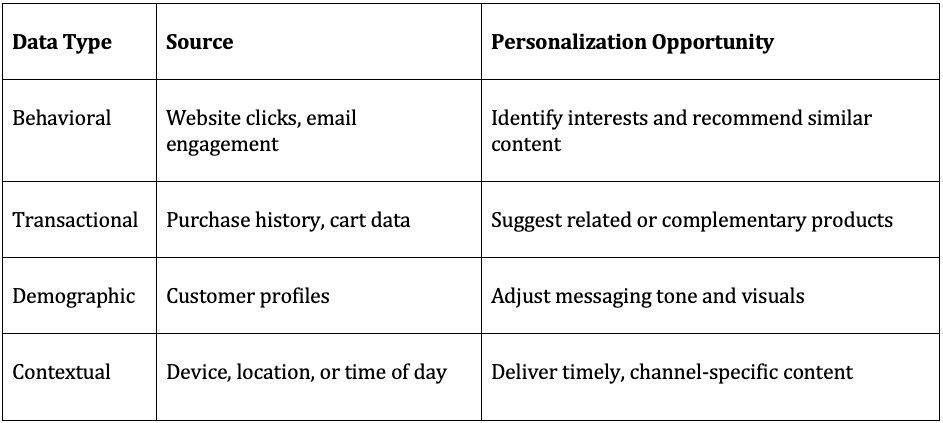
When combined, these insights help businesses anticipate customer needs and deliver relevant content before customers even ask.
Seamless Personalization Through Unified Experiences
Customers don’t experience your business in fragments, they move fluidly from Instagram to your website to an email offer. To keep that journey consistent, small businesses can use an experience management platform that organizes and distributes content from a single hub. Instead of juggling multiple tools or repeating updates, every campaign, image, and message stays synchronized across channels.
This unified system helps you deliver a true omnichannel customer experience, where brand voice and visuals remain steady, yet content still adapts to each audience’s needs and device context. It also integrates easily with analytics and commerce tools, allowing your marketing, product, and customer data to work together. The outcome is a smoother, more personal experience that feels deliberate rather than disconnected.
Avoid Common Missteps in Personalization
Even good personalization strategies can falter when executed poorly. Many small businesses rush to automate before they understand their customers’ journey or privacy expectations. Typical pitfalls include:
● Over-personalization that feels invasive or repetitive.
● Relying on outdated or incomplete data.
● Ignoring consent and privacy transparency.
● Fragmented messaging between online and offline channels.
The fix is simple: slow down, simplify, and focus on authenticity.
A Checklist to Build Your Personalization Strategy
To help you put structure around your efforts, here’s a straightforward checklist to launch and refine your personalization plan:
● Define your target outcomes (more sales, engagement, or loyalty).
● Audit existing content for gaps or reusable assets.
● Choose one primary personalization variable to start (e.g., location or product history).
● Integrate analytics and CRM tools to unify data.
● Test personalized content in one channel before scaling.
● Review metrics monthly and refine continuously.
This approach keeps things manageable while ensuring every personalization effort ties directly to measurable goals.
FAQ
Before investing in personalization tools or systems, small business owners often ask these high-impact questions. Here’s what you should know before taking your next step.
1. How do I know if my business is ready for content personalization?
If you have a steady flow of customer data, such as emails, purchases, or engagement metrics, you’re ready. Personalization doesn’t require enterprise infrastructure, just structured insight. Start small and expand once results prove sustainable.
2. What tools or systems should I prioritize first?
Begin with your website’s CMS and email platform, they’re the core of your digital presence. Add CRM integration to connect customer data across touchpoints. As your strategy matures, consider unified platforms that manage omnichannel distribution.
3. How can I measure ROI from personalization efforts?
Track engagement rates, repeat visits, and conversions before and after implementing personalized content. If these metrics trend upward, your strategy is working. Over time, ROI compounds as repeat customers become advocates.
4. What’s the best way to personalize without seeming intrusive?
Offer value before you request data, and explain how personalization benefits the user. Transparency builds trust, and trust increases engagement. Always give customers control over their data preferences.
5. How do omnichannel strategies improve personalization outcomes?
They ensure your message feels unified no matter where customers interact—online or offline. Omnichannel systems share data across touchpoints, reducing redundancy and confusion. This consistency reinforces brand reliability and deepens customer trust.
6. How long does it take to see meaningful results?
Most small businesses notice initial engagement gains within 30 to 60 days. Full ROI often appears after several testing cycles. The key is patience and consistent iteration.
Conclusion
Personalization isn’t just about algorithms—it’s about empathy at scale. By connecting your data, aligning your channels, and focusing on value-driven content, you build experiences that feel human and memorable. Small businesses that embrace omnichannel personalization don’t just sell better—they communicate better, earning loyalty that lasts long after the first conversion.