What I Know Now… Eulin Goh
Each month, Rhiannon Price asks some familiar faces in the MRX world what they have learned about themselves and the industry on their journey so far.
I’m lucky enough to have interviewed some super interesting people throughout my career. People from all over the world. People from all types of professions. People from many different backgrounds. I’ve spent days in their company taking it all in. I’ve seen them laugh, cry, and get angry about the twists and turns their path has taken them on. Be it a South African entrepreneur in Soweto or a Saudi millionaire, I have learned a lot about how people get to where they are going and their advice for life. But until recently, I have never really turned the lens inward. I have never asked my peers or the people I most admire in market research what their advice for life is. How they got to where they are. How they see things. But when I did, I found it wonderfully inspiring and not only a little bit transformative.
And so, I thought it was about time that we celebrated the wisdom of our MRX crowd and let their stories inspire us.
This month, I spoke to Eulin Goh, former Head of Research & Insight at British Airways. She reflects on 20 years in aviation, the importance of knowing your worth, and learning the art of ‘unclenching’!
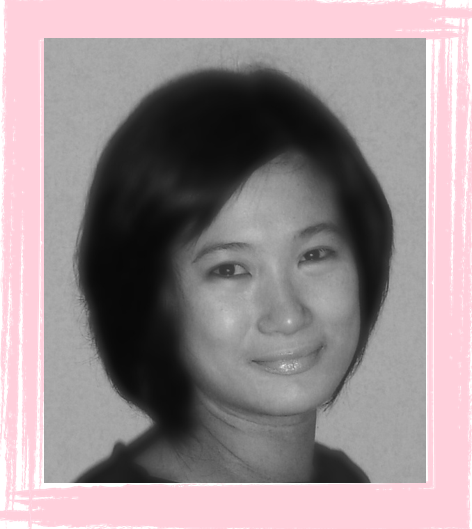
Image. Eulin Goh, former Head of Research & Insight at British Airways.
Let’s start with the big one at one…Are you where you thought you would be at this point?
No. And as a good researcher, you can interpret that question in different ways! If you ask my younger self, then probably no, because when I finished university, the assumption was that you went on the well-trodden path into the City, into a big corporate financial job. That was very much the visible route.
But I also wouldn’t say I had a really clear plan. When I was younger, I did think about being an author at one point, and I also toyed with the idea of being a journalist. I’d done a history and politics degree, and a lot of that is about looking at evidence, assessing what’s in front of you, and having an argument. So, there was always that critical thinking side there.
Like a lot of people, I kind of fell into research. I knew I was analytical and I knew I wanted an analytical role. At first, I was looking at analytical roles in investment banking and asset management, but then I saw graduate programmes with research agencies and thought, actually, this does fit my skill set. I applied and got a role at TNS.
But I do really admire people who have a very clear plan, and I think younger generations are much more intentional about that. But for me, it was more that I found something that matched the way I think. The industry didn’t necessarily promote itself brilliantly, so a lot of us found it through curiosity rather than because it was a clearly signposted path.
It’s interesting though, isn’t it, that the one thing that makes you a good researcher – curiosity – is the thing you need to even find out it’s a career! But research does feel like one of those careers where the possibilities are actually quite endless, even if it isn’t always marketed that way.
Yes, exactly. Even now, there’s always a sense of, could I do more? Could I do something broader? Could I go in a different direction? There’s the hierarchy element, but there’s also the breadth element. Working client-side especially gives you a view of how many different things you could potentially do.
I’ve had colleagues who came into client-side insight roles and then branched out into other business roles. I do sometimes ask myself, should I have done that? I think I probably could have, because the skills are transferable, but I’ve always stayed in the insight line.
You mentioned journalism and being an author. There’s obviously a love of storytelling there, which is so relevant to this industry. What appealed to you about that kind of path?
I hadn’t really thought about it too deeply before. The journalism bit was probably connected to studying history, especially contemporary history, and being interested in current affairs. There was also an element around writing, around communication.
Now, communication has become much more important in our industry. Everyone talks about storytelling. We know communication isn’t just the written word — it’s how you say something, how you structure it, what visuals support it. But the premise is still the same: what is your key message?
With my team, I always used to talk about the elevator pitch. I’d say: you’ve got three minutes in the elevator with the CEO — what are the three things you’re going to say? That helps you think about the structure of what you’re preparing. The visuals might aid it, but you still need to be able to say it clearly.
I do think there are things insight people can learn from journalism. There’s a clarity and discipline to how journalists pull a story together that is really powerful.
And perhaps even more so now, because with AI doing more of the heavy lifting, that last mile of making insight land is becoming even more important.
Yes, I think so. Before, agencies might deliver a report and that was that. Now the real value is in bringing it to life and communicating it in a way that lands.
So, you started at TNS. What happened from there? What were some of the twists and turns?
I worked predominantly in quantitative insight. I started in the social team, then worked on media clients and consumer clients. But I got to the point where I was handing things off and not seeing the rest of the story. You delivered a piece of work, handed it over, and then moved on to the next project. It could feel a bit like a sausage factory.
After about six years, I felt I wanted to work in a more commercial organisation where I could see things through. The funny thing is, my move happened through a very ordinary moment: I was booking a flight to the Netherlands. I didn’t end up buying my ticket from BA, but I clicked on the BA careers link, typed in “research”, and there was a role.
British Airways was always a company I admired. Aviation was something I was really interested in. I’d actually applied for their graduate scheme years before and got to the final stage, so there was definitely an element of thinking that maybe this is my way in.
And then you stayed for 20 years.
Yes — and aviation is a really challenging sector. The purchase cycle is very different from something like FMCG. People aren’t buying flights or holidays every week, and there are so many things outside your control. It’s a hugely complex category, and I learned so much from those tensions.
At BA, I broadened out. I’d done a lot of quantitative work before that — segmentation, U&As, brand tracking — and then I got more exposure to qualitative work too. I worked on the loyalty programme, on usability for the website, and then over time moved up through the ranks, became a manager, and eventually led the team.
One thing I’m particularly proud of is helping to introduce and operationalise newer ways of doing insight. We launched an online community with Virtual Surveys, when that was still quite a new methodology, and I remember doing a pilot and then presenting it at MRS. So much work eventually went through that community. It helped make insight more visible and more ‘on tap’ for the business.
I also worked on big transformations to customer satisfaction programmes, including moving things from paper onboard to online. That was a massive task, but it really helped people use the data more actively.
Was leadership something you were actively aiming for?
Not initially. I don’t think I was gunning for it. But when I became a manager, I thought, okay, I can do this, and I could see the skills that would be required.
There was an opportunity at one point to lead the wider team, and I remember thinking: no, I’m not ready. I haven’t been a manager long enough. And I think that was the right decision. The person who came in to lead the team, Debra Walmsley, taught me a huge amount, and some of which was through observation — how she operated, the structures she put in place, how she approached things.
When the opportunity came around again, I felt in a much better position. So, I think leadership is something I grew into.
That’s a very self-aware decision though — plenty of people would have just gone for it. What do you think held you back at that point?
I think it was recognising that I still had things to learn. At that stage I was still very much about the doing and the delivery. But leading the whole function required more than that — it required ambition, vision, strategy, selling the direction, not just delivering the work.
I hadn’t quite mastered that yet, and I knew it. So, I needed a bit more grounding before taking the lead. I completely understand why other people might think, right, I’ll go for it and work it out. But for me, it felt more important to be honest with myself about what I still needed to learn.
What do you think makes you a good leader?
Trust, first and foremost. If you don’t build trust, people hold back. You need to create a space where people feel they can share openly, without prejudice, and say what they really think. You may not always have the answer as a leader, but you can say: yes, this is challenging — so how do we find a way through it?
I always found techniques like the listening circle really effective — literally going around the room and making sure everyone has a voice. When I created the insight strategy each year, I’d often come with a bit of a straw man, but then I’d get the team to input into it. We’d co-create it. If you just impose a plan on people, they won’t feel any buy-in. And also, they’ve got great ideas. You’re missing out as a leader if you’re not using the strengths of your team.
I was also always very keen on the team as a collective. Of course everyone has individual accountabilities, but the strength is in what you do together. If the chips are down, everyone mucks in. And I do think basic things matter too — saying thank you, recognising effort, being open. You really notice their importance when they’re absent.
What were some of the biggest challenges along the way?
There were different kinds. Early on as a manager, there was a period where we didn’t have a wider team leader, and I was being asked to go up and present to the C-suite. It was an amazing opportunity, but also quite exposing and scary at first.
One piece of advice I got that has stayed with me is that if you don’t know the answer, it’s okay to say you don’t know. There’s such pressure sometimes to have an answer for everything, but there’s no shame in not knowing and coming back to it properly.
There were also the harder people challenges that come with leadership — reorganisations, restructures, making changes sensitively. Those are always difficult because they’re not necessarily about an individual being good or bad; often it’s about the capability or structure the organisation needs.
And then of course there was the pandemic…
Yes. The pandemic was hugely challenging, but also strangely motivating. Aviation was hit right at the front end of it. BA went from around 800 flights a day to something like 10 or 20. Overnight, most of the team were furloughed. I had to tell people they were being furloughed, and I had to tell the handful who were staying that they were staying. That was really hard.
It made me realise how much work gives people purpose and routine. And because the situation kept rolling on, that uncertainty was incredibly difficult. At one point I was effectively a one-person team.
But at the same time, insight had never been more in demand. We were in a completely unknown situation and everyone wanted to know what was happening — how people were feeling, what sentiment looked like, what the experience was like, how the market was shifting. We were doing daily updates, scanning the market, finding anything we could, hustling like anything.
That part was actually energising, because you knew you were having an impact. In a crisis, everyone has to muck in. You get things done faster. The collaboration was phenomenal. So, when I look back, yes, it was hugely challenging, but we also did a lot of great things.
What did that period teach you about yourself?
That I’m organised, that I can put a plan together, that I can look at a problem and structure a response. But it also reinforced the importance of recognising the skill sets of others. In a crisis, especially when there are fewer people around, you become very conscious of what you can do, what you can’t do, and who around you has strengths you need.
I think that was a big learning for me — not just that I could pivot, but that the real strength is often in seeing the broader jigsaw of people and skills and then putting that together effectively.
From a personal perspective, are there habits or rituals that have helped you be successful?
More recently, I’ve really been trying to be intentional about carving out time for reflection and personal development. It’s very easy to say and not always easy to do, but I think if you don’t make the time yourself, nobody else is going to do it for you.
I also think it’s important to know what gives you energy. I really enjoy the arts — exhibitions, visual culture, creative spaces. Part of me always wonders if I should have done something more creative, so I suppose that’s how I satiate that itch.
And then there’s also just knowing when to let go. There will always be challenges and frustrations. You have to be able to say ‘yes, I’m annoyed by that, yes, there’s a learning there — and now move on’. Don’t let it fester. I used to joke about ‘unclenching’, but there’s truth in it. Your body holds tension. You have to release it.
Do you think being a woman in business has shaped your journey at all?
I wouldn’t say I’ve personally had a strong experience of that in a direct sense, and insight as an industry has stronger female representation than many others. But I do think there are patterns in how women assess themselves. We know the statistics around women reading job specs and focusing on the things they can’t do, while others may just go for it.
So, I think there is something about betting on yourself. Knowing your worth. Being clear on your skill set. And perhaps not underplaying what you’ve done. I do think humility can hold people back a bit. Sometimes we need other people to remind us of what we’ve actually achieved.
You spent 20 years at British Airways. What kept you there, and what made now the moment to leave?
What kept me there was the challenge. It’s such a complex category and there were always interesting problems to solve. I also had the chance to work across lots of different areas and keep learning.
But I got to a point where I felt I’d reached the peak of what I could learn there. I had seen a lot of the trajectories already. And I realised I needed to be the one asking the questions again, rather than being the person everyone came to because I knew the history and the answers.
I could see the energy that new joiners had, and I thought I want some of that learning energy back. So now I’m in a period of re-grounding — thinking about what gives me energy, what kind of challenges I want, what kind of organisation I want to be in.
I’m open. It will probably still be insight-related in some way, but I am enjoying exploring new possibilities and asking myself, why not? I’m currently working on a consultancy project that gives me exposure to some broader elements as well as insight. There’s so much talk now about portfolio careers and fractional work, and I’m curious about that too. It’s a very different leap from being embedded in one organisation for so long, but it’s exciting as well.
If you could pass on one piece of advice, what would it be?
Know your worth, and know your skills. Really know them. Because I think sometimes we reduce ourselves to the obvious things — yes, I can analyse, yes, I can do the technical part — but actually there’s often a much broader and deeper skill set there than we recognise.
And use other people to help you know yourself. We’re all researchers; we spend our lives listening to other people talk about themselves and their lives. Maybe we should get a group of people together and do a focus group on ourselves.
OK, so now time for the quick-fire recommendations!
If you read just one book…?
I do enjoy reading biographies because you can have fiction, but actually the stories that people have in their own lives, I always find really interesting. I read Dave Grohl's, where he talks about his journey of being in a band and going into Nirvana and then Foo Fighters. It was just very engaging reading about how he connected with people and what his passions were.
Then Barack Obama and Michelle Obama's autobiographies, seeing what they've had to go through to achieve something amazing.
If you listen to just one podcast…?
I'm not a massive podcast person, and I feel like it's something that I perhaps need to get more into. I would always prefer to listen to music, actually. Having said that, on the topic of storytelling, I do enjoy occasionally dipping into The Moth, which is an organisation that organises storytelling events where people tell all kinds of stories, as well as Simon Mayo’s Confessions, where people confess to misdemeanours, often in a hilarious way.
Let's flip it then, if you need to get yourself going for a day, like what do you put on?
Well, I'm listening to Prince at the moment. He’s got such a great back catalogue, and there are some really great tunes in there, but I'm trying to diversify a bit and listen to upcoming artists. And so that's been great as well, listening to the likes of Olivia Rodrigo being influenced by different artists. But you definitely can't go wrong with some Prince for a bit of energy!
If you follow just one person…?
I don't know if I would pull out one person; I'm doing a lot of self-reflection, so I'm very much following people who share perspectives on leadership, brands and culture, diversifying beyond travel. Helen Tupper and Sarah Ellis have some great advice on squiggly careers. But I think it's important to have more voices and not just stick to one for your own critical thinking - to challenge yourself by having those different perspectives.
And finally, if you remember just one thing?
Know your worth, and know your skills. But also, use others to know yourself because they are very insightful as well. And you know, we're all researchers here, so we're very used to sitting in rooms and hearing people talk about things. So actually, maybe we should get a group of people and do a focus group on ourselves!
Thanks so much, Eulin. It has been an absolute pleasure!


