What the Decline of Car Ownership Reveals about the New Consumer, and Why All Brands Should Care.
How people feel about Car Ownership and what the industry can learn
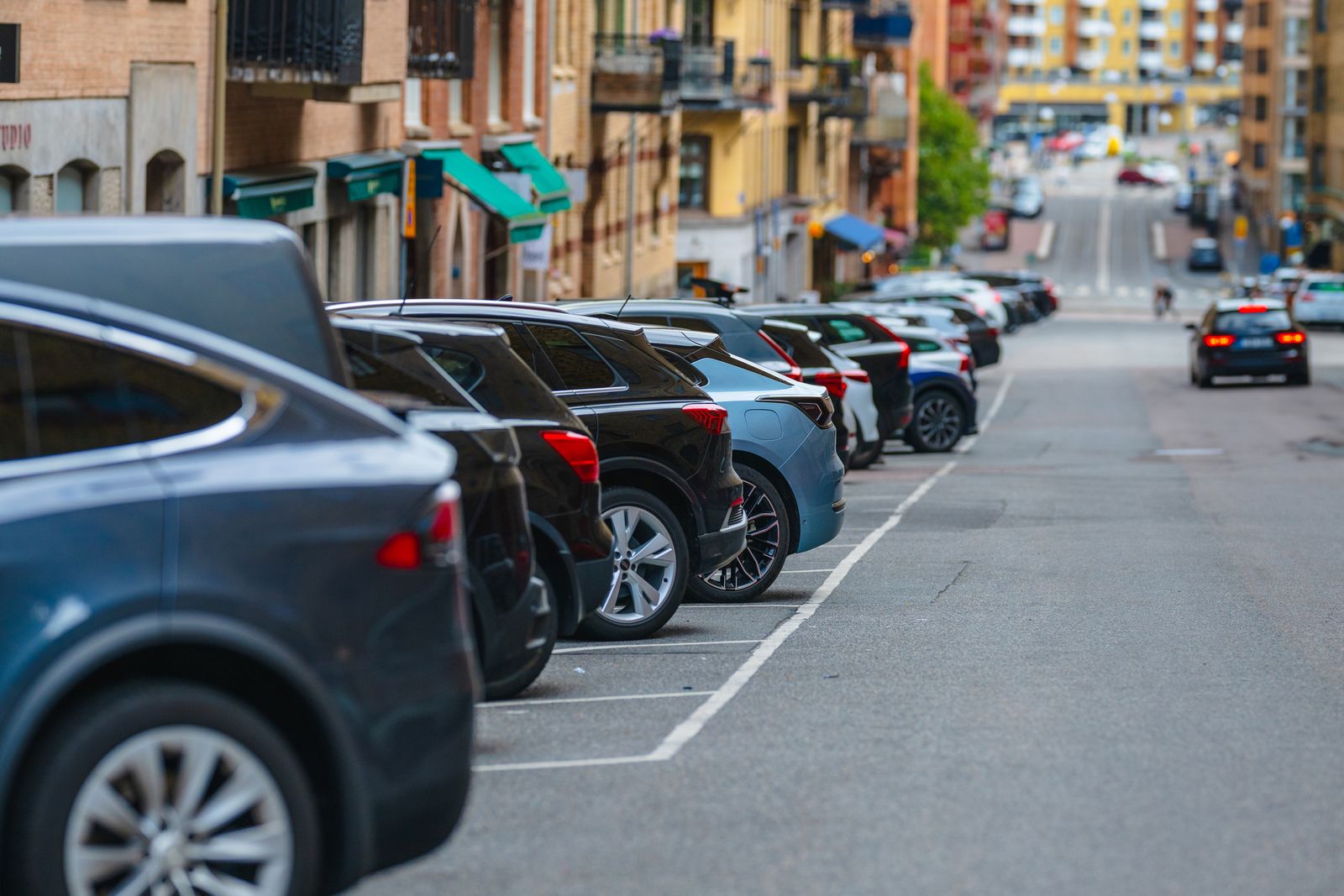
When most people talk about the falling rates of car ownership among young adults, it’s framed as an automotive story in terms of fewer drivers, lower sales, or a challenge for carmakers. But look closer, and the way people now feel about cars is a window into much deeper changes in consumer attitudes. Shifts that matter far beyond the car industry itself. From financial services and property to tech and retail, anyone seeking to understand or influence today’s consumers can learn from what’s happening to the car, that long-standing symbol of status and independence.
When I was a teenager, I spent hours watching Top Gear reruns (Top Gear being a humorous British TV show where cars are tested, raced, and celebrated). I knew I wanted a car one day. The independence, the prestige, the windows rolled down on a warm day.
Fast forward and I'm just turned 30, I work in automotive, and I've still never owned a car. My situation would have been unusual a generation ago, but now it's commonplace. Only 29% of 17-to-20-year-olds in England hold a full licence (RAC Foundation), down from 48% in the early 1990s (DfT). Among the broader 17-to-24 age group, fewer than half are eligible to drive (USwitch).
That decline is well documented, but what's often overlooked is what the car market can teach us about how consumer attitudes are shifting more broadly, especially for anyone attempting to research, segment, or understand consumer behaviour across categories. Few purchases sit at the intersection of identity, cost, practicality and ethics quite so starkly. The car doesn't just subtly reflect these shifts; it highlights them like the neon under glow on a Honda Civic.
Three shifts in particular stand out, each with lessons for brands and researchers across industries.
1. Your car isn’t your personality any more
The most visible shift is in how status works. For older generations, cars did a lot of heavy lifting as a status signal: an obvious marker of earnings, taste and independence. That monopoly is gone. Younger consumers still care about status (arguably more so), but the signalling is spread across a wider portfolio: phones, trainers, travel, a carefully curated social media presence. The car is just one big, risky purchase competing with many smaller, more TikTok-able ways to show you're doing well. When identity is built across a collage of signals rather than anchored in one big-ticket item, research that tracks brand aspiration within a single category may be missing the real competitive set entirely. This obviously isn't just an automotive problem, then, it's a question for anyone whose segmentation assumes their category still occupies the same space in consumers' lives that it did a decade ago.
2. Living life out of sequence, by design
Then there's life’s great conveyor belt. Licence, car, house, family – the old sequence assumed a predictable order, but that sequence has long since fractured. I passed my driving test after university, promptly moved to London, and balked at parking permits, insurance and congestion charges. A car didn’t make practical sense, so I didn't buy one. When housing, insurance and the cost of learning to drive are all competing for the same limited budget, the car stops being a natural next step, and while young people aren't necessarily more responsible than their predecessors, they certainly have less room to get it wrong. It's the embrace of a different sequence, and one that worked for me – a 30-year-old non-driver isn't ‘behind’, they've just prioritised differently (he says, trying not to sound defensive). Life-stage segmentation models that assume a fixed order of acquisition risk misreading consumers not just in automotive, but in financial services, property and beyond.
3. Negotiation, not conviction
And underneath all of this sits an ethical dimension that most frameworks still handle badly. Most young adults carry at least some awareness of climate impact and air quality, but it rarely overrides a decision. There are quiet internal negotiations going on: a smaller engine, an EV where the budget allows, driving less and feeling broadly fine about it. Not so much a hard green stance as a softer adjustment within existing constraints. In my humble opinion, the current global socio-economic climate has left many young people with enough constraints imposed on them already, never mind choosing to impose more on themselves. Anyone still segmenting consumers into green versus indifferent, conscious versus careless, and myriad other trendy counterpoints, is missing the messier middle where most real decision-making actually happens. The car market shows that with great clarity.
So, what does this means for brands?
These shifts point to a problem that extends well beyond automotive: the assumption of a default trajectory. Most car industry research still treats everyone as a driver-in-waiting, someone who will eventually buy and progress through a familiar ownership lifecycle. But the same logic underpins segmentation across categories. When your framework assumes a single path, it flatters the demand picture and obscures the people who've taken a different route.
A consumer who signals status through other categories, sequences their life differently, and makes quiet ethical trade-offs is not a less engaged version of the traditional buyer. They're a different type of consumer entirely, and research that treats them as a diluted version of the old model will keep producing insights that feel right but miss the point.
One last thought…
I expect I'll still probably own a car one day, but the terms will look nothing like those the industry assumed I'd follow. If the frameworks we use to understand consumers still struggle to account for someone like me, they're probably missing a lot of other people too.