The Road to Business Impact: The Consultative Journey
This third article in the Road to Business Impact series examines how consultative capabilities enable insights teams to turn insight maturity into real business impact.

The insights industry has improved its ability to achieve real business impact over the past 15 years, as demonstrated by GRBN’s Insights Maturity Study. This is the third in a series of articles exploring key drivers and strategies to enhance corporate consumer insights functions.
In our introductory article to this series, we laid out the four key drivers of insight maturity – structure and diversity, relationships, ability and communicating proof of value. In this article we concentrate on what we call “the consultative journey” to bringing about business impact – the consultative abilities and approaches that we need to learn, hone and deploy; how to reach and maintain true alignment with our stakeholders; and how to use our influence to ensure activation.
Why should researchers be consultants?
We live in a world characterized not just by change but by accelerating change. No longer are decisions made solely on the basis of primary research. Markets are no longer stable for months or years on end. Insights jobs based on just process and execution will soon no longer exist. Instead, we live in a world where AI processes and executes far faster than we ever could while the world around us mutates at an ever-increasing rate. Businesses and other organizations that rely on data are now inundated by the stuff, from a myriad of sources, and need to make decisions within hours and days rather than weeks and months.
But while data has become the oil of decision-making – and therefore a precious asset – the use of that data still relies on human understanding and, in some cases, intuition.
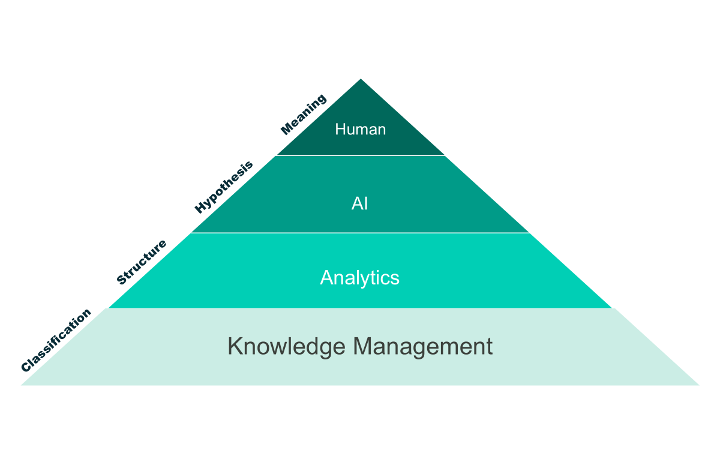
The modern age dictates that we need to build systems that can classify and manage the ever-growing lakes of knowledge that are open to us (especially the unstructured variety), deploy analytics to apply structure to them, and bring AI into the mix to build hypotheses around the resulting outputs. But discerning the meaning – the real meaning – inherent in all of this is still for the human being to bring to the table.
But bringing it to the table is only half the story. Once there, we need to convey that story in a way that promotes understanding and revelation, decisiveness and intention to act. That is the remit of someone who has a polymathic mind, is business savvy and can tell a compelling story. We call that someone a “consultant”.
But just what is a “consultant” and how can we define “consulting”?
The Oxford English Dictionary defines consulting as “the business of giving expert advice to people working in a professional or technical field”. This rather basic definition assumes that the consultant is themselves an “expert” in the given field, which we would take to be a sine qua non. But for a consultant to be successful in this endeavour, we would also argue that the advice, if taken, should lead on to a positive outcome for its recipient. That is, that it should have impact. For this to happen, we need to take into account six key questions:
To whom are we offering this advice? Unless the recipient is in a position either to act on the advice themselves or to influence the ultimate decision-maker(s), it is likely that it will fall on fallow ground;
How are we communicating with them? The environment in which we are offering our advice and the profiles of those to whom we offering it will determine not only the medium we use to communicate but also the tone and degree of specificity with which we do so;
How can we influence our audience? This depends not only on our own natural influencing styles but also on those of the people themselves whom we are seeking to influence. Adjusting our own style to match circumstances and recipient profiles is essential for success;
How do we tell the story? Proficiency and confidence in storytelling is key to enabling our advice (based on solid evidence) to actually reach the recipient in such a way that they are compelled to act;
How are we perceived? Does our audience have preconceptions as to who we are, what expertise we have and our right to be in the room? Pre-consulting preparation to establish our credentials is essential;
How much are we trusted? The ultimate deciding factor in whether you succeed in your endeavour to influence your audience and achieve a positive, impactful outcome.
The last two of these questions are critical to a consultant’s success – particularly if their roots are in research or analytics.
In essence, there are three fundamental attributes to being a successful consultant:
Knowledge – as researchers and analysts, we have ample proof of this. We are the bringers of evidence into decisions – this is our bedrock. But it goes beyond that – we also have to demonstrate deep knowledge of the business itself, its markets and external factors such as macro trends affecting demand, behaviour and attitudes.
Credibility and Trust – earned over time, this comes from building a reputation in which your stakeholders (especially those who are decision-makers) view you as wise, thoughtful, reliable and trustworthy.
Influence – if all of the above is true, then you are well-placed to enter the room with influence. Your audience is predisposed to respect your point of view and sees you as someone to listen and look up to. But influence isn’t guaranteed. It must be reinforced in how you show up as a consultant at every interaction.
Acting as a consultant
Much of our ability to own these attributes depends on our behaviour over time and the attitude we bring to the role. These display themselves in the core competencies and actions a consultant deploys in bringing value to their clients and/or stakeholders: absorbing, sense-making and guiding.
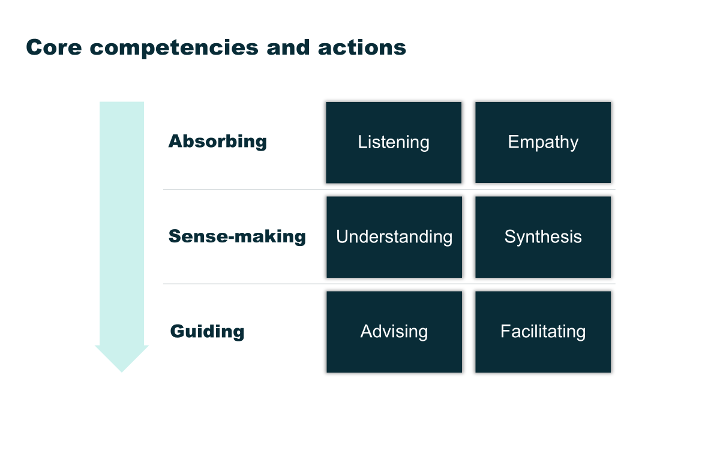
The first of these phases, absorbing, is where consultants follow the maxim of using their ears twice as much as their mouth. Not only does this allow for the consultant to absorb the issues at stake as well as the key ideas, feelings and positions of those involved but it adds to the gravitas of the consultant themselves. An old colleague of ours who worked at Ogilvy many years ago was revered throughout the organization. Why? Because, in meetings, he would listen intently for the entire time and then, only at the end, would he summarize what he had heard as well as his perspectives and advice. In addition to listening, however, the consultant needs to practice empathy, showing that he or she is walking in his or her stakeholders’ shoes. This doesn’t mean agreeing with them all the time, but it does mean displaying deep, empathetic understanding – the essence of the second level, sense-making.
To make sense of the issues with which your stakeholders are dealing, as well as all the innate and evidential knowledge you bring to the table, you as a consultant need to be a master at synthesis. Inevitably in today’s world, you will be dealing with a myriad of data sets and sources that have bearing on the issue. How do these fit together and how do you seek out the main story that they are trying to tell you? It is here that your polymathic skills come to the fore.
What do we mean by this?
Many researchers have a fairly narrow view of their remit: receive a request for research that can answer a specific set of questions, execute a design and deliver the results to stakeholders so that they can then decide what to do. That no longer suffices in the modern world. Instead, researchers of today are required to be polymathic in their consulting roles – that is, they are capable of deploying synthesis on three distinct levels before crafting the story they will take to stakeholders and management. These are:
Explicit (Analytical Integration) – where we consciously and deliberately combine data sets, physical data sources, explicit information, experiments, models and trend information.
Implicit (Knowledge Integration) – where we unconsciously bring in background knowledge, parallel analyses and trends, as well as empathetic, qualitative and ethnographic information and inadvertent observation.
Intuitive (Instinctive Integration) – this is where we quickly form (expert) judgments based on deep lived experience, leveraging gut feel, cognitive observation, parallel experience, stories, patterns and imagination.
We’re all good at Explicit Synthesis but need to flex our Implicit and Intuitive muscles to become truly impactful consultants.
‘To consult’ is an active verb
None of this matters, however, unless the outcome of your consulting is action. Not only that, it should be action that results in impact. Furthermore, the road to action does not start at the end of a project. A proficient consultant will start off the process right at the beginning by ensuring that they and their stakeholders are fully and explicitly aligned on a series of issues. This involves clarifying the business objectives, decision needs, expected outcomes and strategic impact while identifying who will use the insights and the role Consumer Insights will play in driving decisions.
Only with these questions answered - and agreed up front - can we start to plan for facilitation and activation. As its name suggests, this is the active process of engaging with all relevant stakeholders in purposeful conversations that are grounded in insight. Communication at this stage is a continuous process in which the initial output is synthesized and shared with stakeholders, thought starter questions are posed to generate debate and, ideally, people from a diversity of disciplines and functions are involved. The roads travelled at this stage can be numerous, including pre-worksheets that ask stakeholders for their reactions to what they are learning, activation workshops, ideation sessions and even ethnographic field trips.
The key to all of this is that, while ‘to consult’ is an active verb, the process of consulting is not supposed to be one where the consultant is laying down the law of the direction to be taken. Rather, it is about guiding stakeholders through a process of discovery, understanding, insight and decision-making. It is about being a credible, knowledgeable, savvy business partner who garners implicit and explicit trust as they guide their stakeholders on a journey of decision-making to business impact and success.
Simon Chadwick
Managing Partner at Cambiar Consulting, Editor in Chief of Research World at EsomarSimon founded Cambiar in 2004 to provide strategic assistance to research and insight companies as they face rapid and fundamental change. With 40 years of guiding and managing international organizations of various sizes and stages, Simon’s advice and counsel has helped many companies increase their value – to stakeholders, investors and clients.
He is an acknowledged industry leader, author and conference speaker. In addition to his role at Cambiar, Simon is also a Fellow of the Market Research Society, past Chairman of the Insights Association and Editor-in-Chief of Research World, ESOMAR’s global magazine.
He holds an MA in Philosophy, Politics and Economics from Oxford University, UK, and has done post-graduate studies at both Columbia and Harvard business schools in Change Management and Strategic Management.