Can AI Really Know What Consumers Will Pay?
Why the organisations that gain most from synthetic pricing research will be those with the best anchors, not the largest synthetic panels.

It is tempting to ask whether AI can tell us what consumers will pay. The question sounds reasonable, and a growing number of vendors now answer it with a confident yes. The difficulty is that the question assumes willingness to pay is a single number sitting inside each consumer, waiting to be retrieved. It is not, and it never has been.
Large language models can estimate, simulate and predict willingness to pay (WTP). What they cannot do is discover it, as though it were a hidden demographic attribute. I draw on the most recent evidence from pricing and synthetic consumer research to explain where these tools help, where they mislead, and how organisations can adopt them without mistaking precision for truth. I close with a practical operating framework, ANCHOR, that research and pricing teams can use to govern synthetic evidence before it influences a live price.
Willingness to pay was never a fixed number
Willingness to pay is the maximum amount at which a person would rather have a product than keep the money. In practice, we rarely observe it directly. We infer it from what people say, what they choose in structured trade-off exercises, what they actually buy, and how purchase probability changes when price moves. Each method captures a slightly different expression of the same underlying construct.
Consider a single consumer. She may say she would pay A$80, choose the A$70 option in a conjoint exercise, decline the product when asked to spend real money, and then buy it for A$95 three weeks later because a competitor is out of stock. None of these observations is her "true" WTP. Each is a reading taken with a different instrument under different conditions, and researchers actually estimate a conditional demand relationship.
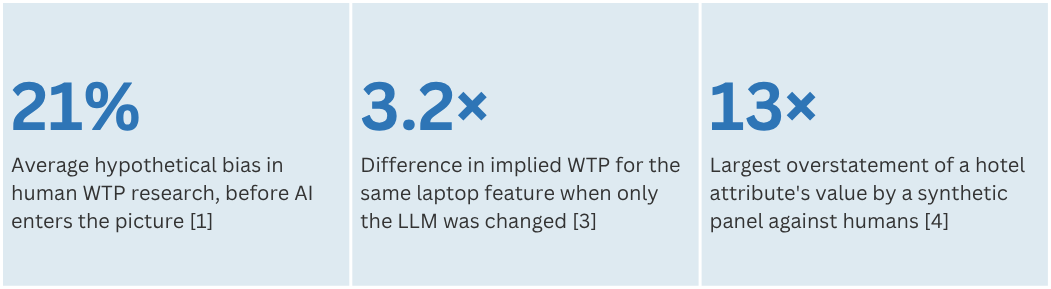
Human research has never measured this perfectly. A 2020 meta-analysis covering 77 studies, 115 effect sizes and more than 45,000 hypothetical and real WTP observations estimated average hypothetical bias at about 21% [1]. An earlier meta-analysis found a median ratio of hypothetical to actual WTP of 1.35, meaning stated valuations ran about 35% higher than real ones at the median [2].
This matters for how we judge AI. Large language models enter a field in which the ground truth was already imperfect, but they introduce a different kind of risk. Traditional conjoint research asks humans to make artificial choices and then uses an economic model to infer their preferences. LLM research can replace the human twice: first by creating a synthetic respondent, and then by treating that respondent’s choices as evidence about real consumers. Without an independent human or behavioural benchmark, the resulting price can be mathematically precise while being empirically untethered.
What the evidence actually shows
The research published over the past two years is now substantial enough to reject both extreme positions. Synthetic consumers are not yet replacements for research participants, and it is equally inaccurate to claim that LLMs cannot model preferences at all. The more useful question is under which conditions the synthetic signal can be trusted.
The same question, very different answers
Brand, Israeli and Ngwe’s updated 2026 Harvard Business School study compares synthetic conjoint responses with human consumer studies [3]. In pilot settings, some LLM-derived WTP estimates for consumer goods came within 50% of published human estimates. Across the main studies, however, baseline estimates included two- to threefold overestimation, wrong-signed preferences for laptop brand and screen size, and wrong-signed preferences for new toothpaste flavours. The authors state plainly that a researcher without a human benchmark would have had no reliable way of knowing in advance which estimates were wrong.
The same study shows how sensitive these results are to the model choice. For a built-in laptop projector, GPT-3.5 implied WTP of roughly US$1,074, while GPT-4o implied about US$333. Nothing about the product or the consumer changed. Only the foundation model changed, and the commercially relevant answer shifted by more than a factor of three.
This work also provides encouraging evidence. Fine-tuning on human data from the same product category corrected the direction of WTP for previously unseen cucumber and pancake toothpaste flavours, bringing the cucumber estimate within roughly 30% of the human value and bringing the projector estimate close to the human result. However, the gains did not generalise well. Laptop-trained fine-tuning worsened several tablet estimates despite overlapping attributes, and it still poorly reproduced differences between demographic groups. Human WTP for a MacBook differed sharply between men and women, at approximately negative US$50 and US$249, whereas the fine-tuned model produced roughly US$45 and US$57.
Coherent is not the same as correct
Reusens and colleagues’ 2026 hotel choice experiment demonstrates a failure mode that a conventional model dashboard could easily miss [4]. The synthetic choices were highly internally coherent, with McFadden pseudo R² values averaging approximately 0.63 for Llama 3.3 70B, 0.80 for GPT-4o and 0.92 for Gemini 3.1 Pro. Yet when the implied WTP was compared with a human benchmark, the gaps were large, as Figure 1 shows.
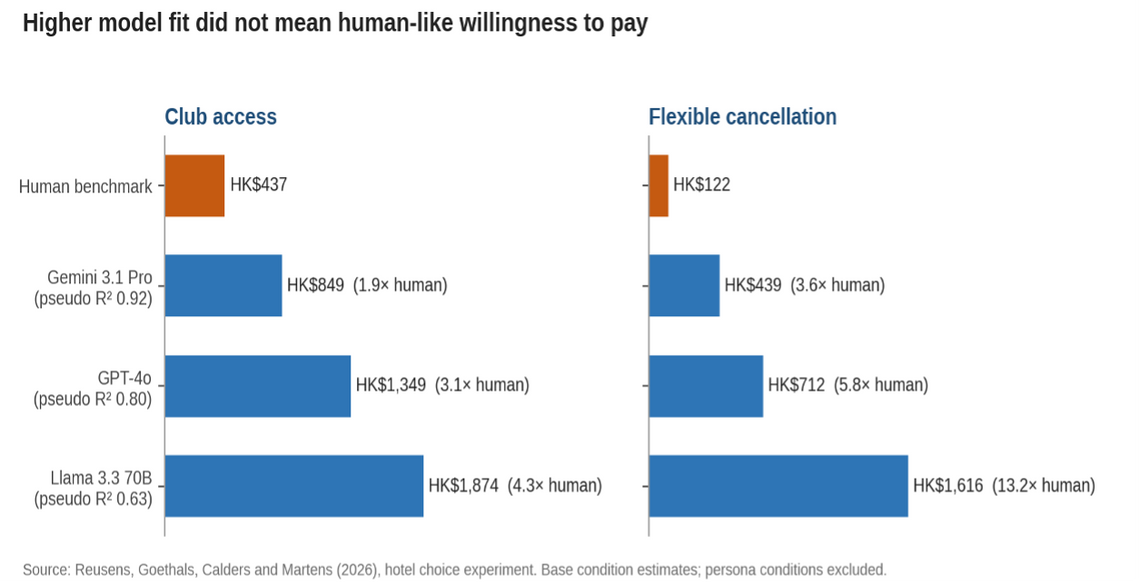
Figure 1. Implied WTP for two hotel attributes from three LLMs, compared with the human benchmark. Source: Reusens, Goethals, Calders et al. (2026).
Human WTP for club access was HK$437, and the models implied between 1.9 and 4.3 times that amount. For flexible cancellation, the human benchmark was HK$122, while the models implied between 3.6 and more than 13 times the human value. The model with the best statistical fit came closest, but even it overstated the value of flexible cancellation more than threefold.
Persona prompting made matters worse. Student personas chose the lowest-priced option in more than 95% of dilemmas, and a business traveller persona produced club access estimates many times the human business traveller benchmark, including one Gemini estimate above HK$92,000. The lesson I take from this is that persona labels should be treated as hypotheses about heterogeneity, not as observations of it. A good econometric fit to synthetic answers tells us the model is internally consistent. It does not tell us that the synthetic utility function belongs to humans.
Directionally useful, but compressed
The Nuremberg Institute for Market Decisions reported roughly 79% agreement between synthetic and real participants’ choices in its 2026 evaluation. It also found that synthetic respondents were substantially less variable than humans, deviated by about 1.2 points on average on seven-point attitude scales, and tended to overstate positive attitudes towards familiar brands. For pricing, this compression matters a great deal, because premium tiers, discount segments and versioning decisions all depend on the tails of the WTP distribution rather than its average.
Measurement design and grounding make a real difference.
Two further studies show where the field is heading. Maier and colleagues tested purchase intent across 57 personal care surveys and 9,300 human responses [6]. Rather than asking the LLM for a numeric Likert rating, they let it respond in natural language and mapped the semantic similarity of that response onto a rating distribution. This approach reached approximately 90% of human test-retest reliability, with distributional similarity above 0.85. At Stanford, researchers built agents grounded in two-hour qualitative interviews with more than 1,000 people. Across social science measures, those agents reproduced participants’ answers 85% as accurately as participants reproduced their own answers two weeks later.
Neither study sets prices. Together, however, they show that some limitations of synthetic consumers come from how we ask rather than from the model alone, and that the depth of person-specific grounding materially changes fidelity. My summary of the evidence is this: LLMs contain useful behavioural priors, elicitation determines how much of that signal is recoverable, grounding determines how relevant it is to the target market, and external validation determines whether it is safe to use.
Why “synthetic accuracy” is not one number
It is easy to line up the headline figures from these studies and conclude that synthetic research is somewhere between 79% and 92% accurate. That conclusion would be wrong. Choice concordance, relative test-retest reliability, distributional similarity, and pseudo R² answer different questions, and the last measures internal coherence rather than agreement with humans. Figure 2 places them side by side for exactly that reason.
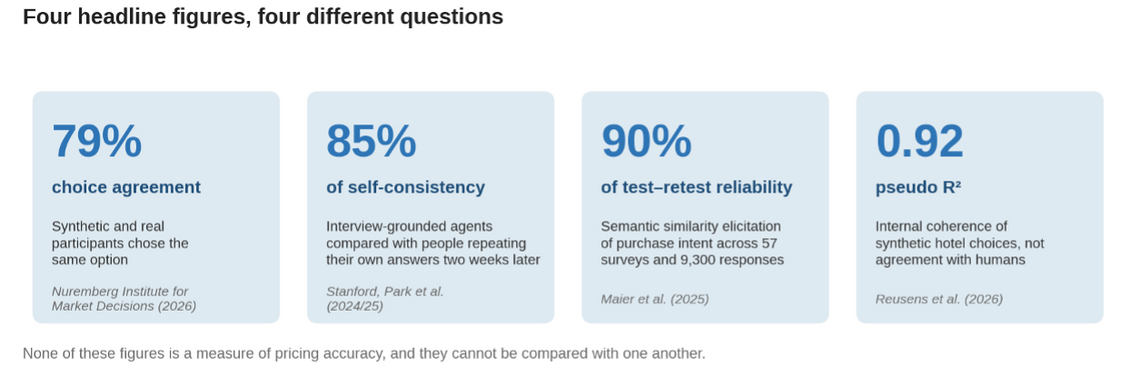
Figure 2. The most-cited synthetic research figures measure different constructs and should not be read as a single accuracy score.
For research leaders, the practical implication is that a single headline "synthetic accuracy" KPI is inadequate. I would be cautious about any claim of "90% accurate synthetic consumers" unless the denominator, benchmark, target variable, holdout procedure, and a cross-category transfer test are all disclosed. For pricing specifically, the most consequential benchmark is decision fidelity: would the synthetic evidence lead the organisation to choose materially the same price, configuration or price architecture as credible real-world evidence would?
The synthetic certainty paradox
Consider a business evaluating prices of A$79, A$89, A$99 and A$109. It generates 50,000 synthetic consumers, estimates demand at each price, and finds that A$99 maximises simulated contribution margin. What has actually been established is only that A$99 is optimal within the synthetic world’s demand function. Unless the generator has independently demonstrated that its price elasticity, attribute trade-offs, segment weights, outside option rates and tails resemble the real population, the market has not validated A$99.
Increasing the synthetic sample from 50,000 to five million makes the estimate more precise, but it does nothing to reduce systematic model bias. I describe this as the synthetic certainty paradox: sampling uncertainty falls while model bias stays exactly where it was. A synthetic panel can therefore produce very tight confidence intervals around the wrong answer.
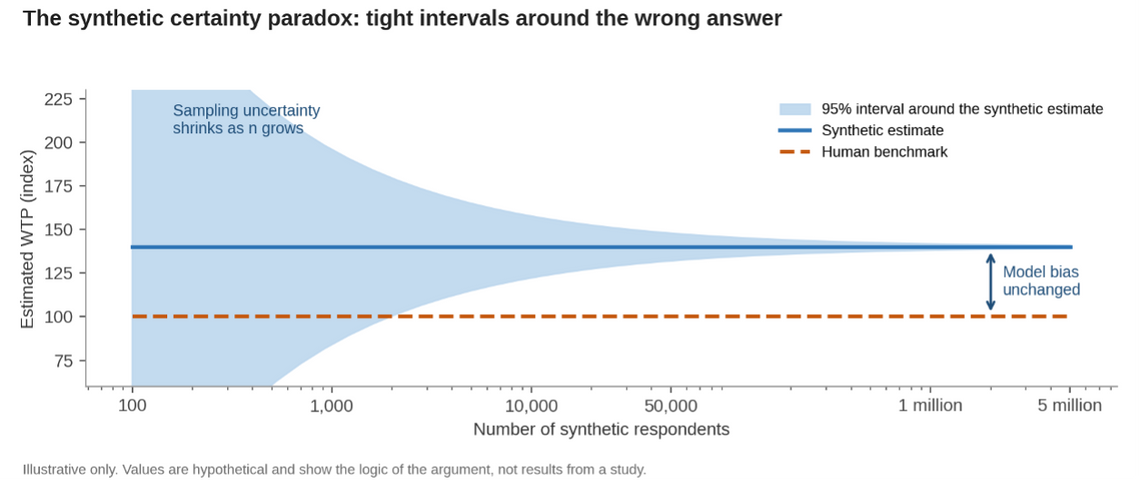
Figure 3. Illustrative only. As synthetic sample size grows, the interval narrows around the synthetic estimate, while the gap to the human benchmark remains.
The problem deepens when one synthetic system benchmarks another. If one LLM proposes the price, a second creates the consumer panel, and a third evaluates the respondents' explanations, agreement between them may reflect shared training data and cultural priors rather than independent evidence. The benchmark must therefore sit outside the generative loop. The key test is not whether a synthetic dataset looks real. It is whether a decision made from it performs acceptably when judged on evidence the synthetic system neither generated nor saw.
The ANCHOR framework
Synthetic data changes market research from primarily a sample acquisition problem into, increasingly, a calibration, evaluation and governance problem. ANCHOR is the operating model I propose for that shift. It has six activities: Anchor, Name, Create, Hold out, Operationalise and Revalidate, and it is designed to scale from a small organisation using an off-the-shelf LLM to an enterprise building proprietary synthetic panels. Its principle is straightforward: use real consumers to anchor reality, use synthetic consumers to expand, stress-test and accelerate it, and then validate decisions against independent human behaviour.
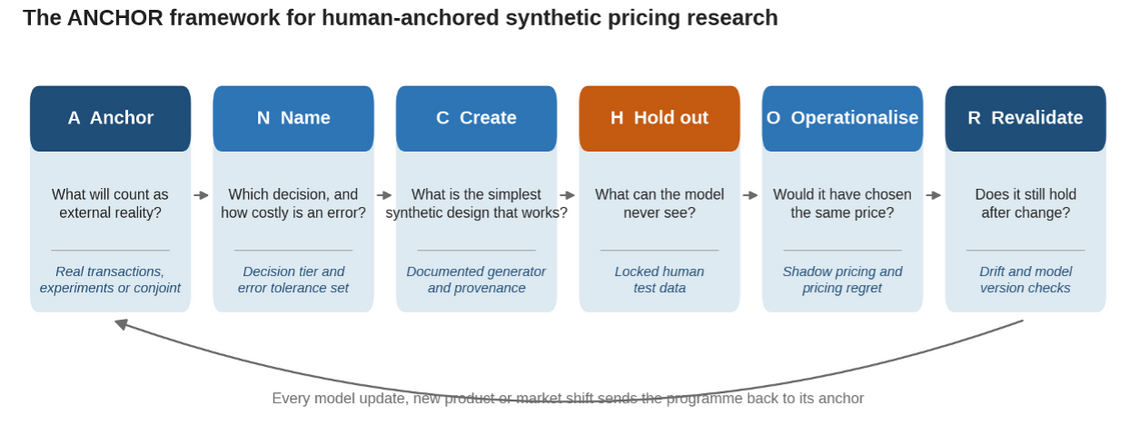
Figure 4. The ANCHOR framework. Each step answers one governing question and produces one piece of evidence that the next step depends on.
A: Anchor the reference frame
Before generating anything, decide what evidence will count as external reality. For established products, this is usually transaction histories and controlled price experiments. For genuinely new configurations, use well-designed conjoint or choice studies; for discovering attributes, use qualitative research. A pricing-quality dataset should include the offer and price shown, the alternatives available, purchase and no-purchase outcomes, promotions, channel, timing and sufficient price variation. WTP cannot be reverse-engineered with confidence from transaction data in which almost everyone saw the same price. Human data used to calibrate a model must also be kept separate from human data used to evaluate it.
N: Name the decision
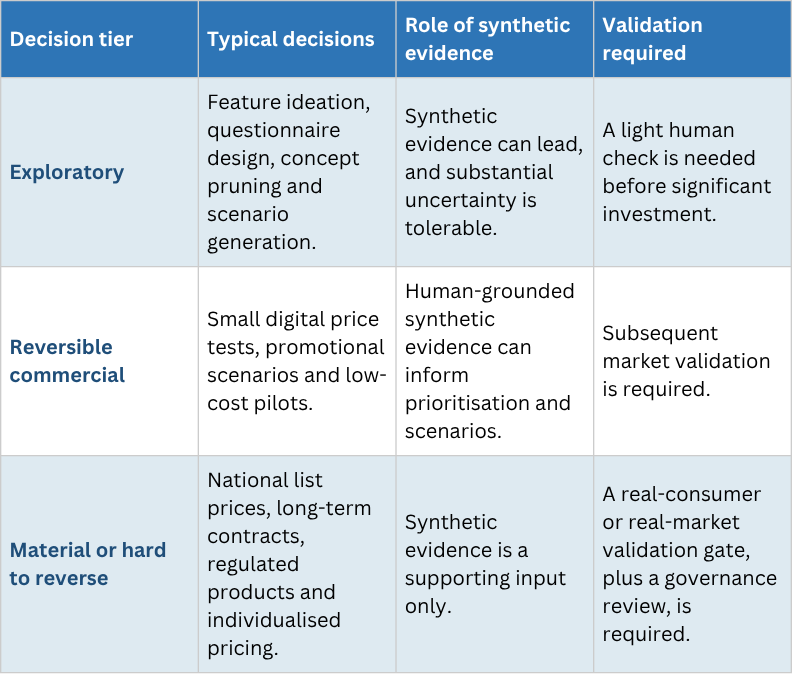
“Estimate WTP” is too vague to govern. Screening 100 product concepts, choosing between A$29 and A$35, sizing a feature premium, designing subscription tiers and personalising offers are different decisions with different consequences. Tolerance for synthetic error should follow from the economic and ethical consequences of the decision, not from whichever model metric looks most impressive. Table 1 sets out the three decision tiers I use.
Table 1. How much synthetic evidence each decision can bear
C: Create the simplest architecture that works
The term “synthetic respondent” hides at least four quite different products, shown in Figure 5. Potential fidelity generally rises as grounding becomes more relevant, but so do the privacy, governance and implementation burdens, and the evidence does not support treating these four approaches as substitutes.
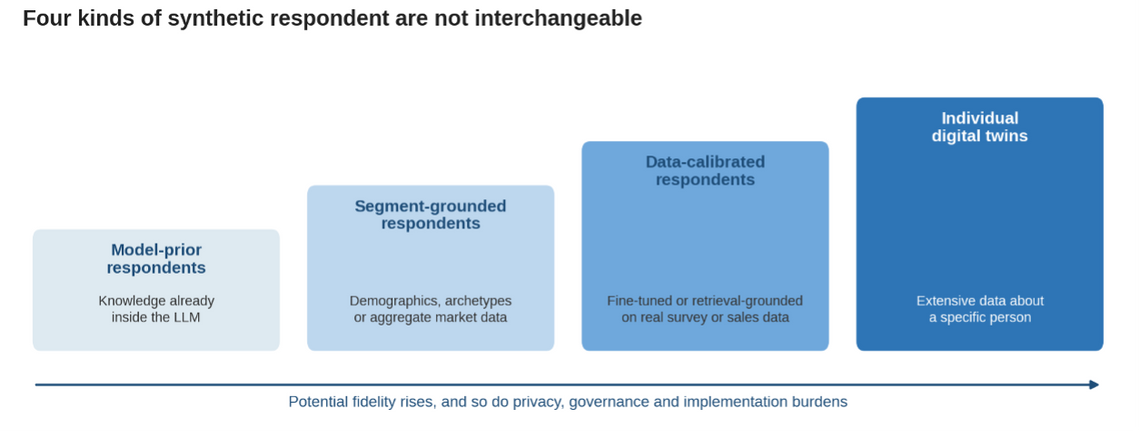
Figure 5. Four operational categories of synthetic respondents, ordered by grounding depth.
A small organisation with no historical research should not manufacture fictional precision by generating 100,000 demographic personas. It is better served by using a generic LLM to generate hypotheses and identify attributes, followed by a modest human validation exercise. An enterprise with several years of conjoint studies and transaction data can justify a grounded synthetic panel. In either case, I recommend documenting the LLM and version, prompt, temperature, sampling procedure, grounding sources, date, weighting and any fine-tuning, because the projector example shows how large between-model differences can be. Behavioural grounding should also be preferred over demographic stereotyping. What a customer has repeatedly chosen is generally a more relevant signal than what a model imagines “a 37-year-old professional mother” values.
H: Hold out a benchmark the model cannot contaminate
This is the most important governance control in the framework. The final human benchmark should never appear in prompts, retrieval documents, fine-tuning examples or prompt development. Where possible, use temporal holdouts, calibrate on earlier research and test against a later study, or use geographic and product holdouts. A mature program maintains three datasets: calibration data that grounds the synthetic system, validation data that supports model selection and prompt development, and locked test data opened only for formal evaluation.
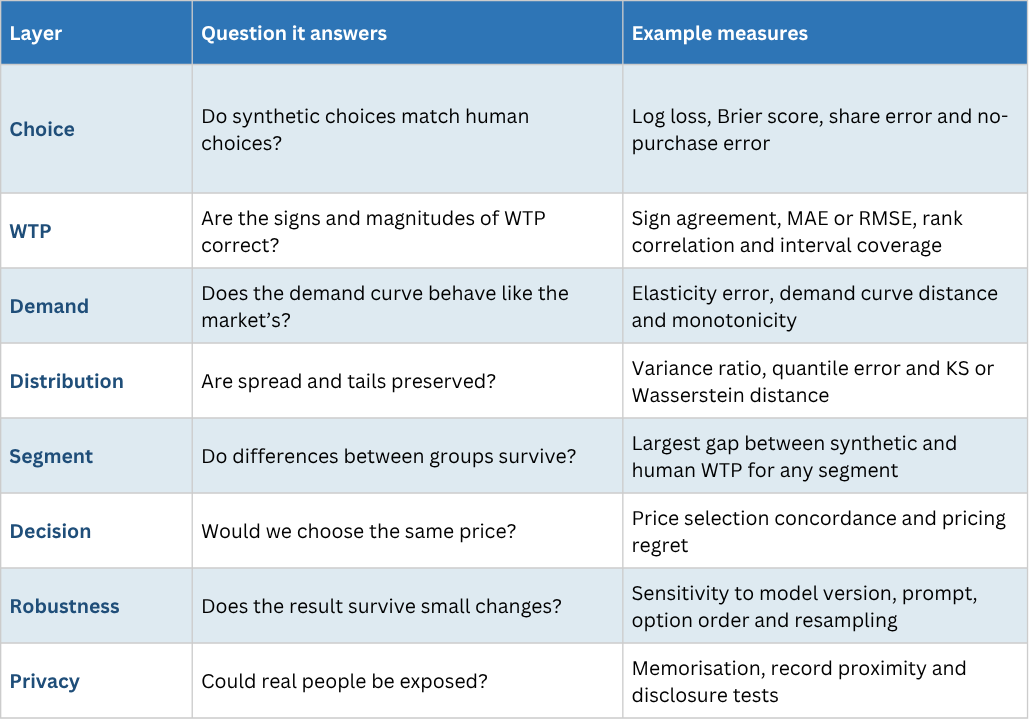
Materiality thresholds should be agreed before opening the holdout, because no universal WTP error is acceptable. A three-dollar mistake can be immaterial for a luxury hotel room and very costly for a thin-margin grocery product. Table 2 sets out the scorecard I recommend in place of a single accuracy KPI. Within it, a wrong-signed WTP estimate should be treated as more serious than a moderate magnitude error, because it reverses the direction of the inferred preference.
Table 2. A fidelity scorecard for synthetic pricing research
O: Operationalise through shadow pricing
Before synthetic outputs influence live prices, run them in parallel with conventional research across several decisions. The synthetic system makes and records its recommendation, while the conventional process determines the actual action. Once enough cases accumulate, compare decision concordance and pricing regret: the difference between the profit earned at the price real-world evidence would have chosen and the profit earned at the price the synthetic system chose, both measured against real demand. This gives the organisation its own empirical answer to the question "Can synthetic research work for us?" rather than relying on generic vendor benchmarks. Where live experimentation is feasible, the sequence then moves from synthetic simulation to human validation, then to a limited real-market experiment, and only then to a scaled pricing decision.
In my view, pricing regret belongs at board level. Model teams will naturally optimise WTP error or survey concordance, but executives should care about whether synthetic evidence produces materially worse pricing decisions than a credible benchmark. A synthetic panel with imperfect individual predictions that still selects almost the same optimal price is useful, while one with impressive response-level accuracy that places the optimum on the wrong part of the demand curve is not.
R: Revalidate continuously
A model that passed in March should not receive permanent accreditation. New foundation model versions, new products, inflation, new competitors and cultural change can all alter the relationship between synthetic and human preferences, and industry guidance from NielsenIQ similarly argues for continual calibration against recent behavioural data [8]. A governance dashboard should track synthetic-to-human WTP error, variance ratio, segment error, price recommendation concordance, realised pricing regret, model and version drift, the proportion of decisions receiving independent validation, and any fairness or privacy incidents.
Governance, privacy and trust
Synthetic pricing sits on a spectrum. At one end, a team asks a generic LLM to critique three hypothetical price architectures, no personal data is involved, and the main risk is commercial error. At the other end, an organisation builds an individual digital twin from purchase records, browsing history and inferred traits, estimates that person's reservation price, and uses the estimate to decide which offer they see. At that point, the output is no longer research. It can involve profiling and automated decision-making using personal information.
In Australia, the Office of the Australian Information Commissioner (OAIC) has stated that Privacy Act obligations apply to AI systems that handle personal information, and that AI-generated or inferred information can itself be personal information when it concerns an identified or reasonably identifiable person [9]. A statement such as "Customer 482 is likely to tolerate a 17% higher price" may look like a statistical prediction. Still, it can fall within those obligations, including the accuracy requirements of APP 10. From 10 December 2026, amendments introduced by the Privacy and Other Legislation Amendment Act 2024 will require relevant APP entities to set out in their privacy policies certain uses of personal information in automated decisions that could significantly affect individuals' rights or interests [10]. Whether a particular pricing application meets that test depends on its design and effects, so it requires legal assessment rather than assumption.
Beyond formal compliance, I would ask four questions of any synthetic pricing program. The first concerns fairness, since a system optimised purely on WTP may learn that customers with fewer alternatives or greater urgency will tolerate more, which can be predictive without being an acceptable basis for differential treatment. The second concerns representation, because reduced variance and poor reproduction of group differences can make unusual or marginalised consumers disappear statistically, even as the panel still claims demographic diversity. The third concerns transparency, as decision-makers need to know whether a finding came from an observed customer, a synthesised record, a generic persona, a fine-tuned model or a digital twin. The fourth concerns trust, and here I find the “front page test” useful: would customers regard the logic as legitimate if it were explained publicly?
What this means for research teams
I expect the researcher's role to shift in four ways. First, it shifts from respondent replacement to respondent leverage. Each well-designed human study becomes more valuable because it can calibrate, validate, and enable thousands of synthetic scenarios. Brand and colleagues' strongest gains arose precisely where relevant human data already existed. The second is a move from point-in-time projects to persistent research systems, in which a continuously calibrated synthetic market runs alongside a smaller, targeted stream of human ground truth.
The third is a shift from questionnaire expertise to measurement-system expertise, since the Maier results suggest that AI-native elicitation can outperform legacy survey items sent to an AI persona. The fourth is a move away from sample size as a signal of rigour. Once a model can produce a million observations overnight, "we surveyed 100,000 synthetic consumers" says very little. The scarce information is the independent set of real decisions against which those simulations have been calibrated.
This also changes where competitive advantage lies. If every competitor can query similar frontier models, access to the model is unlikely to be a durable advantage. A longitudinal body of recent, consented transactions, experiments, interviews and conjoint data, against which synthetic systems can be grounded and evaluated, is far more defensible.
Conclusion
The strongest case for AI in pricing is not a system that knows exactly what every customer will pay. It is a research architecture that combines the scale and counterfactual reach of generative models with the accountability of real human evidence. Used asymmetrically, synthetic consumers are well suited to eliminating weak concepts, exploring extreme scenarios, designing better human studies and narrowing the price range worth testing. The final few percentage points of a high-value pricing decision still deserve disproportionately more real evidence.
My recommendation is to treat synthetic consumers as an instrument, not a population. More generated observations do not create more truth, and the organisations that benefit most will not be those with the largest synthetic panels. They will be those with the best anchors.
I am interested in how others are approaching this. If your team already uses synthetic respondents in pricing or product research, what are you using as your anchor, and how do you decide when synthetic evidence is strong enough to act on?
References
[1] Schmidt, J. and Bijmolt, T. (2020). Accurately measuring willingness to pay for consumer goods: A meta-analysis of the hypothetical bias. Journal of the Academy of Marketing Science. https://link.springer.com/article/10.1007/s11747-019-00666-6
[2] Murphy, J., Allen, P. G., Stevens, T. et al. (2005). A meta-analysis of hypothetical bias in stated preference valuation. Environmental and Resource Economics. https://link.springer.com/article/10.1007/s10640-004-3332-z
[3] Brand, J., Israeli, A. and Ngwe, D. (2026). Using LLMs for Market Research. Harvard Business School Working Paper 23-062, updated 30 April 2026. https://www.hbs.edu/ris/Publication%20Files/23-062_1f58623a-ee21-44b9-a262-276047bc5543.pdf
[4] Reusens, M., Goethals, S., Calders, T. et al. (2026). Would a Large Language Model Pay Extra for a View? Inferring Willingness to Pay from Subjective Choices. https://arxiv.org/html/2602.09802v2
[5] Nuremberg Institute for Market Decisions (2026). Leaving Insight to Digital Twins? Promise, Progress and Limits of Synthetic Respondents. https://www.nim.org/en/publications/detail/leaving-insight-to-digital-twins
[6] Maier, B. F. et al. (2025). LLMs Reproduce Human Purchase Intent via Semantic Similarity Elicitation of Likert Ratings. https://arxiv.org/abs/2510.08338
[7] Park, J. S. et al. (2024/25). Generative Agent Simulations of 1,000 People. Stanford Institute for Human-Centered AI. https://hai.stanford.edu/policy/simulating-human-behavior-with-ai-agents
[8] NielsenIQ (2024, updated through 2026). The rise of synthetic respondents. Industry guidance. https://nielseniq.com/global/en/insights/education/2024/the-rise-of-synthetic-respondents/
[9] Office of the Australian Information Commissioner (2024/25). Guidance on privacy and the use of commercially available AI products. https://www.oaic.gov.au/privacy/privacy-guidance-for-organisations-and-government-agencies/guidance-on-privacy-and-the-use-of-commercially-available-ai-products
[10] Office of the Australian Information Commissioner (2026). Consultation on guidance for transparency in automated decision-making.https://www.oaic.gov.au/engage-with-us/consultations/consultation-on-guidance-for-transparency-in-automated-decision-making
I am a research strategist who partners with businesses, technology organisations, and SaaS teams to turn research into clear strategic direction and measurable impact. I work hands-on across the full research lifecycle, spanning academic, consulting, industry, and policy research, with a strong focus on evidence-based decision-making.
My expertise brings together data-driven insights, UX and CX (Voice of Customer) research, strategic research planning, stakeholder engagement, and robust survey and measurement design. Using a mix of primary and secondary research methods, I help organisations move beyond surface-level insights to understand what truly drives customer behaviour, product adoption, and long-term value.
As a customer-centred, insights-led researcher, I focus on uncovering human behaviours, habits, motivations, and attitudes to help teams design products, services, and strategies grounded in real-world needs. I’m particularly drawn to emerging technologies and SaaS environments, where strong research can shape how people learn, work, and interact at scale.
Beyond UX and customer research, I bring deep experience in strategic research program design, vendor management, and cross-sector collaboration. I work closely with senior stakeholders and interdisciplinary teams to ensure research findings are translated into actionable strategy, product roadmaps, and policy-ready recommendations.
I actively contribute to the research and technology community through thought leadership, including writing on Medium and publishing a LinkedIn newsletter focused on research practice and emerging industry trends. I also partner with SaaS companies to evaluate user research platforms and capabilities, providing practical, real-world feedback that informs product innovation.
Forward-thinking and outcomes-focused, I bridge academic rigour, industry innovation, and strategic insight to help organisations build better products, make confident decisions, and deliver meaningful customer experiences.