How cultural research can help marginalised communities reconnect with nature and what brands must do next
Community-led outdoor groups are redefining nature beyond the traditional white, individualistic image. Research reveals structural, cultural, and emotional barriers that limit access, highlighting the need for more equitable outdoor spaces.

For decades, the outdoors industry has sold a singular idea of nature: white, remote and individualistic. But across the UK and the US, a counter-movement has been taking shape. Community-led outdoor collectives – created by and for Black, Brown, Latinx, queer and marginalised groups – are redefining who nature is for, how it’s accessed, and what belonging outdoors can look like. However, this is not a new trend; today’s outdoor communities stand on centuries of collective effort to carve out access to nature for marginalised groups.
The question is not whether these communities want to be in nature. It’s why so many systems still make it hard for them to stay. As Black and Mixed-race researchers, it was crucial that this study not only shed light on the realities of underrepresented communities’ relationship with nature, but that we also provided solutions, frameworks, and tangible actions that can be taken to make the outdoors a more equitable space.
Over the past year, we set out to understand how underrepresented people relate to the outdoors, speaking with six outdoor collectives across the UK and US, and surveyed 600 Black, Mixed, Asian, African American, Biracial and Latinx outdoor enthusiasts. What emerged wasn’t a single barrier, but a web of structural, cultural, and emotional ones – some of which have been reinforced by brands, their products, and their marketing.
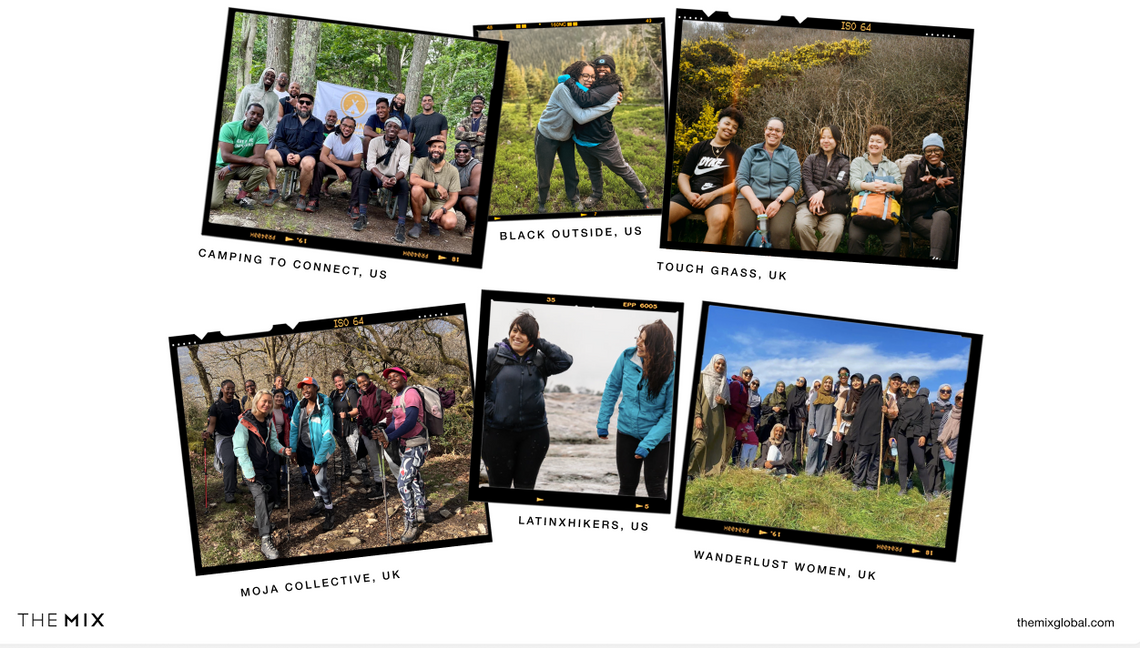 The collectives interviewed as part of Second Nature, The Mix Global 2025
For example, in the UK, people from ethnic minority backgrounds are almost three times more likely to live in areas with the least access to green space. Cost compounds this, with outdoor gear & transport costs - plus time - increasingly putting it out of reach. But the most pervasive barriers are cultural, with nearly half of respondents reporting they hadexperienced negative encounters outdoors, from subtle exclusion to overt hostility. The insight: When you rarely see people like you in outdoors-focused media, it sends a clear message about who belongs – and who doesn’t.
And yet, the desire to be in nature runs deep. For many marginalised communities, nature is not a lifestyle choice but a cultural inheritance. 72% of respondents told us that spending time outdoors helps them express or preserve their cultural identity. Limited access doesn’t just restrict leisure; it disrupts ancestral connection.
This helps explain why collectives matter so much. Eighty-one percent of people told us they feel safer in nature when they’re with others who share similar cultural or racial backgrounds. These groups aren’t exclusionary by nature – they are protective by necessity. Safety, visibility and trust are not “nice to haves” outdoors; they are prerequisites.
It has been noted that the outdoor industry has reached for representation as the solution, but our research suggests that representation is only the starting point. People notice who appears in campaigns – with 71% saying seeing diverse identities in outdoors-focused media increases their sense of belonging – but they also notice when inclusion stops there. Product design, fit, aesthetics, retail environments and partnerships all signal who is being thought about. It’s telling that only 7% of respondents in the UK and 19% in the US feel satisfied with current outdoor apparel options.
Gear, in particular, carries cultural weight. For some, “looking the part” is a form of protection - a way to reduce scrutiny. For others, it’s something to reject entirely – a refusal to assimilate into an aesthetic that was never made for them. These tensions don’t show up in sales data, but they shape behaviour all the same.
Through these insights, we recognised that these collectives are already doing the work the industry claims to aspire to: building community, lowering barriers, creating safer pathways into nature. So, we treated the participants as experts in their own right and designedoutputs that served the collectives’ ambition as much as potential commercial gains. It also meant thinking differently about how insight lives in the world. Research doesn’t end when the report is written. Ever. Not at The Mix anyway.
That’s why we launched Second Nature during Advertising Week NYC, creating a space for collective founders, members, global brand leaders, and research practitioners to connect, learn from one another, and build stronger relationships.
We’re known for turning rich insights into impactful, memorable, and beautifully designed creative outputs and Second Nature was no exception: we created bespoke branding, a podcast series, and a zine for the launch event…as well as sustainable, reusable, branded lunch boxes.
 Second Nature NYC Launch Event, 2025
We started with a guided walk across the High Line, led by Camping to Connect founder Manny Almonte, to ground the conversation in place.
A multi-sensory installation brought the findings of our work to life. A panel with collective leaders and brand partners like AllTrails & Diageo moved beyond surface-level inclusion toward practical collaboration. And a post-panel workshop surfaced new ideas for creating shared spaces without draining community resources.
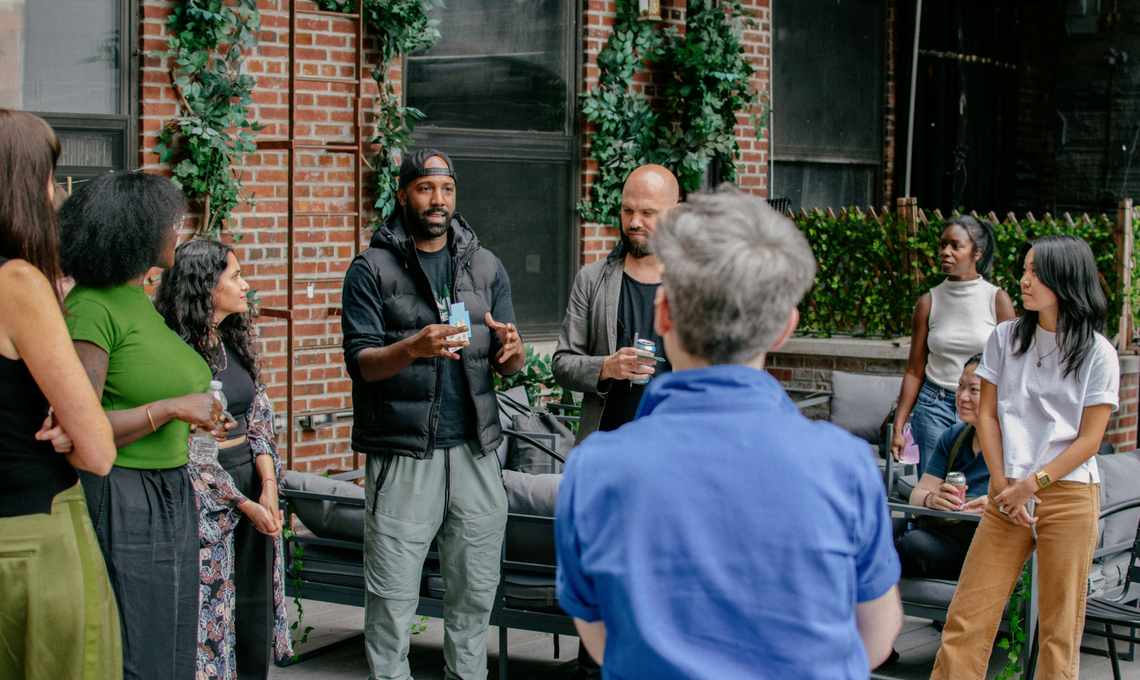 Second Nature Launch Event, NYC 2025
The most powerful outcome though wasn’t visibility – it was alignment. Collective founders recognised shared struggles across geographies. Brand leaders confronted the limits of their current approaches. And we gained clarity on which insights resonated because they reflected lived reality, not abstract strategy.
The ultimate takeaway: The future of the outdoors will not be unlocked by louder campaigns or broader targeting. It will be shaped by whether brands are willing to listen differently, design differently, and support meaningfully. Because the growth opportunity is real – but it will only belong to those prepared to move beyond representation and into responsibility and respect.
What next? We are currently planning to bring this experience to London in early 2026 andare continuing to explore creative ways to foster meaningful growth in the outdoors category in partnership with the community. If you want to join us, then you can access the full report & sign up here. We look forward to seeing you.
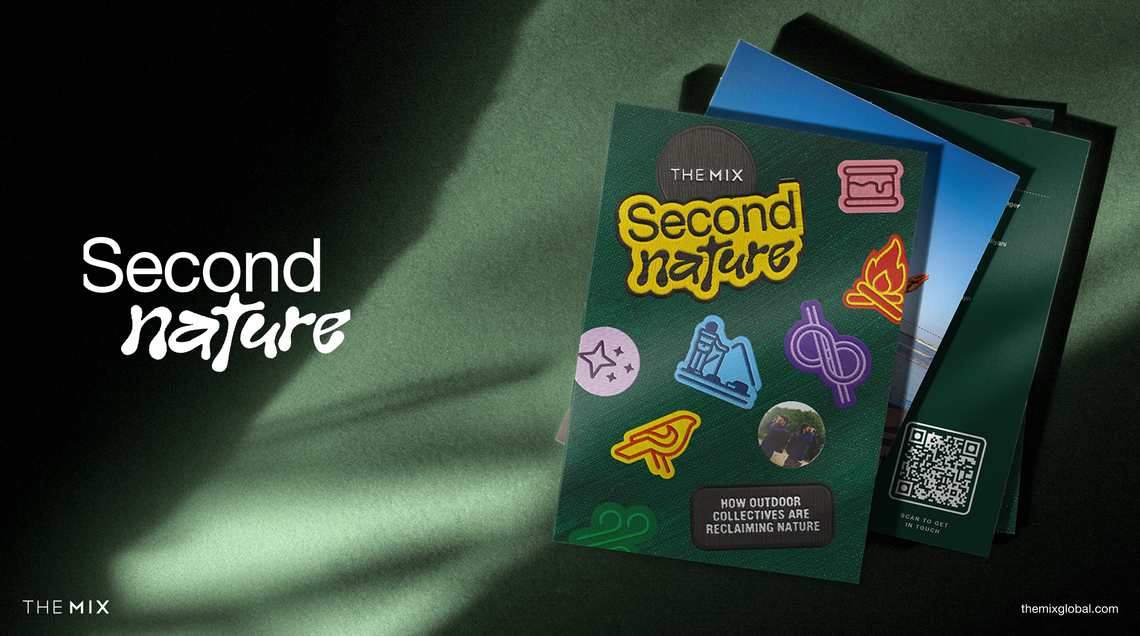 Second Nature Zine Report, The Mix Global 2025
Appendix
About the collectives we spoke to:
• Touch Grass: Toni-Ann Murphy (founder) & Natalie (community member)
Toni created Touch Grass in 2023, Touch Grass became registered as a CIC shortly after. Touch Grass focuses on creating outdoor community for Queer Women and Non-Binary people of colour. They facilitate camping trips and nature retreats throughout the UK. They are currently planning their first retreat in this summer.
• Moja Collective: Shukura (founder) & Ijaz (community member)
Shukura founded Moja Collective in January 2024 after going on hikes with predominantly white collectives and having an unfortunate experience which left her feeling unsafe. Through this experience and Shukura’s desire to provide safety and education in outdoors spaces to Black and Brown people, Moja Collective was born. They now do hikes and trail walks all throughout the UK, with the aim to create more representation of Black and Brown faces in the outdoors.
• The Wanderlust Women Amira Patel (founder) & Ayisha (community member)
The Wanderlust Women is an initiative born out of the need to normalise Muslim women exploring and being visible in the outdoors. The pandemic ignited Amira’s need to move from solo expeditions to running community focused events. Ayisha joined the collective in 2022 and now serves as the compliance lead. The Wanderlust Women combine faith and adventure into their global and national expeditions. The journey of The Wanderlust Women has been featured in BBC, The Guardian and Tedx. They are currently planning a trip to Antarctica in 2026.
US:
• Camping to Connect: Manny Almonte (founder) & Ryan (community member)
Camping to Connect is a BIPOC-lead nonprofit organisation with the aim of confronting teen social isolation by fostering in-person connection through nature. Manny created Camping to Connect as a program of The Young Masterminds Initiative which centres men of colour. Camping to Connect run events such as weekend camping trips, hikes and wellness workshops in NYC and Denver.
• Black Outside: Alex Bailey (founder) & Kamau (community member)
Black Outside is a nonprofit organisation based in Texas, with the aim of connecting Black youth to the outdoors. In 2018, Alex shadowed summer camps and outdoor programs across the U.S to better understand the impact outdoor programming has on the youth. He took those learnings to build Black Outdoors which now serves 150+ Black youth across Texas. Kamau is one of the young people who takes part in Black Outdoors events and now seeks to lead his own outdoor events. Black Outside’s work has been featured on BET and TedX.
• LatinxHikers: Adriana Garcia (founder)
LatinxHikers was founded in 2017 by Adriana Garcia and Luz Lituma. It started as an online platform where Adriana and Luz shared the stories of outdoorsy Latinx women, as they noticed a dearth of Latinx stories in popular outdoors channels. In 2018, they took it offline and begun hosting hiking events on trials in the South and beyond. The ethos of LatinxHikers is to break down barriers in the outdoors by providing representation and empowering the Latinx community.
• Quantitative survey: 300 Black, Mixed, and Asian outdoor enthusiasts in the UK, along with 300 African American, Biracial, and Latinx outdoor enthusiasts in the US exploring their relationship with nature, barriers to the outdoors, media representation, shopper journeys, and relationship with apparel and outdoor equipment.
Through our conversations with collective founders, community members and outdoors enthusiasts we arrived at five key takeaways:
1. There’s not just one barrier to nature: We heard repeatedly how many obstacles still stand between Black, Brown and Latinx communities and the outdoors. Some are financial, such as the high cost of outdoor gear and the rising price of transport that makes travelling to nature spaces more difficult. Others are environmental. For example, 40% of people from ethnic minority backgrounds in the UK live in areas with the least access to green space, compared with only 14% of white people. There are also cultural barriers. When Black, Brown and Latinx people rarely see individuals who look like them represented in outdoor campaigns, it creates a feeling that they do not fully belong in those spaces. On top of all this, almost half of the Black, Brown and Latinx people we surveyed in the US and UK reported experiencing negative encounters, whether subtle or overt, while outdoors. All of this made it clear that access to nature is not limited by a single factor. It is shaped by many interconnected barriers, some of which exist by design.
2. Lack of access to nature limits ancestral connection: Many marginalised groups place an importance on being in nature because their ancestors grew up in rural environments. 72% of Black, Brown and Latinx people in the UK and US said that spending time in nature helps them express or preserve my cultural identity. Having limited access to the outdoors severs a vital connection point to heritage and identity.
3. Safety in numbers due to lack of trust: 81% of marginalised groups prefer taking part in outdoor activities with people who have a similar racial, ethnic, cultural background as them. Due to past unfortunate experiences and lack of trust, they now feel safer being in nature with people who look like them.
4. Gear holds deeper cultural meaning: Marginalised groups have a nuanced relationship with outdoors gear. Some people want to “look the part” whilst in the outdoors, with the hopes that it limits discrimination. Others reject this notion and want their kit to reflect their personalities and cultural identities
5. Representation is just the beginning: There are expectations from collectives for brands to go deeper across every touch-point - from representation in branded content, to product innovation that reflects diverse needs, to retail experiences that feel genuinely inclusive.