On Track for Growth: Why Rail Freight Is Becoming the Backbone of Global Trade
The global rail freight industry is experiencing growth as businesses shift cargo from trucks and ships to rail in response to rising fuel costs, stricter emissions regulations, and supply chain challenges.
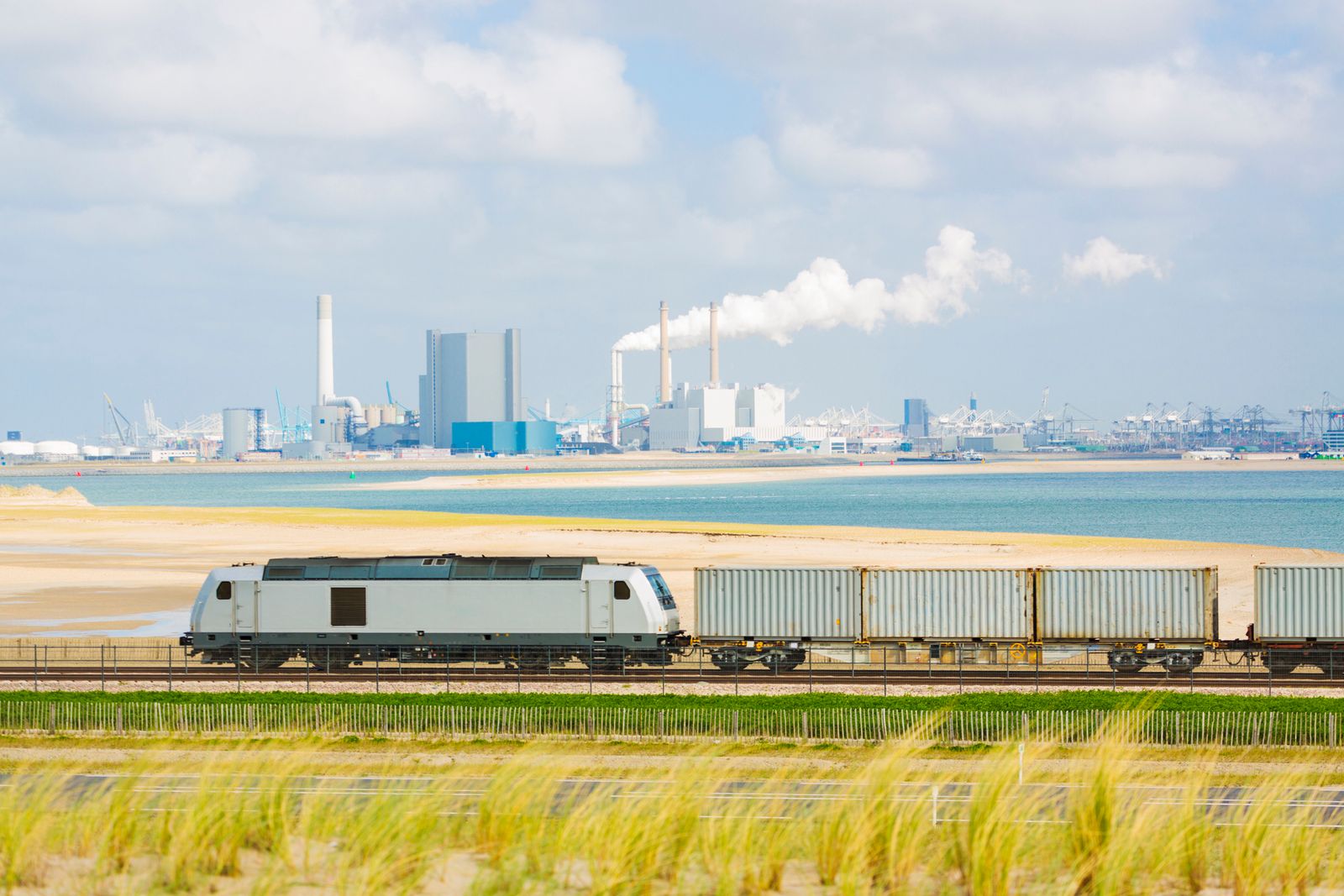
Somewhere between a coal mine in Queensland and a steel mill in Rotterdam, a quiet transformation is taking place. Freight that once moved almost exclusively by truck or ship is finding its way back onto rail — not out of nostalgia, but out of necessity. Rising fuel costs, tightening emissions rules, and supply chains stretched thin by years of disruption have pushed shippers to reconsider one of the oldest transport technologies in existence. The result is an industry worth roughly $353 billion in 2025 and on pace to top half a trillion dollars within the next decade.
A Market Building Momentum
Industry estimates put the global rail freight sector at close to $367 billion in 2026, with projections showing it climbing toward $550 billion by 2035 — an annual growth rate of about 4.6%. In terms of physical volume, that translates to freight movement rising from roughly 11,600 billion tonne-kilometers to nearly 14,700 billion by the mid-2030s.
What's striking is how broad-based this growth is. It isn't concentrated in one commodity or one region. Coal, grain, chemicals, containerized consumer goods, and even automotive parts are all contributing to rail's expanding footprint, and the reasons behind that expansion are as much about economics as they are about environmental policy.
Bulk Cargo Still Rules the Rails
Non-containerized freight — think coal, iron ore, fertilizers, and construction aggregates — remains the single largest category, accounting for roughly half the market. This isn't surprising. Rail has always excelled at moving enormous, heavy loads over long distances at a cost per ton that road transport simply can't match. Mining, agriculture, and energy companies depend on this capability daily, and specialized infrastructure like heavy-haul corridors and dedicated bulk terminals only reinforces rail's advantage here.
That said, containerized freight is where the real acceleration is happening, with growth rates outpacing bulk cargo by a wide margin. E-commerce, just-in-time manufacturing, and the push toward door-to-door logistics are all favoring standardized containers that can move seamlessly between ship, rail, and truck. Ports and logistics operators are investing heavily in inland container depots and better rail-port connectivity to keep up with this shift.
A similar pattern shows up when you look at how freight is booked. Full carload service — where an entire wagon or train is dedicated to a single shipper — still dominates, prized by industrial customers who value predictable scheduling and lower per-unit costs. But intermodal transportation, which stitches together rail, road, and sea into one continuous journey, is growing faster than any other service category as companies chase efficiency across increasingly global supply chains.
Sustainability Is No Longer a Side Conversation
It would be hard to talk about rail freight's rise without mentioning climate policy. Rail produces a fraction of the carbon emissions per ton-mile that trucking does, and that gap has turned rail into a genuine climate strategy rather than just a logistics preference. Governments across Europe and Asia in particular are actively encouraging companies to shift freight off highways and onto tracks, backing that push with investment in electrified lines and energy-efficient locomotives.
This regulatory tailwind is reshaping corporate decision-making too. Large shippers under pressure to hit emissions targets are increasingly treating rail not as a fallback option but as a first choice for long-haul cargo, particularly for hazardous or high-value goods where safety regulation also favors rail's more controlled operating environment.
Technology Is Quietly Rewriting the Rulebook
Behind the scenes, rail freight is undergoing a digital makeover. Sensors that monitor wagon health in real time, GPS-based tracking that gives shippers minute-by-minute visibility into their cargo, and predictive maintenance systems that catch mechanical problems before they cause delays are becoming standard rather than exceptional. Automated yard operations and AI-assisted scheduling are trimming the operational friction that has historically made rail less nimble than trucking.
This digitalization matters because it addresses rail's oldest weakness — flexibility. A train can't reroute around traffic the way a truck can, but better forecasting, automated switching, and smarter terminal operations are narrowing that gap considerably.
Where the Growth Is Happening
Geographically, Asia Pacific has emerged as both the largest and fastest-growing region, powered largely by China's enormous rail freight volumes and India's aggressive push to build dedicated freight corridors under national infrastructure programs. China alone accounts for a substantial share of the regional market, driven by industrial output, cross-border rail links tied to the Belt and Road Initiative, and continued investment in heavy-haul lines.
North America and Europe, meanwhile, represent mature but still-expanding markets. The U.S. rail network remains one of the most extensive in the world, built around major Class I operators who move enormous volumes of coal, grain, and industrial goods across the continent. A proposed merger between two major U.S. rail carriers, aimed at creating the first true coast-to-coast freight network, signals just how much consolidation and scale still matter in this industry. Europe, for its part, continues to lean on policy — from the EU's decarbonization agenda to investment in digital signaling — to keep freight moving off congested highways.
Challenges That Aren't Going Away
None of this growth comes without friction. Rail infrastructure is enormously capital-intensive, and building or upgrading networks in developing regions remains a slow, expensive process. Rail also can't match the door-to-door flexibility of trucking, which means multimodal coordination — and the added complexity that comes with it — will remain part of the equation for the foreseeable future.
The Bigger Picture
Rail freight's growth story isn't about a single breakthrough technology or a single government mandate. It's the product of several forces converging at once: cost pressure, climate policy, e-commerce-driven logistics demands, and a wave of digital tools finally making an old industry more responsive. Whether that convergence is enough to push the market past $550 billion by 2035 remains to be seen, but the direction of travel looks fairly clear.
Source: https://www.gminsights.com/industry-analysis/rail-freight-market