Reframing Lives, Restoring Value: The #Invaluables Journey in Bengaluru
To shift how Bengaluru sees waste pickers—from invisible and undervalued to recognized, respected, and essential.

In Frames of War, Judith Butler argues that societies operate within “frames” that determine which lives are seen as real, grievable, and worthy of protection—and which are rendered invisible, already forfeited, or less than fully human. At the heart of this argument lies the concept of precariousness: the shared vulnerability of all human life. Yet this vulnerability is not experienced equally. Social and economic systems expose certain populations to deeper insecurity, exclusion, and risk.
In 2020, BBC Media Action joined Saamuhika Shakti in Bengaluru - a collective of 11 organisations working towards a common goal of putting waste pickers on the path to a more resilient future, helping them step out of the shadows and into recognition. Towards this end, reframing how the city sees its waste pickers became central to our work. To bring waste pickers’ contribution and recognition to the forefront, we implemented the Pathway to Respect, Identity, Dignity and Empowerment (PRIDE) project under the H&M Foundation-supported Saamuhika Shakti initiative.
The goal was clear and uncompromising:
To shift how Bengaluru sees waste pickers—from invisible and undervalued to recognized, respected, and essential.
Our mandate was not simply to raise awareness, but to shift perceptions—challenging the deeply embedded frames that rendered waste pickers invisible, undervalued, or seen as lesser. To do this, we first had to understand how these narratives shaped public attitudes and how they contributed to making waste pickers’ lives and labour appear unworthy of recognition. Only by confronting and reshaping these perceptions could we begin to restore dignity and professional identity to those who sustain the city’s circular economy.
The Weight of Invisibility
Our formative research and baseline study conducted in 2020-21 at the project initiation stage, revealed a stark paradox. While waste on the streets was visible and widely considered a civic concern, the people who clean, sort, and manage that waste were largely unseen.
When asked directly, 55% of respondents described waste pickers as “dirty.” 44% believed they should not be allowed into residential complexes, citing fear of theft. The COVID-19 pandemic further intensified stigma and repulsion.
This discrimination was not only external. Interviews with waste pickers revealed that many deliberately avoided interactions with residents to escape harassment—choosing invisibility as a form of self-protection.
The issue, therefore, extended beyond waste management systems. It was embedded in social attitudes, fear, and prejudice. Waste pickers were framed as unskilled, dirty, and marginal—rather than as workers performing critical environmental services for the city.
A Theory of Change and Communication Strategy: Reframing Recognition
Butler describes “frames” as representations that can be reshaped. Our research made it clear: we needed to reframe how waste pickers were represented in the public imagination.
Waste picking was seen as menial and dirty rather than skilled and essential. Their labour was dismissed as low-value, and their identities were stripped of dignity. To challenge this, our Theory of Change focused on creating awareness and recognition for the role of waste pickers and reframing their identity. If waste pickers could be revealed as skilled workers whose labour sustains the city’s circular economy, then appreciation, empathy, and respect could follow. Crucially, the goal was not pity or charity, it was recognition of denied humanity and professional worth.
Our communication strategy focused on four objectives with the purpose of leading waste pickers from being invisible to being considered invaluable:
Reveal waste pickers—their skills, labour, and contribution to the city
Spark discussions that encourage interconnectedness through appreciation and recognition
Build empathy and respect, not sympathy
Reframe waste picking as dignified, skilled, and indispensable work
The #Invaluables campaign was designed as a multi-round, social media–led intervention to move citizens from indifference to appreciation—from seeing waste pickers as “dirty” to recognising them as skilled environmental stewards. Four rounds of intervention planned in the first four years touched upon the different communication objectives.
Research Methodology
Impact was measured through a longitudinal panel of 1,924 Bengaluru-based social media users, combining surveys, social media analytics, and qualitative interviews.
The panelists were recruited for two years and sent out online questionnaires at regular intervals after every round of intervention. Research included surveys with 400 exposed and 400 unexposed panel members in each wave with boosters, as required..
Qualitative in-depth interviews were conducted after each round of intervention to better understand what is driving change. The research methodology and ethical protocols were independently reviewed by an Institutional Review Board.
The research methodology was refined as the project moved ahead with next two years of intervention, to ensure alignment with the evolving approach, emerging learnings, and strategic priorities.
Communication Impact: From Invisible to #Invaluable
Each campaign round of #Invaluables created varying degrees of impact across the communication objectives.
Round 1: Friendship as Reframing
The campaign kicked off with a social experiment film featuring a popular local television personality, supported by a series of additional content pieces. By exploring what defines a true friend, the film revealed that waste pickers embody these very qualities—reliable, consistent, and quietly supportive. The message was simple yet powerful: these are the friends Bengaluru never knew it had.
The campaign reached 21% of Bengaluru’s target audience and successfully fulfilled its primary objective—raising awareness about waste pickers and their work, sparking conversations, and building traction for #Invaluables.
Round 2: The Happy Number
The campaign’s lead asset focused on a striking data point—waste pickers prevent an estimated 383,250 tonnes of waste from reaching landfills each year. This insight was transformed into a musical piece titled The Happy Number, reinforcing waste pickers’ identity as #InvaluableRecyclers and making their environmental contribution both memorable and shareable.
Alongside this, supporting content began introducing tangible calls to action, offering audiences simple ways to protect the dignity of waste pickers and improve the recyclability of waste. It was at this stage that #WashTheDabba—later a key movement in the subsequent phase—was first introduced.
Achieving a reach of 54%, the content drove strong momentum across key performance indicators. Most notably, it helped reframe the identity of waste pickers as environmentalists and entrepreneurs while amplifying discussion and appreciation for their contribution towards healthy living.
Round 3: Viral Humour, Practical Action
In Round 3, the campaign sustained focus on waste pickers’ role in diverting recyclable waste from landfills, while using influencer-led social media content to emphasise practical waste management behaviours and highlight how citizen actions can improve recycling outcomes. This was complemented by on-ground activations to drive chatter on waste pickers’ role in the circular economy.
Understanding shifting social media user preferences, we started to pivot from Facebook to Instagram. Our 90-second content piece Bengaluru based influencer, @AiyyoShraddha, achieved viral reach. Leveraging satire and humour, the content improved awareness of waste segregation practices while building empathy by foregrounding waste pickers’ safety concerns.
This round drove measurable behavioural shifts: 43% of exposed viewers stopped stuffing plastic into bottles, and 44% reported washing plastic containers before disposal. Content was well received, with 90% of viewers indicating improved understanding of waste pickers’ challenges.
Round 4: Coffee with Recyclers: Conversations that Humanise
To foster empathy and strengthen professional pride, Coffee with Recyclers – curated conversations with waste pickers was launched. It offered nuanced portraits of waste pickers’ lives, skills, and daily realities through a four-part YouTube series and on-ground activations bringing audiences face-toface with those involved in waste management. Using other short, simple, comic with catchy music content pieces that were influencer and waste picker led, the supporting assets helped strengthen recall of simple doable actions on waste segregation. Consequently, this round, drove audience behaviour change towards key call to actions :
65% stopped discarding paper waste by crumpling it.
60% began segregating textile waste properly.
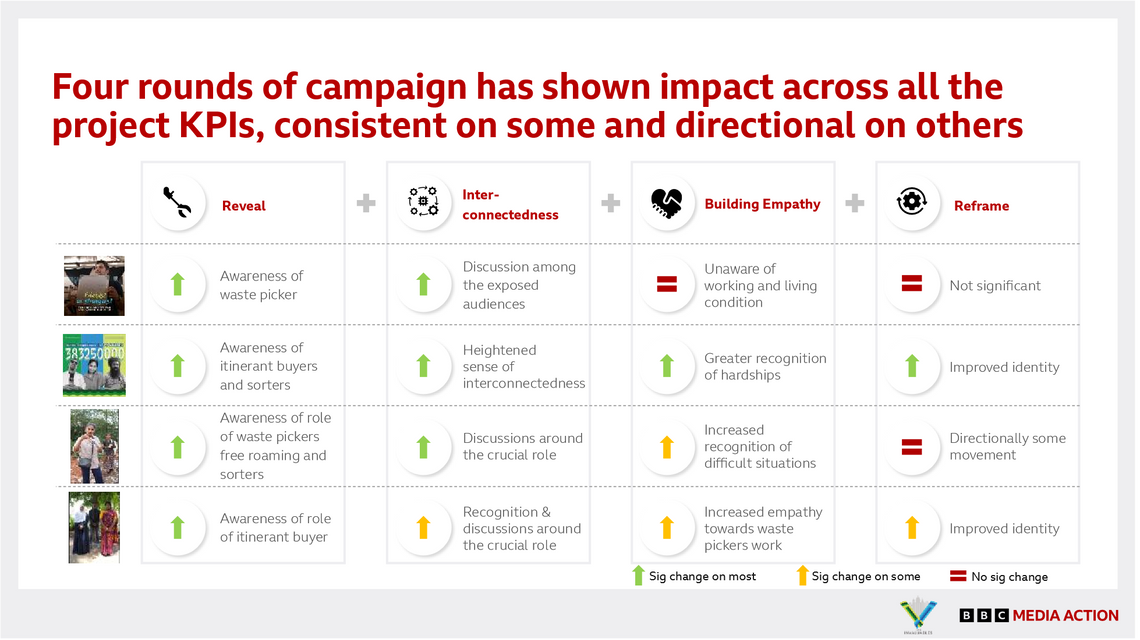
Picture 1 below, encapsulates the areas which each round of output for first three four years of the intervention impacted.
Measurable Shifts in Attitudes and Identity
During the first four years of Saamuhika Shakti, our campaign reached 10.6 million unique individuals and generated over 30 million video views. Social media conversations reflected appreciation, gratitude, and concern for safety and dignity. Citizens enquired about Dry Waste Collection Centres and safe disposal methods for sanitary and medical waste—signalling deeper engagement and a growing sense of interconnectedness—an understanding that waste management is shared responsibility.
Beyond reach and online chatter, attitudinal shifts were significant: Across the four rounds of campaigns , impact was visible across all key performance indicators—consistent in some areas and directional in others. The work moved audiences through four interlinked pillars:
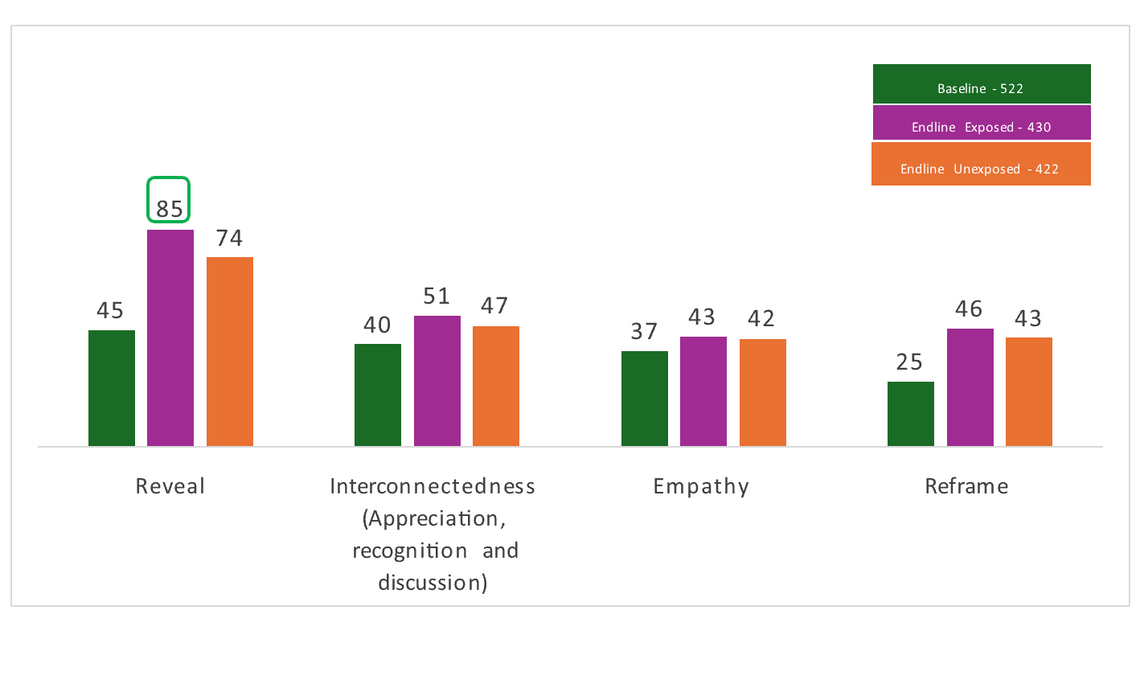
Reveal – Significant increases in awareness of waste pickers, from 45% at time of baseline to 85% among exposed at the end of first three years.
Interconnectedness – Increased discussions among exposed audiences and a heightened sense that residents and waste pickers are part of the same urban ecosystem. Discussions about waste management with neighbours rose from 25% at baseline to 36% among exposed audiences. Conversations about the importance of waste pickers’ work within families increased from 29% to 47% among exposed groups.
Building Empathy – Greater recognition of hardships and improved understanding of working conditions.
Reframe – Directional but meaningful shifts toward improved identity recognition, with more residents viewing waste pickers as environmental workers rather than marginal labourers. Belief that waste pickers are environmentalists rose from 26% at baseline to 52% among exposed respondents (compared to 34% among unexposed).
A respondent captured the shift succinctly:
Earlier I would have thought this (waste segregation) is their work, not ours. We give, they collect and segregate; they get paid for this. Now I feel, if we cannot help them personally, at least we can make their workplace better.” Female, 28 yrs
Picture 2 below presents the impact at the end of Phase 1 of PRIDE. The campaign has been successful in revealing the work of waste pickers and improving recognition for their efforts
The initial years laid the groundwork for systemic change. Waste pickers were increasingly recognised not as marginal figures, but as skilled professionals contributing to Bengaluru’s sustainability.
But recognition alone is not enough.
The next phase of #Invaluables focussed on translating this shift in awareness and gains in perception into practice – linking empathy and interconnectedness to waste disposal habits that directly impact the dignity and working conditions of the waste pickers.
Sonal T Chaudhuri
Senior Research Consultant at BBC Media ActionSonal T Chaudhuri, is a senior research consultant at BBC Media Action India. Her research repertoire includes work on social issues such as health, gender, climate change, as well as strategic initiatives for brands.
She has more than 13 years of research experience across both agency and programme-side and has strong applied knowledge of SBCC research. In her current role, she supports research across various projects at BBC Media Action.
Neema Gupta
Research Manager at BBC Media ActionNeema Gupta is a Research Manager working with BBC Media Action India. She has worked in the sector for 8+ yrs with multiple agencies like Kantar, IFMR LEAD etc.
She is currently leading research for the PRIDE Project, a programme designed to change the perception of waste pickers among the target audiences.
Her favourite thing about research is going to the field and immersing herself in the experience of engaging with target audiences.