Research is on the front line in defending democracy
Research does more than improve products and services — it also plays a key role in supporting democracy. At the Esomar Citizen Insights Summit, industry leaders highlighted the importance of research, data, and citizen insight in democratic life

We often think of research as helping clients deliver better services, increasing the range of flavours available to consumers, and ensuring that products meet customer expectations. That commercial work is real and valuable. But research's remit is far wider, and its role in defending democracy was brought into focus at the recent Esomar Citizen Insights Summit, "Democracy in Focus", held in the European Parliament in Brussels. As Esomar President Anne-Sophie Damelincourt noted in her opening remarks, the choice of venue was itself a statement: research, data and citizen insight belong at the heart of democratic life.
Damelincourt set the scene by describing the world as it is. The digital revolution, artificial intelligence and engagement-driven social media have reshaped how citizens form opinions and how narratives are created and contested. Against that backdrop, trust in institutions, in media and in expertise is under pressure, something we feel in rising abstention and in the hardening of social divides. Her central argument was a hopeful one: data and insights, done well, are an act of listening, and rigorous, ethical, representative research is itself a democratic act. She was also direct about polarisation, arguing that the danger today is less that citizens disagree, which is the essence of democracy, and more that they increasingly inhabit separate information worlds with no shared factual foundation.
The keynote that followed, by Dr Michelle Harrison, President of Verian Group, was titled "On the front line: truth, democracy and the data ecosystem". Her warning was stark; for the first time in the history of our sector, we face the loss of a shared notion of truth, and the threat is both external and internal to the profession.
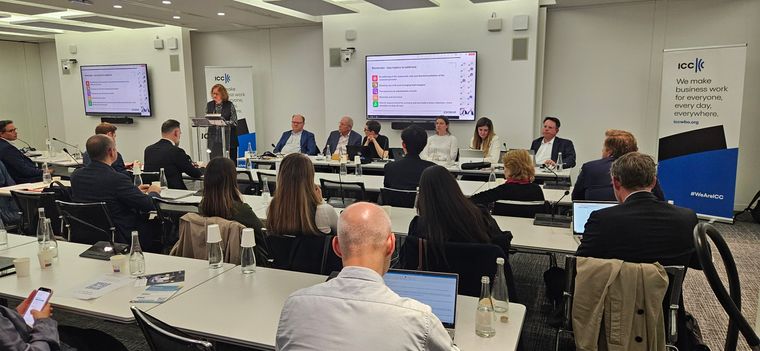
I was at the Summit as Chair of Esomar's Professional Standards Committee, and had the pleasure of chairing a panel of five: Gaëtane Ricard-Nihoul, Head of Unit for Public Opinion and Citizen Engagement at the European Commission; Monika Alpoegger, Data Analyst in the Eurobarometer and Surveys Unit at the European Parliament; Amy Lecomber, Head of Research, Plans and Insights at NATO HQ; Femke de Keulenaer, Senior Research Director for European Public Affairs at Ipsos; and Nicolas Bécuwe, Senior Director and Head of the International Election Team at Verian.
The discussion was candid and wide-ranging. One thread asked whether the shift towards the EU is a durable realignment of democratic expectations or a crisis-driven spike that could unwind once the pressures of Ukraine and transatlantic uncertainty recede, and what kind of research would help us tell the two apart. A second looked at how Eurobarometer evidence is used in practice inside the institutions, where it serves as the reference point for what "European public opinion" means, and where survey data reaches the limits of what it can tell a policymaker on contested questions such as defence and enlargement. A third explored the broader toolkit beyond the opinion survey, including qualitative deliberation, behavioural data, ethnography and AI-assisted synthesis of unstructured citizen input, and where those approaches add genuine value.
Nicolas Bécuwe set out clear evidence from the latest Eurobarometer that public opinion is shifting towards EU-level leadership: 61% of citizens now say more decisions should be taken at EU level, 66% believe their country can better face the future inside the EU than outside it, and trust in the EU stands at its highest recorded level. The important nuance, though, is that this mandate is conditional. Citizens want a stronger EU, but continued support depends on visible delivery.
Another presentation brought a different dimension of this picture to life. The session on Hungary examined what polling can and cannot do. Surveys tell us where people stand, but they are less equipped to show how people arrived there, or where opinion is heading next. Drawing on a pre-election psychographic reading of Hungarian political discourse, the presentation made the case for qualitative-at-scale analysis working alongside survey methods. Tapping into natural conversations offers a view into the motivational architecture of opinion formation, the tensions, loyalties and early movements that shape where opinion is going, and helps sharpen the questions that quantitative instruments are then best placed to answer.
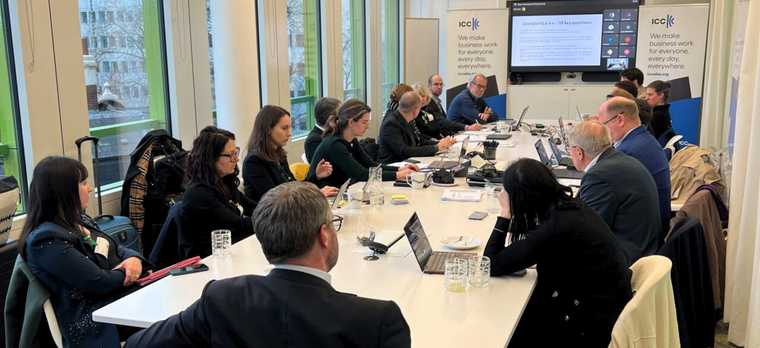
The morning session was a round-table discussion bringing together the presenters, panel members, Esomar's Legal Affairs Committee and the Programme Committee. One of the key questions raised was how to defend our ability to keep producing "decision grade" evidence, to borrow Dr Harrison's phrase, to support the creation of public policy. As Harrison put it, evidence-based policymaking only works if we actually have evidence. The policy cycle, the work of designing, implementing and evaluating public policy, is a sophisticated piece of shared infrastructure, and it is at risk of breaking if the data underneath it cannot be trusted.
One key defence is the ICC/Esomar International Code on Market, Opinion and Social Research and Data Analytics. As Damelincourt emphasised, the Code is not a bureaucratic compliance exercise but a moral contract between researchers and the people they study, and it is built on the principle of self-regulation: the profession sets its own standards, holds itself to them, and invites public scrutiny. That matters now more than ever, because the Code draws a clear line between genuine research and data collected for other purposes such as direct marketing or political targeting, a line that has never been more contested. It is encouraging to note that the European Commission systematically asks tenderers to belong to Esomar or WAPOR, or to commit formally to complying with the ICC/Esomar International Code or the WAPOR Code of Ethics.
A second strand was the need to protect the viability of key data collection options, in particular face-to-face. Much of the best research on public policy is conducted using random probability samples administered through face-to-face interviews. Face-to-face is, in effect, a shared piece of infrastructure: it is sustained by the collective demand of the programmes that use it. When individual programmes shift to cheaper alternatives such as self-completion, they erode the cost base that keeps face-to-face viable for everyone, including the programmes that genuinely still need it. This is a major concern for Esomar and for me as Chair of the Professional Standards Committee.
To come back to the core theme highlighted by both Damelincourt and Harrison, the threats to society are real, and so is the need to provide evidence that policymakers and citizens can rely on. Both were of one mind on the answer. As Harrison put it, our sector's moral compass will only be as good as our collective willingness to take self-regulation seriously. There has never been a greater need for researchers to work together to protect and advance the highest standards, to hold power to account, and to inform the decisions of citizens and governments alike.
Ray Poynter
Chair of the Professional Standards Committee at EsomarRay has spent the last 45 years at the intersection of insights, research, and new thinking. Ray has held director-level positions with companies such as The Research Business, IntelliQuest, Millward Brown, and Vision Critical. Ray is committed to the research and insights industry, having been a member of Esomar for over 30 years and a fellow of the MRS.
In recent years Ray’s work has focused on training, writing, speaking and sharing. Ray has run training workshops for a variety of national and international organisations, including RANZ, TRS, JMRA, MRS and ESOMAR. Ray has written textbooks, taught at Saitama and Nottingham Universities, regularly blogs, and is active on social media.
In 2023, Ray was elected President of Esomar.