Wellness Research: The Integrator Shift
Segmentation in wellness categories often assumes fixed identities. However, consumers are increasingly living in weekly rhythms. And this gap might be costing you the largest emerging segment.

If you run wellness research, you have probably seen this respondent and tried to tidy them up. These respondents track their runs but they also drink on weekends. They meal prep on Monday and then they order fried chicken on Friday. In most segmentation systems these respondents look inconsistent, and as a result, they get averaged away or filtered out entirely. Because we are segmenting wellness as identity, we will misclassify these emerging respondents - the Integrators.
So, here is the tension I am trying to work out. Market research still forces people to choose a wellness identity. On the other side, consumers are building a week that switches modes by occasion. That is not hypocrisy. On the contrary, it is an operating model. And if we keep measuring the old game, we will miss the biggest segment shift happening right now.
Integrators as an Emerging Segment
Most wellness segmentation has been stable for a decade because it use to map three recognizable patterns. These are not official industry categories, but if you have done work in this space, you have seen them in your data. Let's call them Optimizers, Minimalists, and Bon Vivants. While I am not totally convinced those are the perfect labels, the distinction holds. These read best as behavioral archetypes with a supporting identity story that people sometimes adopt. The segments are clearer when anchored in what people do.
Optimizers are defined by their behavioral pattern: wearables, macro tracking, recovery scores, unbroken streaks. The supporting attitude is control and progress. The identity story they tell themselves is that wellness equals discipline and measurable improvement. That works until the control becomes surveillance. One bad week is a failure to them. Therefore, when their tracker starts judging them, they either double down or quit entirely.
Minimalists behavior is about reducing inputs, removing apps, keeping a few anchors such as sleep, walking, simple meals. The supporting attitude is relief. The identity story is that wellness means removing pressure rather than adding more. Without feedback loops, intention slowly gets replaced by whatever is easiest to them.
Bon Vivants optimize for pleasure and social energy. Great food, late nights, travel, group experiences. The supporting attitude is that life should be enjoyed. Their identity story frames wellness as vitality rather than restriction. Their weakness isn't moral (I need to be clear about this) but physiological. Too many late nights, too little recovery, and eventually the body sends a signal they can't ignore.
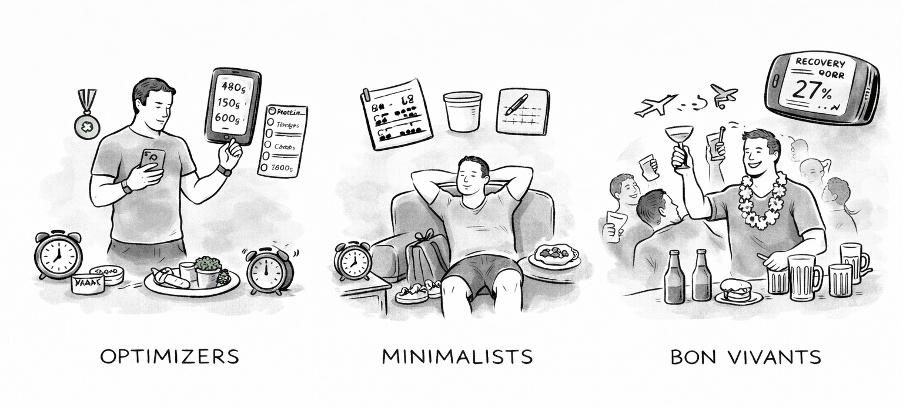 Figure 1. The three common wellness archetypes: Optimizer, Minimalist, and Bon Vivant.
The above three archetypes share a common measurement assumption: wellness choices are treated as identity statements. The segmentation variable is behavioral pattern, but researchers typically infer a fixed identity from that pattern and then expect consistency.
Integrators are not an identity segment in this framing. They are a pattern of switching behavior across occasions, plus a refusal to be pinned to one self-label. The segmentation variable is occasion-linked behavior, not identity.
The same individual behaves differently across Monday through Sunday. Monday is about weights and meal prep, mid-week is about cooking, Fridays mean toasting with friends, and weekends bring relaxation and desserts. They track obsessively for three weeks, then take the watch off for a weekend because they don't want a device grading their fun. They are not balancing as compromise (choosing less of both to find a middle) but balancing as competence (switching fully between modes depending on context). In sum, they don't change who they are but adapt to what the moment needs.
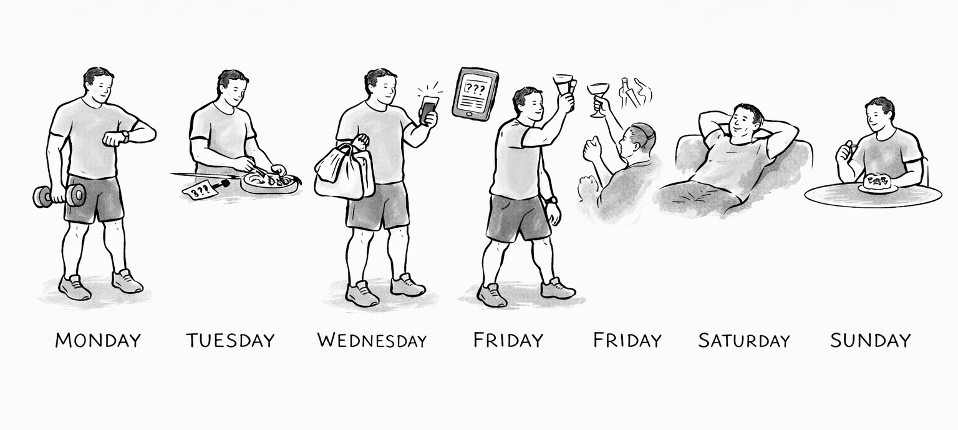 Figure 2. Integrators, the emerging wellness segment.
And that switching is the insight most wellness research is still missing.
The following 2×2 matrix plots Health Behaviors (vertical axis, low to high) against Indulgence Behaviors (horizontal axis, low to high). Integrators occupy the upper-right quadrant where both dimensions score high, distinguishing them from Optimizers (high health, low indulgence), Minimalists (low on both), and Bon Vivants (low health, high indulgence).
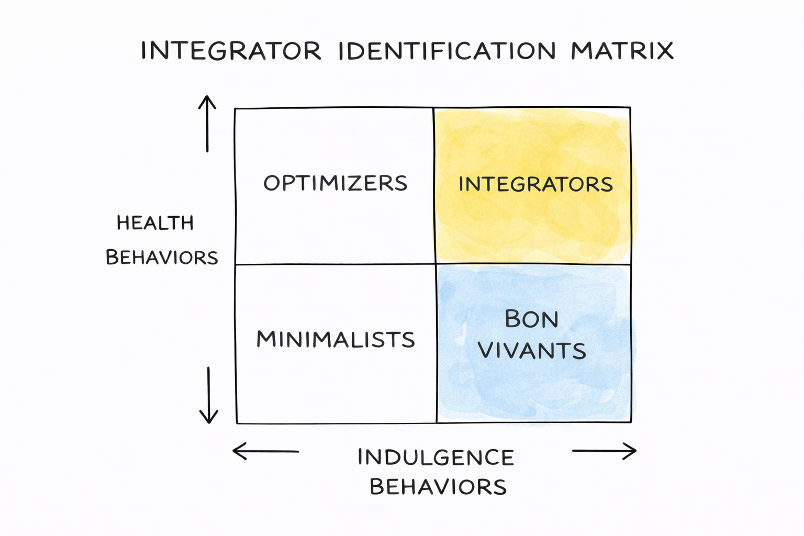 Figure 3. Integrator Identification Matrix
Context as the Organizing Principle
Traditional segmentation follows a top-down flow from consumer identity to behaviour. Identity shapes attitude, and attitude drives behaviour. This type of segmentation helps demographic targeting easier before psychographics and behaviour variables are overlaid. You are an "Optimizer" or a "Bon Vivant," and that identity determines what you do. The Integrator model inverts this identity-led hierarchy. Here, the context shapes attitude, and attitude drives behaviour. Identity still exists, but it floats at the periphery rather than anchoring the system. The same person can hold multiple wellness identities across different occasions without contradiction because identity is no longer the organizing principle.
Integrators prioritize context over identity because it removes the moral weight from switching. When your organizing principle is 'What does this moment need?', ordering takeout Monday night after meal-prepping Monday morning is not hypocrisy but competence. The same person can hold discipline on Tuesday morning and connection on Friday night without either being fake. Identity-led models reward consistency; context-led models reward adaptability. For Integrators, adaptability is the actual skill being demonstrated.
In the old model, you ask "What kind of person am I?" and behavior follows. In the new model, you ask "What does this moment need?" and behavior follows. Identity becomes a post-hoc narrative that explains why different behaviors feel coherent, not a predictor that determines them in advance.
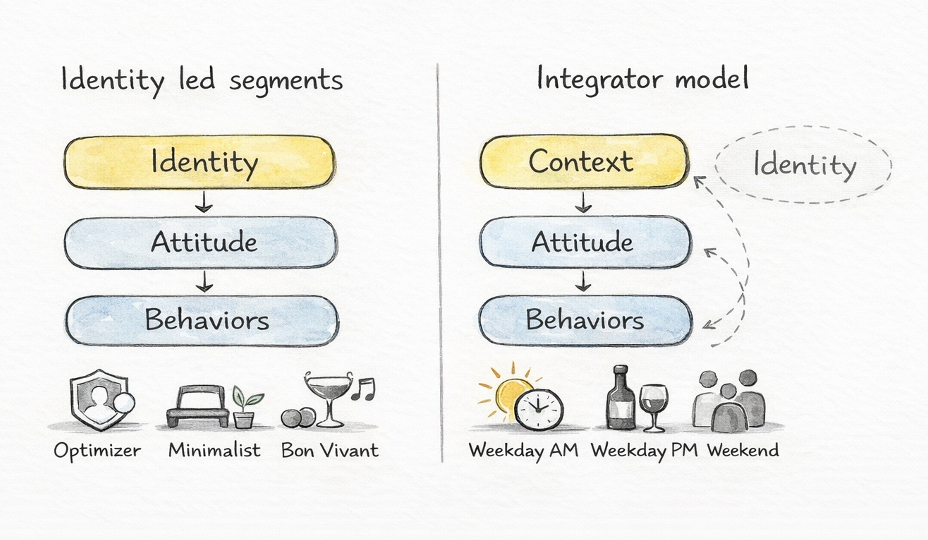 Figure 4. Identity-Led Segments vs. Integrator Model
In the traditional approach, Identity → Attitude → Behaviors flows downward, producing fixed types like Optimizer, Minimalist, and Bon Vivant. In the Integrator model, Context → Attitude → Behaviors flows downward while Identity floats as a peripheral element, enabling the same person to shift across Weekday AM, Weekday PM, and Weekend occasions.
So, once you stop looking for identity consistency and start mapping occasions, the pattern clarifies itself pretty quickly. Integrators do not behave inconsistently but situationally, and the situations follow predictable rhythms. Weekday mornings are control points while weekday evenings are release valves. Weekends are identity play. The same person who meal preps Monday morning orders delivery Monday night. Not because she is confused about her values. Because Monday morning needs fuel and Monday night needs easy.
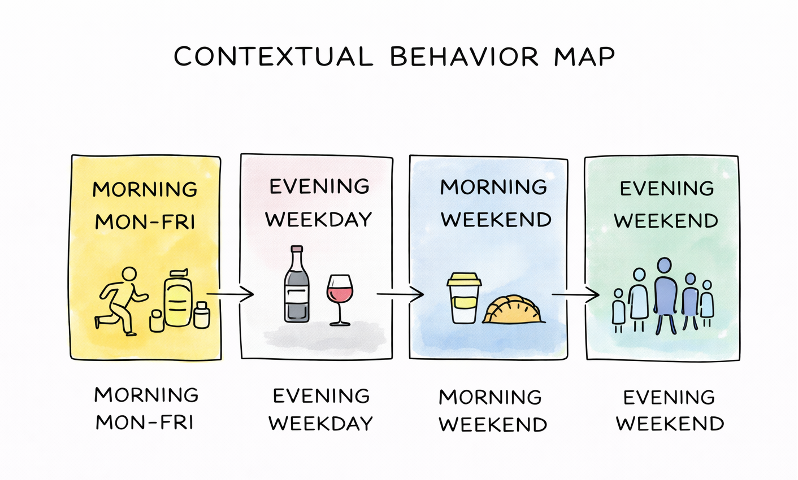 Figure 5. Contextual Behavior Map
This context-based behaviour is also confirmed through the basket data. Worth checking co-purchase overlaps that bridge health and indulgence. Recovery products in the same baskets as party supplies. Athletic wear appearing with desserts. Meal prep ingredients alongside ready meals. Functional beverages purchased with alcohol. This is not about whether these things belong together morally but whether they already travel together behaviourally. If you only analyse wellness baskets in the wellness aisle, you may miss the behaviour entirely because Integrators live in the overlap.
Directionally, three behavioral signatures are expected to show up consistently inside a typical Integrator pattern. Premium indulgence means choosing higher quality versions of the real thing when switching to indulgence. Craft beer, not low-calorie beer. Artisanal dessert, not protein bar pretending to be cake. The attitude underneath is intentionality: if I am indulging, make it worth it. Ritual markers means indulgence clustering around social rituals in predictable ways. Post-run coffee becomes post-run beer on weekends. Desserts appear after group meals, not alone. Because here the attitude is the social glue. Transparent indulgence means rejecting healthy-halo substitutes during treat occasions. Integrators do not want cauliflower pizza or stevia desserts when treating themselves. They want category honesty. Sugar when they want sugar. Because their attitude is not a fake compromise.
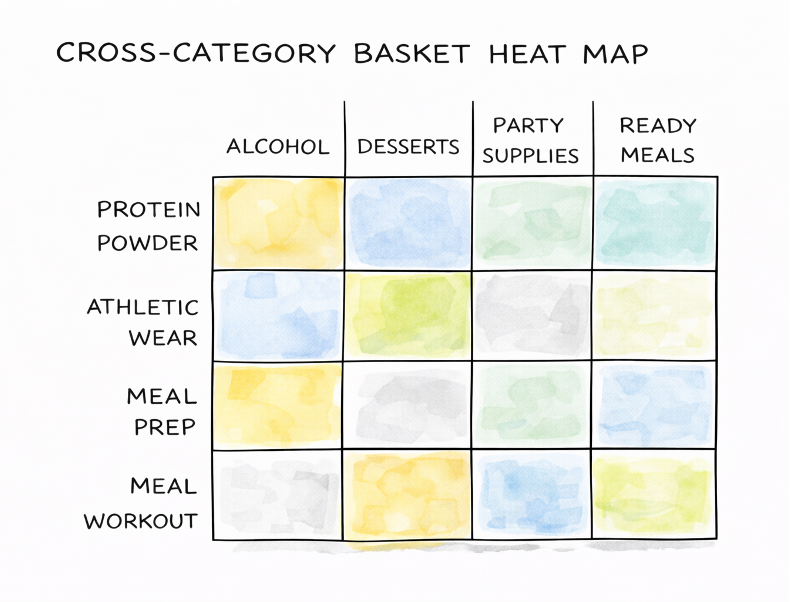 Figure 6. Cross-Category Basket Heat Map of Multiple Sub-segments of Integrators
Asia as Early Indicator of the Integrator
The Integrator pattern is global, but it surfaces more so in the Asian research data because of how wellness categories have developed in these markets.
In many Western markets, the modern wellness industry evolved alongside diet culture and fitness tracking that positioned health behaviors as personal discipline projects which is often measured through purity metrics like adherence, streaks, and restriction. This created research instruments that treat switching between health and indulgence as inconsistency to be explained or corrected (because it feels like moral failure on respondent’s part), so such respondents who do it look inconsistent and get filtered out.
Asian food culture evolved differently. Street hawkers, night markets, communal dining. Eating out is infrastructure, not indulgence. Social eating is routine, not reward. When "healthy" and "social" have always coexisted in the same meal, the Integrator pattern doesn't read as contradiction. It reads as normal life.
The Asian cultural vocabulary also reflects this. Thailand's concept of sanuk treats joy as life requirement rather than earned exception. Indonesia's nongkrong frames communal time as default rhythm rather than special occasion. Cargill's 2025 study of 4,250 consumers across Indonesia, Malaysia, Philippines, Thailand, and Vietnam found that 69% consider health attributes important even when choosing indulgent treats. Innova Market Insights reports that 54% of Asia Pacific consumers factor health-promoting ingredients into snack purchases, compared to 33% globally. China's Gen Z coined "punk health" to name what they actually do: 70% actively pursue wellness while 60% stay up late and young people account for 65% of alcohol consumption, according to Qiva Global research. They take supplements before drinking and recovery tonics the morning after. The behavior isn't inconsistent. The framing that makes it look inconsistent is the problem. Korean running clubs illustrate the synthesis: Seoul Flyers meets twice weekly for challenging routes along Hangang Park, then heads to karaoke or dinner together. Fitness serves community. In India, gyms have become social infrastructure for young urbanites, with 72% of urban Indians recognizing exercise benefits according to FICCI while food culture and social dining remain central to daily life. As a pilot for occasion-based segmentation, Asia offers lower measurement noise because the behavior you're looking for isn't culturally coded as deviance.
Measurement Implications
The shift from identity to context has three practical implications: how we measure, what we measure, and who we recruit.
Start with survey design. Traditional instruments ask whether people are "health conscious" as a trait. Integrators refuse trait framing, so they answer inconsistently and get screened out. Replace identity questions with occasion questions. Ask what happened in the last seven days, not what kind of person they are. Look for any mix of training, tracking, social drinking, takeout, dessert, and intentional rest. When respondents tick across both sides, treat it as signal, not noise. In qualitative work, structure guides by day part and social context rather than demographic profile. Walk me through Tuesday morning versus Tuesday evening. What makes Friday night different from Wednesday night. Show me your last grocery order and explain what occasion each item served.
Then redesign the scorecard. Most wellness dashboards reward purity: days without alcohol, weeks of continuous gym attendance, diet adherence percentage. Those metrics work for Optimizers. They misread Integrators entirely. An Integrator can fail every purity metric while improving actual wellbeing, because wellbeing for them includes social connection and psychological release, not just program compliance. Add integration metrics alongside physical ones. Track activity-occasion balance across a week, not just streaks. Track social wellness. Add a flexibility index measuring how quickly someone returns to baseline after indulgence, using sleep quality, mood, energy, and connection as inputs. This is not soft measurement. It is closer to how Integrators actually define wellness.
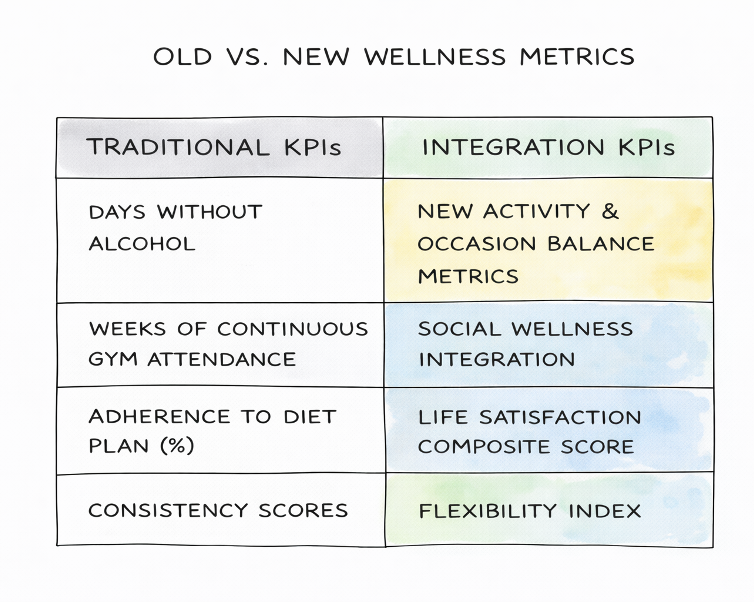 Figure 7. Old vs New Wellness Metrics
3. Finally, change recruitment. Stop screening out "inconsistent" respondents. Those are often your Integrators. Include people who drink occasionally and still train. Include people who care about health attributes and still buy treats. They are not confused. They are competent switchers. And they are probably already sitting inside both your "fitness" segment and your "indulgence" segment, which explains why campaigns for both feel like they underperform. You are reaching the same people at different moments without realizing it.
As a key takeaway, we are looking at Integrators who break category assumptions and open innovation spaces that identity-based segmentation just can’t see. They explain the attitude-behavior gap that frustrates wellness brands, because context drives their choices more than identity does. And they are early adopters of hybrid products that deliver on both health and pleasure, making them leading indicators of where mass markets are heading.
So, if we keep measuring wellness as purity, we keep rewarding shame. We quietly tell consumers that social joy does not count. We push brands toward messaging that scolds, which accelerates backlash. The consumer has already moved on. The question is whether measurement catches up.
Felicia Hu runs Assembled, a market research agency in Singapore. She has consulted 60+ brands across Southeast Asia to understand evolving consumer behavior. She's a National Volunteer & Philanthropy Centre Company of Good Fellow, a leadership program focused on purpose-driven business practices.