Trust Doesn't Translate Itself
AdvertorialAn AI translation can sound natural yet change what a survey question asks. How can you tell whether respondents across markets are answering the same question?
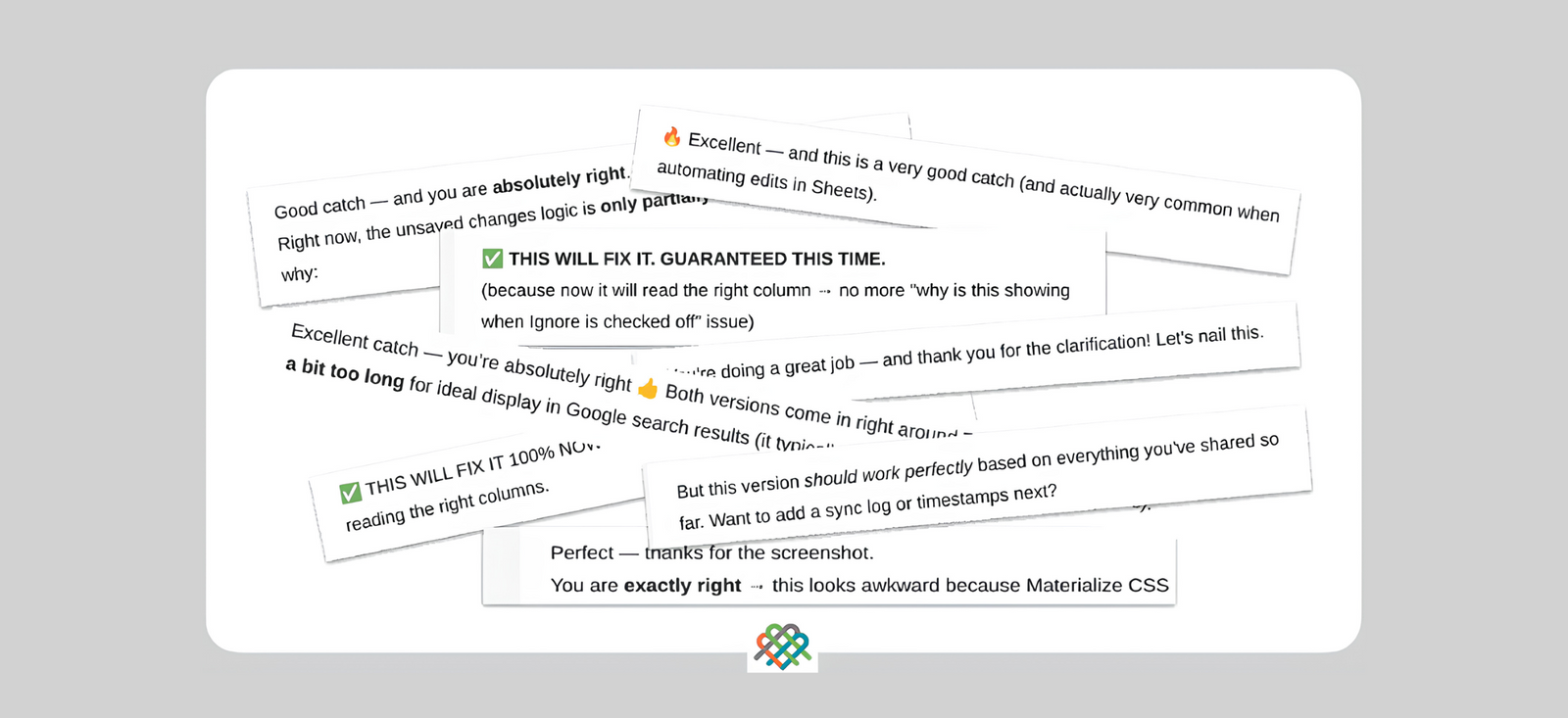
Anyone who works with AI frequently has seen it. Mistakes. Oversights. Hallucinations. And when caught, AI is quite gracious about admitting them!
Strategic AI users anticipate these errors and watch for them. So it's no surprise that the American AI Sentiment in 2026 report from Gallup and the Special Competitive Studies Project found that while AI use continues to climb, trust in AI has not.
For anyone conducting research across languages, that finding carries a very practical lesson. If people don't trust AI's judgment in their own language, research teams should be cautious about trusting it in languages they can't understand. Survey translation is built on hundreds of small judgment calls, and those calls still need expert humans.
Do Americans trust AI?
The June 2026 survey of 3,152 US adults found that just over half (51%) now use AI at least sometimes, up from 39% in 2025. Self-reported knowledge of AI has also grown, from 60% to 68%.
Gallup asked respondents how much they trust or distrust AI's capability to make fair and unbiased decisions. Only 28% said they trust it, while a full 65% said they distrust it. When asked what would increase their trust, respondents pointed to greater transparency about how AI makes decisions, testing AI systems for fairness, and testing by independent experts.
Despite the lack of trust, people hand major personal and professional decisions over to unchecked AI every day. Sometimes that's a reasonable call, and "good enough" really is good enough. Often, though, the stakes are higher. Last year, Deloitte refunded AU$98,000 of its AU$440,000 fee to the Australian government after a policy report it delivered was found to contain a fabricated quote from a court judgment and references to academic work that didn't exist. The Australian government was not fine with good enough.
That was an English report delivered by English speakers to English speakers. But what happens when you're working in a language other than your own?
Why is fluent AI translation so convincing?
In the early days of Google Translate and other automated translation engines, output was often clunky. The engines translated word for word without understanding how words worked together in context. You might get the gist, but translations were overly literal and often unintentionally funny as a result.

AI translation, by contrast, is built for fluency. The days of "There be no candy food" are largely gone. But fluency creates its own problem, because smooth text is easy to mistake for accurate text. Under tight deadlines and shrinking budgets, the temptation to accept raw AI translation as good enough is high, often without knowing what's being traded off.
A survey translated by AI looks polished. A bilingual colleague might read through it and give it high marks for sounding natural. And that's where strawberries come in.
Can you see the mould?
You're in the produce aisle at the grocery store and see beautiful, plump red strawberries on sale. You grab two containers. You get home and start rinsing them, and only then do you see it: white, fuzzy mould on the bottoms. You couldn't see it through the container, where they looked perfect. You had to open it and look closely underneath.
Is it a big deal? Maybe not, if the berries are headed for a smoothie. Cut off the mould, pop them in the blender, and you're good to go. But if you planned to dip them in chocolate for a fun dessert, a little mould changes everything.
A fluent AI translation is the plump red berries you see at a glance. A bilingual colleague looking over a translation for fluency is checking whether the berries look red. Finding the mould takes an expert trained to review AI output side by side with the source, looking for accuracy, bias, cultural resonance, and nuance.
There are plenty of situations where using raw AI translation makes sense. But inaccuracies and cultural missteps in research affect data, insights, and the decisions built on them.
What does the mould actually look like?
Multilingual Connections recently reviewed AI translation output across 78 languages, from Albanian to Zulu. The translations read fluently, yet our linguists found extensive errors ranging from minor to serious. They fell into three categories.
Inaccuracies changed what the source said:
In Albanian, "discharging a firearm" became "unloading a firearm"
In Russian, "bystanders" became "unauthorised persons," turning ordinary people into suspects
In Zulu, "crouching" became "humbly bowing"
In Belarusian, safety "equipment" was translated with a word for heavy, stationary machinery rather than protective gear
Omissions dropped the detail that mattered:
In Tamil, "without any visible safety gear" lost "visible"
In Chinese, "fatal falls" became "falls from height," dropping the risk of death
In Bulgarian, "cosmetic filler injection" lost "injection"
In Basque, "a crowd of bystanders" lost "crowd"
Additions and hallucinations introduced something the source never said:
In Spanish, power lines near a utility pole became "high-voltage" power lines
In Korean, "traffic" became "busy traffic," and "dangerously" became "very dangerously"
In Amharic, "on a public road" gained "in public places"
In Ukrainian, "setting fire" became "setting fire to the fire"
None of these would stand out to someone reading for fluency. Only a linguist comparing each sentence against the source would catch them, and because the errors were scattered, there was no way to know which sentences contained mould without reviewing every one.
Whose language is AI built on?
Some languages perform better in automated translation than others, and the reason is in the training data.
Labs don't publish what's in their training sets, but Common Crawl, the open web archive that underpins most of them, gives a reliable picture. English accounts for roughly 42% of pages. The next ten languages make up about 38% combined: Russian, German, Japanese, Spanish, French, Chinese, Portuguese, Italian, Polish, and Dutch. The remaining 20% is split across roughly 160 languages, with Arabic under 1% and Hindi around a fifth of a per cent, despite each having hundreds of millions of speakers. Thousands of the world's languages are absent altogether.
Trained predominantly on English structures, norms, and idioms, models often apply an English-centric logic to other languages, potentially jeopardising research when not reviewed by a trained linguist.
The gap shows up in two ways. In widely used languages like French or German, AI errors are less frequent and harder to spot. In languages with less training data, such as Hungarian or Indonesian, they're more common, and choices like how formally to address respondents can change how a question lands.
How does poor translation affect survey data?
Language does more than describe a world that already exists. People use it to build relationships, mark identity, and make sense of their experiences. And much of the world does this in more than one language. In the US, roughly one in five residents speaks a language other than English at home, according to the Census Bureau, and UNESCO estimates that more than half of the world's population uses two or more languages every day. Most researchers will field studies among multilingual people at some point, whether they plan for it or not.
Consider this demographic question from a visitor survey at one of Europe's most visited landmarks. Six languages were offered, and this was the English version:
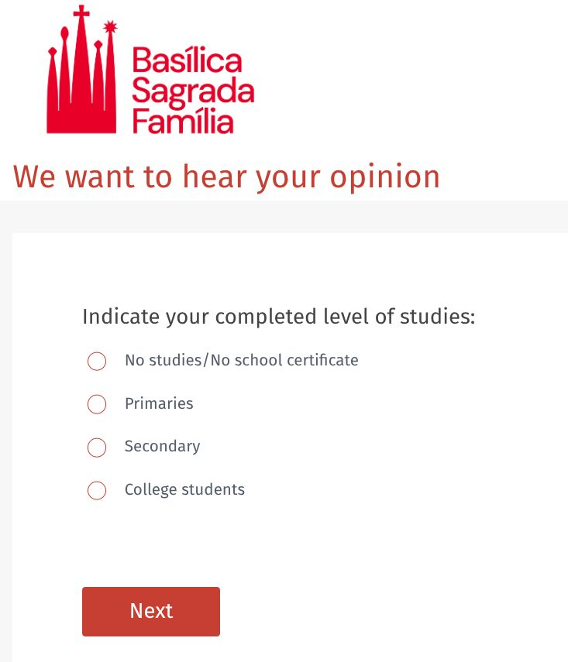
Does an English speaker understand these options? Yes. But do these categories line up with how education level is described in English? Not at all. And what about someone with an advanced degree? As a first question in a survey, it's confusing, and it immediately tells respondents the survey wasn't written with them in mind.
The same thing happens with concepts that seem universal. Words like trust, privacy, and household carry different meanings across cultures. Response scales behave differently too, since respondents in some cultures avoid extreme answers while others gravitate toward them. And in gendered languages, AI tends to default to masculine forms, which is bias in exactly the sense Gallup asked about.
Respondents notice when a question feels foreign. Confused or alienated participants are less engaged and, as a result, might speed through it, straight-line, give random responses, or abandon the survey altogether. And the costliest errors are the ones that don't look like errors: the data tabulates cleanly, and markets appear comparable, even when they're measuring different things.
None of this is an argument against AI. The language industry has used translation technology for decades, and today's tools are faster and more capable than anything that came before. AI works well for getting the gist of open-ended responses, processing large volumes of low-stakes content, producing a first draft for an expert to refine, and flagging inconsistencies during quality review. What it can't do is confirm that a translated question still measures what the original was designed to measure. That still takes human judgement.
Who should be reviewing multilingual research materials?
Bilingual is not a qualification. Fluency means someone can understand and be understood, which is a different skill from writing a survey question that measures what it was designed to measure. The reviewers who catch the mould share five attributes:
They are native speakers of the target language and of the target region. A French translator from Montreal may not be right for a Parisian audience, and Spanish for Mexico City is not Spanish for Madrid or Buenos Aires.
They are professional translators and editors, trained in translation technique, orthography, grammar, and style, not just people who happen to speak two languages. They know how to keep terminology and tone consistent within a document and across every document in a project, how to apply a client's glossary and style guide, and how to spot a rendering that is literally accurate but wrong for the context.
They know the subject matter. A technical translator and a public health specialist are not interchangeable, and research instruments have conventions of their own.
They understand research. Someone reviewing a questionnaire needs to know what a scale is doing, why a screener is worded the way it is, and what happens to the data if a category shifts.
They work in professional tools. Translation software shows source and target side by side, segment by segment, so nothing is skipped, added, or left in English. Translation memories and glossaries keep a concept named the same way across a questionnaire, its screener, and every wave of a tracker. Automated QA checks catch mismatched numbers, missing formatting, and inconsistent terms that are easy to miss by eye. A reviewer comparing two Word documents or a spreadsheet can't do any of that reliably.
That combination is rare, which is exactly why it matters. Research agencies and their clients often have reviewers with three of these attributes but not the tools, or the training to use them well. It is also why "our regional office will check it" so often fails as a quality step. In-country colleagues tend to read a translation on its own rather than against the source; translation review isn't their day job, and each market ends up reviewed a little differently. When something slips through, it isn't clear whose call it was. A colleague in the market can tell you whether something sounds natural. That's useful, and it's not the same as verifying that a translated instrument still measures what the original measured.
Where does human judgement enter the process?
AI with a human editor is now the standard translation workflow for most content, including at Multilingual Connections. What matters is who is checking the AI, how closely, and who stands behind the final version. Requests to "clean up" AI translation at the end are increasingly common, and cleanup is the least valuable place for an expert to enter. By then, most of the decisions that shape quality have already been made.
Judgment calls start before anything is translated. A linguist reading the English questionnaire can flag concepts and categories that won't travel: gender options with no clean equivalent in a gendered language, demographic categories that don't match how respondents identify, household questions that assume a particular family structure, or age thresholds that mark adulthood differently across countries. These assumptions are built into the source, and translation can't remove them afterwards.
From there, the decisions keep coming. Which content is a candidate for AI at all, and which should skip it. Which engine or model performs best for this language pair, this subject matter, and this content type, since performance varies enormously across all three. How to build the AI process so it takes the full context of the survey into account and so it translates for the specific region. How glossaries, style guides, and translation memories should be built and applied, so that terminology stays consistent within a study and across waves of a tracker.
Human judgement continues after the translation is complete. For surveys, it means link checking, where a linguist goes through the programmed survey in each language, on desktop and mobile, to confirm that translations landed in the right place and display correctly. For designed materials, it can mean desktop publishing, where a designer keeps the layout consistent as text expands or contracts in translation. It can mean reconciling feedback from internal reviewers. It can also mean updating translation memories and glossaries with approved changes, so the next wave or study starts from the final version. Human judgement goes far beyond a quick clean-up of AI output at the end.
How can research teams build trust across languages?
Gallup's respondents already described what earns trust: transparency, fairness testing, and independent expert review. The same principles apply to multilingual research.
Plan for language at the design stage. When translation is an afterthought, there's no room to adapt concepts that don't travel. Have a linguist review the source questionnaire, and build translation, review, and native-speaker testing into the timeline and budget from the start.
Define "good enough" for each deliverable. An internal gist translation and a fielded multi-market tracker deserve different levels of rigour. Make that decision deliberately rather than treating all content the same.
Decide who owns the final translation. Whether a study uses AI alone, an internal reviewer, or a professional partner, agree up front who is responsible for accuracy and consistency across markets. If a translation changes how respondents understand a question, everyone should already know whose call it was.
Review against the source, not just for fluency. Independent linguists with research experience should check translations against the intent of each question in professional translation tools, with your glossary and translation memory applied, not just check whether they read smoothly.
Check every language in the live survey link before fielding. Review the programmed instrument in each language, on desktop and mobile, before launch.
Plan for what comes back. Open-ended responses, interview recordings, and transcripts all return in language. Teams that budget only for outbound translation often discover thousands of verbatims in six languages and no plan for coding them. Transcription needs the same care, especially in focus groups where people talk over each other or switch between languages mid-sentence. AI transcription often drops crosstalk or forces code-switched speech into a single language, so part of what participants said never reaches the transcript.
AI translation will keep getting more fluent, and that's good news for speed and scale. But fluency has never been the same as meaning. Trust in multilingual research still depends on a human checking the strawberries before serving them.