What Congress told us about AI
We listened to every recorded session of Esomar Congress 2025 and 2026. AI is no longer one topic on the programme: it has become the setting for almost everything else.

AI went from a topic at Congress to the air in the room. At Prague 2025, more than a third of the recorded sessions never mentioned AI. At Valencia 2026, fewer than one in six did not, and about half of all sessions engaged with it substantively.[1]
One of the strategic priorities of the Esomar AI Alliance is to learn from the collective intelligence of our community: what members share at our events, the conversations those events spark, and the trends they reveal before they show up anywhere else. Congress is where that conversation is richest, so we treated it as a dataset. This article shares one of the techniques we have tested to do that: listening to every session at scale to measure trends rather than rely on impressions, read the signals that point to what comes next, and decide where the Alliance should focus.
A word on what this does and does not show. Congress is a curated programme, so its topics are not a representative picture of what the research sector does day to day. They show where the profession is making progress, and where we suspect it is heading. The wider market is still built on established work: in The State of Insights 2026, Esomar valued the insights industry at US$164 billion in 2025, and reported that project-based research still accounts for about 59% of market research companies’ turnover (US$ 58 bn), against 35% for research software.[2]
How we built it
We worked from the full transcripts: 189 sessions and 566,000 spoken words, from the video captions of every recorded talk, including sponsored showcase sessions. With Claude as an analysis partner, we took five steps.
Clean the corpus. We removed duplicate uploads, ending up with 76 sessions from three stages in 2025 and 113 from four stages in 2026.
Measure AI intensity. For each session, we counted AI mentions per 1,000 spoken words. We call a session “substantive” on AI from two mentions per 1,000 words.
Track the vocabulary. We followed families of terms, from “agentic” to “segmentation”, per 10,000 spoken words.
Trace the arguments. We followed how key debates moved from one year to the next, in the speakers’ own words.
Check the quotes and figures. Every quote and figure attributed to a speaker was checked against the transcript of the talk. Titles and speakers for 2026 were checked against the official programme.
Three limits apply. Captions are generated automatically, so wording and names can be mis-rendered. The 2025 session titles follow the recordings, as we had no programme to check them against. And the results that speakers report are their own: we quote them; we have not verified them.
Five shifts, in the speakers’ own words
The five shifts below are our reading of the transcripts. Each is illustrated by individual sessions; none is a count of what every speaker said.
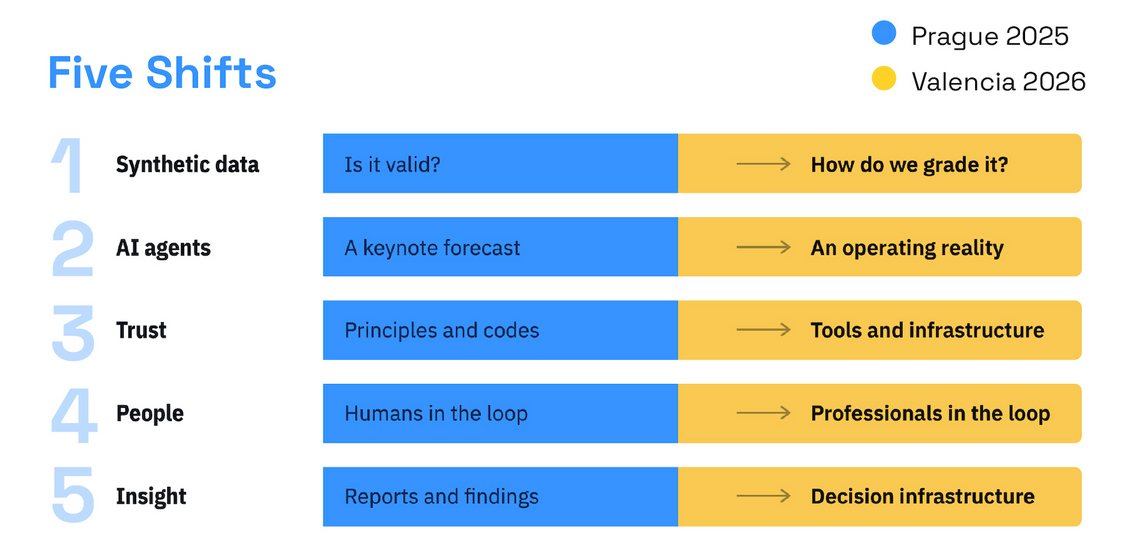
Figure 1. Five shifts in the AI conversation between Congress 2025 and Congress 2026
Synthetic data: from debate to discipline. At Congress 2025, Synthetic Data in Focus was still setting out definitions, and Ray Poynter told the room he was still getting emails saying, “We must try to stop this synthetic data before it takes off”. At Congress 2026, the conversation was about validation. In Digital Twins: From Promise to Practice (2026), David Priestley and Maciek Ozorowski of Ipsos reported replicating a late-2024 Stanford study with about 1,000 members of the Ipsos random probability panel, then improving the modelling. On the benchmark questions about social attitudes, the calibrated accuracy they reported ranges from about 85% to 93%, “calibrated” meaning adjusted for people’s own inconsistency between test and retest.[3] Outside that benchmark, the results were weaker, with “above 70%” overall in a public opinion test. Their conclusion: “Accuracy is highly circumstantial”, and “universal digital twin remains science fiction”. In The Mars Digital Twin Report Card (2026), Mars, Panoplai, and Firefish graded digital twins against real consumers.
Agents: from forecast to reality. In her 2025 keynote, Beyond Humans: Marketing to the Agents Among Us, Nell Watson predicted that “very soon agents are actually going to be the prime purchasers”. A year later, in Intent in, results out: How MCPs are disrupting the insights industry (2026), Patrick Comer, CEO of Cint, applied the same prediction to research itself: “the largest share of research data long term will be agents, not people”.
Trust: from principles to infrastructure. The 2025 sessions on the ICC/Esomar Code and on synthetic data presented the revised Code, in which “AI is now formally in the code”, the 20 Questions to Help Buyers of AI-Based Services (first published in 2024) and new guidance on synthetic data. In 2026, Inside the Esomar AI Alliance introduced the AI Alliance and an AI maturity index, and announced four new documents. They are now published as the Esomar AI Glossary, “10 Questions Buyers Should Ask Suppliers of AI-Based Research Services”, “10 Questions to Consider When Using AI in the Research Process”, and “Using Research Data to Develop and Improve AI: An Esomar Companion Guide”.
Human value: from reassurance to redefinition. In 2025, AI as a Sous-Chef, a case study with Nestlé Health Science, offered reassurance: AI is the precise and reliable sous-chef, “but the head chef is still doing the judgment”. In 2026, Johanna Thompson of Mars went further and redefined the human role itself: “We need to stop saying human in the loop because words matter. It should be professionals in the loop.”
From insights to decision infrastructure. In Architects of Intelligence (2026), Kimberley Burbidge of Kantar shared research from the Insights to Intelligence 2030 programme, run with Google. In it, 70% of C-suites believe they clearly set out an AI-enabled vision, but below the boardroom, “very few people believe that roles are clearly defined”.
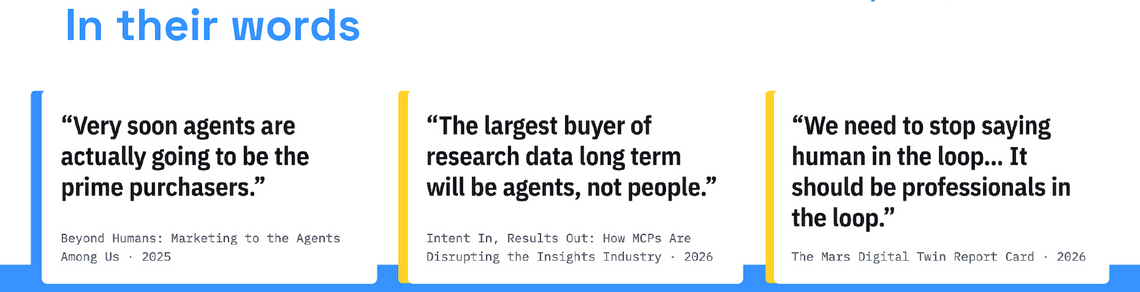
Figure 2. Three quotes that capture the shift.
The vocabulary points the same way
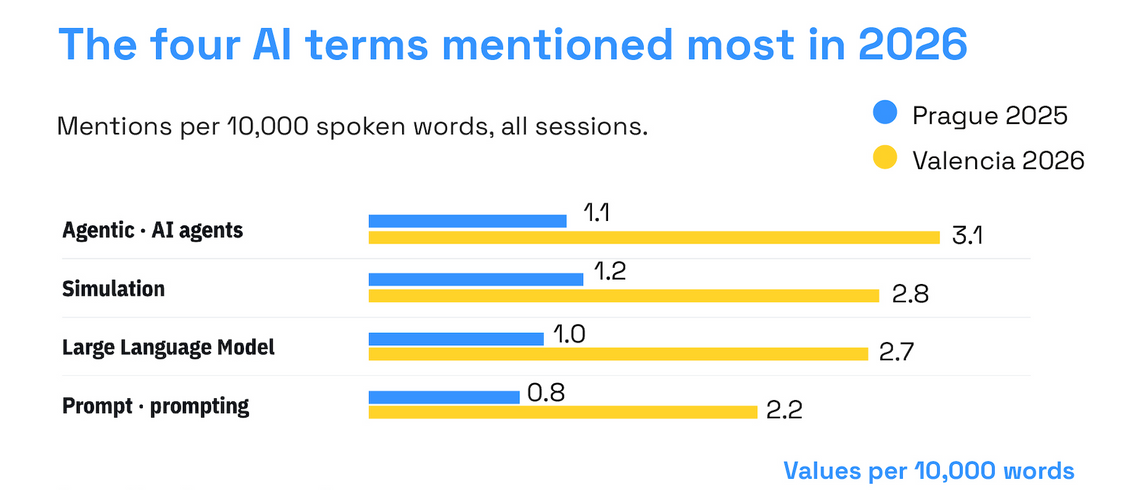
Figure 3. The four AI terms mentioned most in 2026, in mentions per 10,000 spoken words, 2025 against 2026.
All figures here are mentions per 10,000 spoken words, so 2025 and 2026 can be compared directly. [4] Of the AI terms we tracked, the four mentioned most in 2026 all grew: “agentic” with “AI agents” rose from 1.1 to 3.1, “simulation” from 1.2 to 2.8, “large language model” from 1.0 to 2.7 and “prompt” from 0.8 to 2.2. “Digital twin” rose from 0.5 to 2.0.
For a fair comparison, we ran the same count on standard research terms. “Quantitative” stayed flat at 1.9, “survey” rose from 7.2 to 10.6, and “segmentation” from 0.6 to 1.3. So the standard terms were flat or grew more slowly, except “segmentation”, which roughly doubled from a small base. The AI terms all more than doubled, and “digital twin” almost quadrupled. “Trust” barely moved, at 7.1 and 7.3.
As an outside reference, we looked at worldwide Google search interest in the topic “digital twin” over the twelve months between the two Congresses. [5] Search interest was about the same in autumn 2025 and in September 2026, at around 50 on Google’s 0 to 100 index, with a peak of 100 in April 2026. On the Congress stage, mentions almost quadrupled. The two measures are not directly comparable: search covers every industry, while Congress reflects our own profession. But the contrast suggests the term has grown faster in our community’s conversation than in general search.
What the experts told us
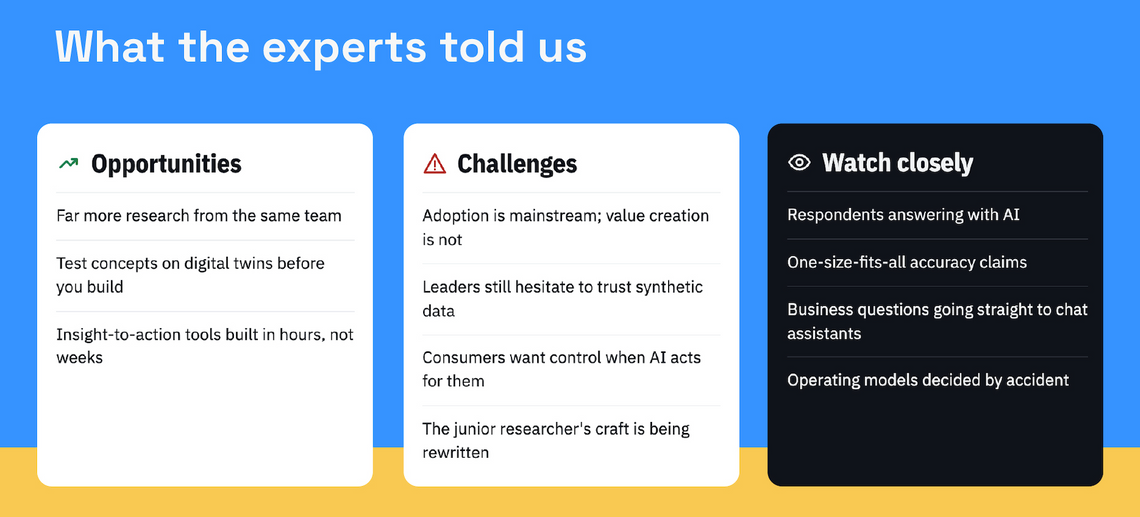
Figure 4. Opportunities, challenges and what to watch, as raised by Congress speakers.
The opportunities speakers reported. In Ten Times the Research. The Same Team. A Different Practice. (2026), Chris Courtney-Smith of News UK, publisher of The Times, reported ten times the research output without adding headcount after introducing synthetic research. Google Japan’s Recalibrating Synthetic Data in Market Research (2025) described digital-twin panels screening more than 150 concepts in two days, against six-plus weeks for traditional testing. Danone and Ipsos tested twins of experts, not only of respondents, in Talk to My Twin (2026). And the 2026 Human8 workshop From Insight to App: Building Digital Insight Tools with Vibe Coding set out to show insight-activation tools built in hours instead of weeks.
The challenges are just as clear. The AI Alliance session shared two findings from a recent CEO survey: “AI adoption is already mainstream, but the value creation is not”, and trust in synthetic data “is still lacking”. Consumers want control: in Mastercard’s How the delegation dilemma is defining the future of agentic commerce (2026), a study of 30,000 consumers found that only about 2 in 10 would hand even simple, low-risk tasks to an AI agent, and nearly 40% fear losing control when they delegate. And in Metamorphosis of Expertise (2026), Kamila Zahradnickova, CEO of Lakmoos AI, warned about the junior pipeline: “The craft, the skill set a junior researcher probably needed 10 years ago has shifted completely.”
Four things need attention. In Panic or Problem? (2026), Andrew Gordon of Prolific showed that off-the-shelf agents can complete surveys, but argued that the main threat is participants using ChatGPT and Claude to answer open-ended questions. In the Mars session, Adam Bai of Panoplai warned against vendors quoting a single accuracy figure, because accuracy depends on the use case. Patrick Comer described business users asking research questions directly in ChatGPT, Gemini or Claude before commissioning a study. How AI assistants describe a brand is becoming something to measure: in Cheers to AI (2025), Ipsos France found a “clear disconnection” between the market position of the Absolut brand and its visibility in ChatGPT. And Kantar’s Kimberley Burbidge made the organisational point: “The operating model isn’t going to happen by accident.”
Some topics were barely touched on in either year. The EU AI Act was mentioned in only 2 of the 189 sessions, and we found no discussion of consent when AI moderates an interview, copyright of AI-generated creative, or the environmental cost of AI. [6] Silence is a signal too.
Where the AI Alliance will focus
The transcripts point to four areas where the industry needs shared answers, not more individual pilots.

Figure 5. The four focus areas of the Esomar AI Alliance.
Standards for synthetic data. Report cards, confidence frameworks and holdout norms for synthetic data and digital twins, building on the ICC/Esomar Code and our upcoming code applied to synthetic data.
Data quality for the agent era. Detecting AI-assisted answers and agent respondents, not only bots, because every simulation depends on verified human data.
Skills development. If AI absorbs the junior craft, where will tomorrow’s senior researchers come from?
Measuring AI maturity. At the organisational and individual level, to see where adoption stops creating value and why.
This is a first experiment in turning our community’s conversations into shared intelligence. We plan to apply the same approach to other Esomar events and community discussions, so that what members say becomes a regular input to the Alliance’s priorities.
If these findings resonate with your own experience, we would love to hear from you. To learn more about the Esomar AI Alliance and our work on responsible AI, visit the Responsible AI Development page [https://esomar.org/representation/responsible-ai-development#helping-the-global-insights-community-navigate-ai-responsibly-practically-and-collaboratively] or write to ai-alliance@esomar.org. Join the conversation and help shape what comes next.