Smarter Together: AI, Human Judgement and the Future of Insights
Dr Manuel Garcia-Garcia discusses his book Smarter Together and explains how AI can help researchers generate ideas and challenge their first reading of the evidence.
We are delighted to welcome Dr Manuel Garcia-Garcia as a new member of the Esomar AI Alliance Expert Advisory Group. To mark the occasion, we spoke with him about his latest book, Smarter Together: How We Think, Feel and Decide with AI, co-authored with Michael Clarke and Michael Joffe, and the key lessons he took away from this year’s Esomar Congress.
1. The why behind Smarter Together: what motivated you and your co-authors to write it, and what gap did you want to address?
When generative AI exploded into everyday life a couple of years ago, most of the conversation focused on the technology: how intelligent these systems would become, what jobs they might automate, and what new capabilities would come next. My co-authors, Michael Joffe, Michael Clarke, and I became interested in a different question at the intersection of AI and human psychology: what happens to human intelligence when we start thinking, creating and making decisions with AI every day? Between us, we came at that question from cognitive neuroscience and behavioural science, technology, product development and human-computer interaction.
That became the starting point for Smarter Together in 2024. We felt there was a gap between the extraordinary speed at which AI capabilities were advancing and our understanding of the psychology of working with them. An AI system can be technically excellent and still lead to a poor outcome if people over-trust it, surrender too much judgment to it, fail to understand what it is telling them, or simply don't want to use it. Conversely, well-designed AI can challenge our assumptions, broaden our thinking and enable us to do things that neither humans nor machines could do as effectively alone.
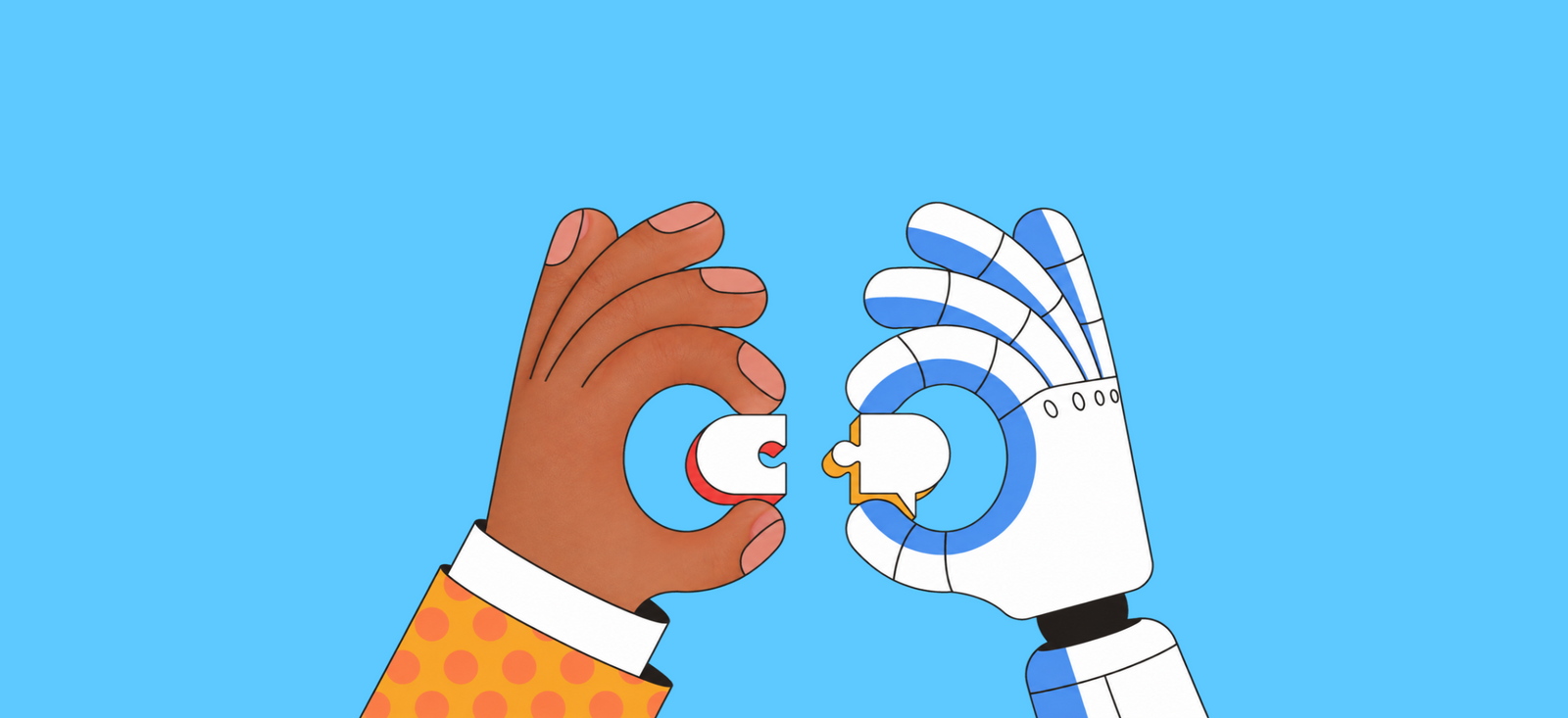
So the book is ultimately about Augmented Intelligence, the idea that the greatest value emerges when Human Intelligence (HI) and Artificial Intelligence (AI) work together, each contributing their unique strength, and bringing what we know about human cognition, emotion, trust and culture into how AI is designed and how we work with it. The question we wanted to address was: “How can working with AI make us better?”
2. What are the key learnings you would like readers to take away?
One of the most important ideas is that AI increasingly replicates elements of human cognition while also extending it. It can retrieve and synthesise information; it is excellent at recognising patterns, and it has shown an outstanding capacity for divergent thinking, allowing it to generate alternatives and operate at a scale and speed that humans cannot. But that by no means makes human cognition obsolete. Human beings contribute context, meaning, emotional understanding, lived experience and judgment. The interesting opportunity lies in designing the relationship between those capabilities.
That is why we resist framing Human + AI as a zero-sum equation. There is a tendency to ask whether AI or humans are better at a particular task. A more productive question is how we divide the cognitive labour. AI can expand the solution space in innovation, for example, generating perspectives and possibilities that humans might never consider. Human judgment then becomes critical in evaluating what is meaningful, feasible and valuable. Similarly, AI can synthesise hundreds of sources for a decision-maker, but we still need humans to interrogate the evidence, understand the context and decide what matters. Sometimes the best AI should make our lives easier; at other times, we argue for positive cognitive friction at the right moments, where AI makes us slow down, reconsider and think more deliberately.
Finally, intelligence never operates in a vacuum. Emotion, trust and culture shape how people interact with AI. A perfectly accurate recommendation may still fail if people don't trust it, while a fluent and confident AI can sometimes earn more trust than it deserves. And an AI interaction that works in one cultural context may feel inappropriate in another. This means that building better AI requires understanding people and the contexts in which they exist, think, feel and decide.
3. Looking ahead: where should the insights industry focus now, and where should it be in five years?
One of my biggest takeaways from the conversations at Esomar Congress is that the industry is moving beyond focusing solely on the technical capabilities of AI technologies. AI is already embedded in research, and the technology is widely accessible throughout the industry. The conversation that is emerging now is how we use it to create genuinely better insights and decisions, and how we use it differently to stay ahead of the marketplace, for both agencies and clients. That means we shouldn't measure progress by how much of the research process we can automate, but by where AI improves quality, expands what researchers can discover, enables new forms of research and, crucially, where human judgment still creates disproportionate value.
In the near term, I think this requires much more experimentation with Human + AI workflows. We should explore AI moderators, synthetic participants and personas, agents, predictive approaches, and AI-assisted ideation, while rigorously validating where they add value and where direct engagement with real people remains essential. We need transparency and validation, but also behavioural science: how do we prevent automation bias and cognitive surrender? How do we calibrate trust? How do we design AI to challenge researchers rather than simply confirm their first interpretation? And how do we preserve the context, empathy and cultural understanding that distinguish insight from information?
Five years from now, I hope we have moved well beyond simply putting AI on top of existing research processes, and we have redesigned research around the complementary strengths of humans and machines. For an industry whose fundamental purpose is understanding human beings, that is a major competitive advantage. As AI becomes increasingly accessible, competitive advantage will come less from the models themselves and more from the combination of high-quality data, domain expertise, robust methodologies and human judgment.
Manuel Garcia-Garcia
Global Lead Science Activation,Research & Strategy at IpsosI help organizations grow by embedding AI and insights into strategic decision-making.
I work at the intersection of AI, human psychology, and business strategy, helping companies design smarter systems, make better decisions, and unlock new sources of growth.
As Global Lead of Science Activation, Research & Strategy at Ipsos, I lead the integration of AI, advanced analytics, and behavioral science into global research and consulting solutions. My work focuses on Human Intelligence + Artificial Intelligence (HI+AI): ensuring that AI systems enhance human judgment, trust, and decision-making.
I partner with senior leaders across industries (CPG, healthcare, financial services, technology, media) to:
Embed insights into strategy, product, and experience design
Build AI-enabled capabilities (e.g., AI moderators, persona-based simulations, AI-driven ideation systems)
Translate complex data and models into clear, actionable business decisions
Drive client growth and innovation through new offerings and scalable solutions
My work sits at a critical inflection point: as AI reshapes how decisions are made, organizations need more than data: they need guidance on how humans and AI work together effectively.
I bring a unique combination of:
Deep expertise in cognitive neuroscience, emotion, and decision-making
Hands-on experience building commercial, scalable AI-enabled solutions
A strong track record of thought leadership translating into client impact and growth
I am the author of:
Consumer Neuroscience (MIT Press, 2017)
Smarter Together: How We Think, Feel and Decide with AI (Cambridge University Press, 2026)
I regularly speak at global forums including SXSW, ESOMAR, ARF, and Advertising Week, and work with organizations building AI-driven products, research platforms, and decision systems.
If you’re working on AI, growth, customer strategy, or decision intelligence, I’d welcome the conversation.