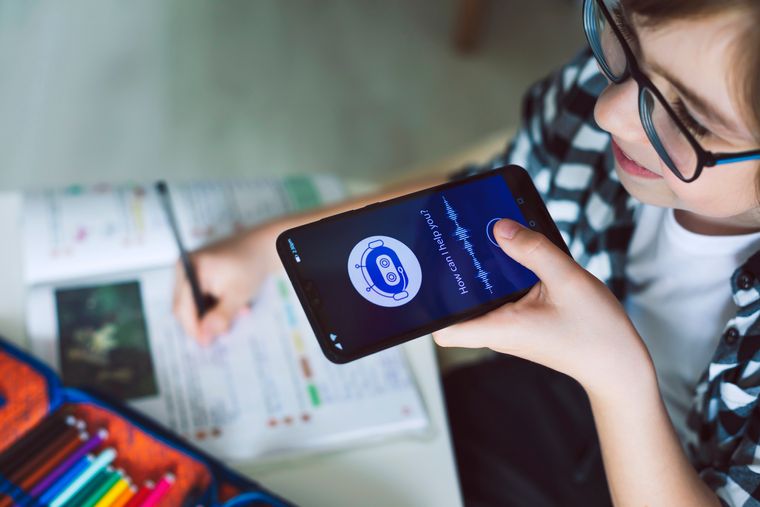
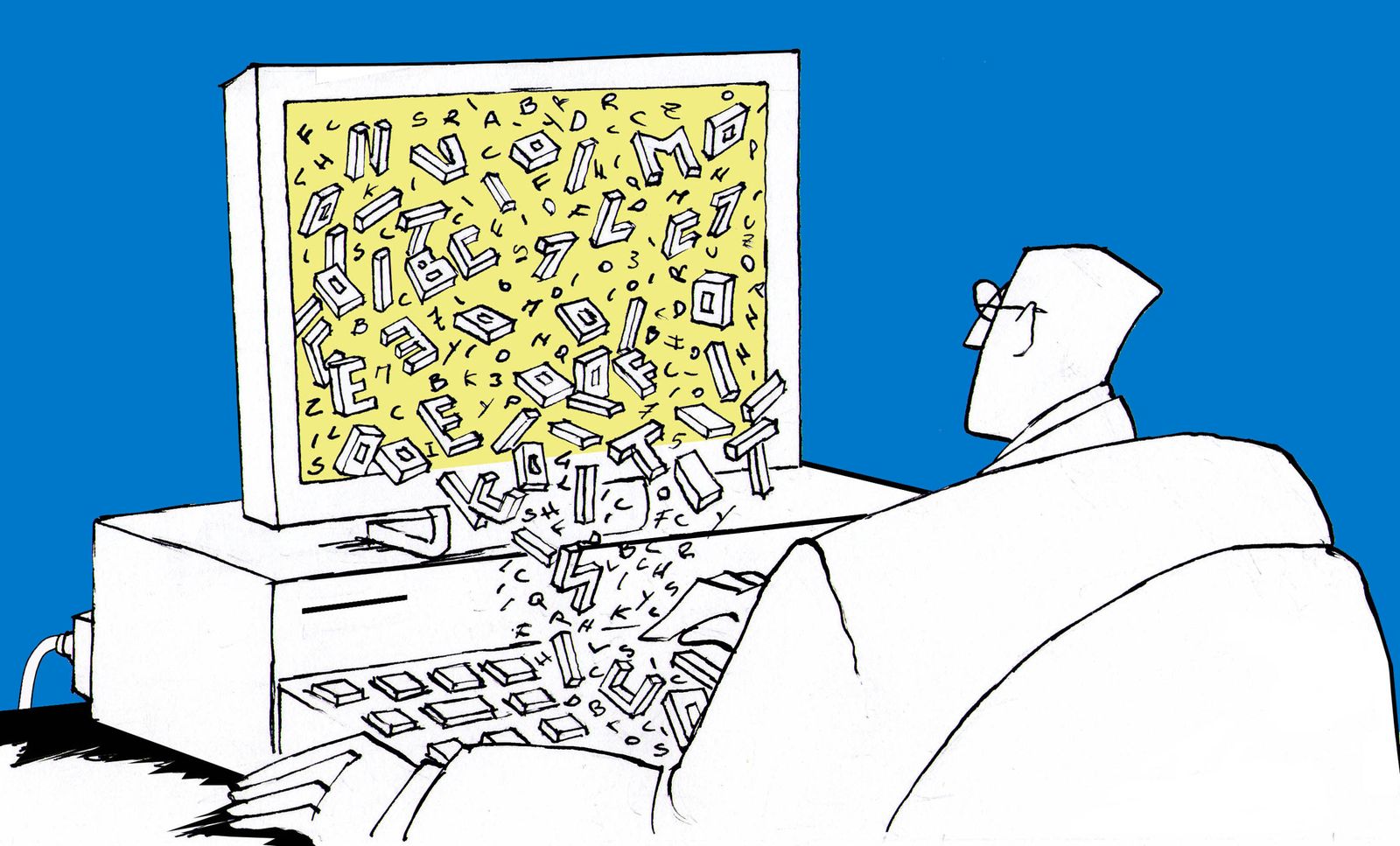
Data is Abundant, but Interpretation is Scarce
The Insight250 spotlights and celebrates, annually, 250 of the world’s premier leaders and innovators in market research, consumer insights, and data-driven marketing.
Article series
Insight250
- The importance of business sense in research
- The role of humour in effective leadership
- The importance of ethics
- The importance of disruption in innovation and leadership
- The importance of Disruption in Innovation and Leadership Part 2
- The importance of Diversity & Inclusion
- The impact of colour
- Communicating insight with impact
- Insights on leadership, culture and polling
- The evolution of electric vehicles
- 2022 Top tips (part 1)
- 2022 Top tips (part 2)
- Maximising the potential of data
- The importance of flexible working
- Winners
- The importance of advanced analytics
- Judges for the 2022 Insight250 Awards announced
- The evolution from social listening to digital intelligence
- The Judges' Perspective
- The judge's perspective - part 2
- Insight Climate Collective
- Insights technology
- Understanding employee ownership
- Global insight perspectives
- Top Tips from our Leaders and Innovators
- The Evolution of Insights in the Food & Beverage Market
- The Evolution of Insights in CPG
- Neural Mechanisms Behind Consumer Decision-Making
- Celebrating and Elevating the Insights Industry
- The State of the Insights Industry
- Opportunities, challenges and threats that AI presents
- 2024 Insight250 Winners Announcement
- Connecting Brands and Consumers Through Insights
- The Importance of Human Insight and Attention
- The Elevating Role of Insights with Technology Innovation
- Haleon’s Insight Expert on Consumer Healthcare
- Insight from the Insight250: How AI is Impacting Qualitative Research
- How AI Tech is Doing the ‘Heavy Lifting’ for Insights
- Reviewing the top tips for 2025
- Google's Sarah Ashley on AI and revolutionising insights - Insights from the Insight250
- Beyond BI: The Future of Decision Intelligence for Insight Professionals
- The Advancement & Impact of Insights - An Insight250 Winners Series perspective with David Smith
- International Jury for the 2025 Insight250 Awards Announced
- Newly elected President, Anne-Sophie, on Revolutionizing the Impact of Insights
- Haleon's Litthya Baez on Enhancing Healthcare with Insights - Insight250 Winners Series
- Understanding the Insights of Consumer Decisions
- Moving Beyond Dashboards to Deliver Decisions with AI
- How AI is Transforming Insights
- How AI is Transforming Insights
- Five Years of Insight250: Elevating the Insight Industry
Tal Oren, Head of Growth & Learning, Talk Shoppe
The Insight250 spotlights and celebrates, annually, 250 of the world’s premier leaders and innovators in market research, consumer insights, and data-driven marketing. The awards have created renewed excitement across the industry whilst strengthening the connectivity of the market research community. Winners of the 2025 Insight250 were announced last September - you can see the full list of Winners, and those from previous years, at Insight250.com. You can also nominate for 2026.
With so many exceptional professionals named to the Insight250, we regularly tap into their expertise and unique perspectives on a range of topics. This regular series does just that: inquiring about the expert perspectives of many of these individuals in a series of short topical features.
With insights advancing at an incredible pace and the value of insights ever increasing, I sat down with Insight250 Winner Tal Oren. Tal received the 2024 Researcher of the Year award by Quirk’s Media. He is a transformative leader, elevating research practice, communication, and culture. As Head of Growth & Learning at Talk Shoppe, he has built tools, guides, and programs to upskill colleagues and foster a collaborative learning culture.
Crispin: You have been named Quirk's Researcher of the Year, you are giving talks at conferences, and you are running Growth & Learning at one of LA's most respected insights agencies. And yet you are spending time re-reading old foundational texts on human behavior. What is the impulse behind the Back to Basics series? Is it a reaction to something you are seeing in the industry?
TO: I have always been passionate about analysis, about interpretation. Getting to the real “why” behind a consumer attitude or behavior, grounding it in something that feels intuitive and undeniable, is one of the most gratifying parts of what we do.
One thing I’ve noticed over the years is that people in our industry have seemingly forgotten that there are answers to this “why” outside of our day-to-day projects, outside of the data we collect or have access to. We have developed a habit of thinking we can only explain something if it exists in our research, if it’s based just on what the research participants said or did. But that's not true.
Answering the “why” behind something is not just a question of methodology, an exercise in reading open-ended responses or running a laddering technique. The answers are sometimes found entirely outside the data, in psychology, sociology, evolutionary biology, even classic literature. Sometimes all at once. Through Back to Basics, I want to bring some of those classic sources back into the conversation and show how much they still have to offer.
Crispin: Your thesis is that data is abundant, but interpretation is the scarce resource. That is a pointed claim in an era when the industry's dominant conversation is about AI, synthetic data, and automation. Where do you think the investment in those tools has been genuinely valuable, and where has it quietly made the interpretation problem worse?
TO: It has been very valuable for the so-called unglamorous operational layer of research work that can eat up enormous amounts of time. Things like transcription, verbatim coding, survey logic and scripting, and crosstab generation. There are also real gains in generating first drafts of reports, in synthesizing large bodies of data, and in surfacing themes. AI has transformed all of that, and I do not think we are going back.
Interpretation has suffered somewhat, though. When AI summarizes qualitative findings, for example, it tends to flatten them. It identifies the most frequently occurring themes and presents those as the insight. But the most important thing a skilled researcher does is notice what is surprising, what is contradictory, what one respondent said that nobody else said, but that everyone in the room recognized as true. The risk of over-relying on AI-generated summaries is that we start mistaking the efficient answer for the most useful one. And in a field where our entire value proposition is interpretation, that is a quiet but serious problem.
Crispin: One of the thinkers you’ve explored so far in the series is Gustave Le Bon. His central claim, that individuals think differently the moment they become part of a crowd, was unsettling in 1895. In 2026, with social media functioning as a permanent ambient crowd, does it feel less controversial or more urgent?
TO: Part of why I started the series with Le Bon is because it feels more urgent than ever to revisit the mechanisms behind crowds and how they can transform individuals.
Crowds are no longer restricted to physical spaces or exceptional moments, like they were in Le Bon’s time. He wrote The Psychology of Crowds in 1895 and reacted to what was happening in the streets - strikes, protests, demonstrations, mobs, mass celebrations. But as much as that was happening, it was entirely possible to live your whole life without ever being swept into one of these personality-altering crowds.
That’s not the case anymore.
Like you say, crowds are now ambient and permanent online, and that’s especially true for younger generations who are living a significant portion of their social lives being witnessed and guided by an online audience that can act as a crowd for good or bad. Understanding how that changes opinion formation and decision-making is not an academic question anymore. It is a core challenge for anyone researching human behavior.
Crispin: You write that more information does not dissolve crowd dynamics, it often intensifies them. That is a direct challenge to how a lot of misinformation strategy is framed. Can you give a brand-side example where you have seen that play out, where more rational evidence actually hardened a position rather than shifted it?
TO: I cannot name the client, but picture a philanthropic organization dedicated to promoting science education and advancing the impact of scientific research. They had conducted a segmentation based on people's relationship to science and its role in society, with segments ranging from Team Science to Science Skeptics. Our job at Talk Shoppe was to bring those segments to life through interviews and focus groups, to inform the communication strategy.
The incoming hypothesis was straightforward: Science Skeptics, whatever their background, simply did not know enough about the scientific method or the accumulated benefits of science to trust it. Close the knowledge gap, eradicate the skepticism. Simple. (I think you know where this is heading.)
We explored two subjects in particular: attitudes toward GMOs and vaccines. This was pre-pandemic, which matters because the pandemic would later turn vaccine hesitancy into front-page news. What we observed in those focus groups was a quiet preview of what the world would watch play out publicly a few years later.
When we exposed Science Skeptics to actual scientific evidence, it did not affect their position. In many cases, it hardened it. Psychologists call this the “backfire effect”. What we found beneath it was belief as identity. These people were not holding scientific skepticism in isolation. Skepticism at large, of science but also of financial systems, the government, and the media, was anchoring their sense of self and their place in their community. Changing that belief did not feel like updating a view. It felt like a threat to their social standing. No amount of factual information can compete with that, at least not as easily as we think.
Crispin: One of your takeaways for researchers is that people answer research as individuals and act as groups. That is not just a philosophical point, it is a methodological problem. What does addressing it actually look like in practice? What has to change in the research design, or in how findings are presented?
TO: One practical method in qualitative research is to conduct research with friend groups rather than individual strangers. You cannot fully replicate a crowd dynamic in a research setting, but you can observe how personal attitudes shift when someone is in the presence of people they are influenced by. If you can do one-on-one interviews first and follow it up with an even better group discussion.
Asking not just what someone thinks, but how that might change in a social context, is easier in direct conversation, but you can also do it in surveys through creative question writing. You can push people through scenarios that place them inside a group dynamic, explore how their stated position shifts, and ask them why.
On the reporting side, it also means being more honest with clients about that gap, framing recommendations around what people are likely to do in context, not just what they told us in the room or in a survey. That is a harder conversation to have, but it is a more useful one.
Crispin: You also explore Sigmund Freud and his 1930 psychology classic, Civilization and Its Discontents. You map Freud's three strategies for coping with reality - withdrawal, connection, and sublimation - onto recognisable consumer categories. Has that framework ever genuinely changed how you approached a client brief or a research design? Is there a category you now read completely differently because of it?
TO: Yes - the snacking category, for example.
For decades, certain snacks were positioned as small escapes. A bite of chocolate, a sip of something sweet, these were not just calories between meals; it was a brief transportive moment. A tiny exit from whatever the day was doing to you. These were textbook examples of Freud's withdrawal strategy: use pleasure to temporarily vacate reality. (Yes, I realize this is a little esoteric but the endless number of bite-and-smile commercials support this - sometimes a chocolate bar isn’t just a chocolate bar.)
The wellness movement changed how people related to ‘guilty pleasure snacks,’ but the real shift came with the arrival of GLP-1 drugs, which sever the connection between consumption and emotional reward. That mango-flavored candy that is meant to transport you to the Caribbean for a second? You don’t want it anymore. So let’s level it up: if your entire brand architecture is built on withdrawal, on the idea that eating your product is an escape, and the drug removes the craving that made escape desirable, you have lost your strategic foundation.
So the question becomes: which of the other two coping strategies can you play into, if at all? Could snacking become more about connection, making it a shared, social experience rather than a private one? Or sublimation, repositioning it around craft, mindfulness, or intentional consumption, something you do with purpose rather than compulsion? These will be too much of a stretch for some brands, certainly. But Freud's framework at least gives you a structured way to evaluate where you stand and where you might go next.
Crispin: Your Freud piece builds toward a provocation about AI and the coming leisure economy, the idea that expanding free time will not liberate people so much as generate its own anxiety. Are brands currently positioning themselves around freedom and leisure, making a strategic mistake?
TO: Not necessarily. Freedom and leisure are genuinely aspirational. They resonate with people and the instinct to position around them is understandable. My larger point is about brands asking: more freedom for what?
Is it freedom for its own sake, or freedom as a means to something else? Because that is actually closer to how people experience it. The research on this is illuminating: a 2021 study by Sharif, Mogilner, and Hershfield found that well-being increases as free time goes from scarce to moderate, but actually declines when it becomes excessive. People with very large amounts of unstructured time reported a lower sense of purpose and lower overall life satisfaction. The sweet spot in their data was around two to five hours of discretionary time per day.
There is also strong evidence that how you spend free time matters as much as how much of it you have. Leisure done with others, for example, through shared meals, conversation, and collaborative activities, consistently produces more well-being than solitary passive consumption. Technology-driven leisure, scrolling and streaming, tends to be solitary and passive, which partly explains why rising screen time has correlated so poorly with rising happiness.
The brands that will win in a potential AI-driven leisure economy are the ones that answer not just “What should I do in my free time?” but also “What am I for in my free time?”. That is a meaningfully different brief.
Crispin: ESOMAR Valencia's back-to-basics theme seems to have validated what you were already sensing. What do you think is driving that appetite right now? Is it fatigue with tech, a quiet crisis of confidence in synthetic or AI-generated data, or something more existential?
TO: I'm a man in my early forties, so it's hard not to see everything from an existential perspective. But I do think that's actually a significant component of this alongside tech fatigue.
Look, it is one thing for research firms to invoke 'back to basics' as a positioning strategy. To challenge the disruptors, to zag with human-centered philosophies in the face of fast technological innovation. That is a marketing decision. But it starts to feel like something larger when you see that the former Surgeon General of the United States launches a podcast called Staying Human, built around questions like: why are we so lonely, how do we deepen friendships, how do we find meaning, how do we find joy, how can we be of service to the world? Basic needs that, for different reasons, have been challenging to meet.
Or when birdwatching becomes popular again, surging 47% in the UK since 2018 for example, driven largely by Gen Z adults. Not bored retirees looking for a new hobby, but young people actively seeking something slow and analog and real.
Or when Kodak restarts dormant film production lines to meet demand, and Fujifilm faces recurring shortages of analog film stock, driven by people in their twenties who have never owned a camera that couldn't also check email.
I think it is all connected. In different corners of culture, in different ways, people want to get back to something real. This is nothing new, of course, but it’s our current version of it.
Crispin: You came up through quantitative research, Kelton, Activision Blizzard, years as Quantitative Group Director. The Back to Basics series feels like a very qualitative, humanistic project. Is there a tension there, or have those two sides always coexisted for you?
TO: I have always seen them as two sides of the same coin. Honestly, I cringe a little when I hear someone describe themselves as a “qualie” or a “quantie” as if it is a fixed identity. People have different skills and strengths, absolutely. But I have never let methodology define me as an insights person.
The people I have learned the most from have always been fluent in both. They know what numbers cannot tell you, and they know how to keep qualitative intuition honest. My quantitative background and love for numbers actually make me a more rigorous reader of the humanistic material. I’m always asking: does this hold? Under what conditions? For whom? What are the limitations? That skepticism is a plus, not tension.
Crispin: More instalments are in the pipeline. Without giving away too much, which foundational thinker or text are you most excited to get to, and why?
TO: I’m so excited about what’s coming up. I’m going to revisit Erving Goffman's The Presentation of Self in Everyday Life, a book about how human beings perform their identities in every social interaction, and what that means for anyone trying to understand them through research. The implications for how we think about methodology are fairly radical once you sit with it.
And at some point, I am going to take a deliberate left turn with Miguel de Cervantes and Don Quixote as an exploration of the gap between our experiential self and our narrative self, and the role that self-delusion plays in how people construct meaning. A 17th-century Spanish novel in a consumer insights series feels like a stretch until it suddenly does not. I think that's the best kind of installment to write.
Hot Topic
The industry is actively debating whether AI-generated respondents and synthetic consumer panels are a legitimate research tool or a category error. Proponents point to speed, scale, and reach. Sceptics note that synthetic respondents are by definition individuals responding in isolation, stripped of the social context that Le Bon and decades of subsequent social psychology tell us is central to how people actually form opinions and make decisions. From the perspective of someone who has spent considerable time thinking about the gap between individual and social behaviour, are synthetic respondents a useful addition to the toolkit, or do they risk producing data that is structurally blind to the thing that matters most?
TO: People are more predictable than they’d like to think. I remember a friend who was genuinely mind-blown when he read an article about how beer preference could be predictive of voting behavior. I nodded politely, but my honest reaction was: of course it can. Attitudes and behaviors are deeply intermingled, and if you model the relationships correctly, you can use one dataset to generate useful hypotheses about another.
That said, the devil lives entirely in the modeling. I am not yet convinced that the current generation of synthetic respondent tools is modeling human behavior with sufficient accuracy, despite the self-serving evidence being presented at conferences and trade shows. The missing piece, to me, is what Dan Ariely called 'predictable irrationality.' We are predictably irrational in specific, documented ways. Any synthetic model that does not bake in the social dynamics, the inconsistencies, the gap between what people say and what they do in groups, is going to produce data that is clean, fast, and quietly wrong in exactly the ways that matter most.
So I am open to it as another tool in the kit. I would just want to see the methodology earn the confidence that some are already placing in it.
Top Tip
We ask all our interviewees to share one practical tip for insights professionals. What is yours?
TO: Wait as long as you can in the morning to get on your phone. Think of it as intermittent digital fasting. The cognitive tax begins as soon as you jump on that device. As soon as you start scrolling, your brain is processing information, it is getting depleted, it is robbing you of deep thinking later on. And, my fellow insight professional, that deep thinking is where you are most useful. That is where you can truly shine. It is where the interpretation happens, where the surprising connection gets made, where the insight actually forms. So give yourself that extra hour in the morning…let me know how it goes!
Crispin: Thank you, Tal. This has been a genuinely rich and wide-ranging conversation, and one I found myself thinking about long after we had finished. Your point about AI flattening qualitative findings, mistaking the most frequent answer for the most useful one, is one of the sharpest articulations of that problem I have heard. It connects, perhaps unexpectedly, to last week's Insight250 interview with Siham Malek, Managing Director of Integrate in Morocco, who made a strikingly similar observation from a very different vantage point: that the brands which commission research and the brands which genuinely listen to consumers are not the same thing, and that the gap between what the data reports and what is actually happening in people's lives can be the difference between a strategy that compounds and one that quietly fails. Both conversations, separated by context and geography, arrived at the same place. The scarce resource in this industry has never been data. It has always been interpretation.
Crispin Beale
Chairman at QuMind, CEO at Insight250, Senior Strategic Advisor at mTab, CEO at IDXCrispin Beale is a marketing, data and customer experience expert. Crispin spent over a decade on the Executive Management Board of Chime Communications as Group CEO of leading brands such as Opinion Leader, Brand Democracy, Facts International and Watermelon. Prior to this Crispin held senior marketing and insight roles at BT, Royal Mail Group and Dixons. Crispin originally qualified as a chartered accountant and moved into management consultancy with Coopers & Lybrand (PwC). Crispin has been a Board Director (and Chairman) of the MRS for nearly 20 years and UK ESOMAR Representative for c15 years. As well as being CEO of Insight250, Crispin is currently Worldwide CEO of Digital Communications Solution Agency, IDX. Crispin is also the Senior Strategic Advisor at mTab and the Chairman of QuMind and spent 4 years as Group President of Behaviorally where he was responsibile for the client & commercial teams globally. Crispin is a passionate advocate for blending human intelligence and technology to deliver innovation and leadership across organisations.
Article series
Insight250
- The importance of business sense in research
- The role of humour in effective leadership
- The importance of ethics
- The importance of disruption in innovation and leadership
- The importance of Disruption in Innovation and Leadership Part 2
- The importance of Diversity & Inclusion
- The impact of colour
- Communicating insight with impact
- Insights on leadership, culture and polling
- The evolution of electric vehicles
- 2022 Top tips (part 1)
- 2022 Top tips (part 2)
- Maximising the potential of data
- The importance of flexible working
- Winners
- The importance of advanced analytics
- Judges for the 2022 Insight250 Awards announced
- The evolution from social listening to digital intelligence
- The Judges' Perspective
- The judge's perspective - part 2
- Insight Climate Collective
- Insights technology
- Understanding employee ownership
- Global insight perspectives
- Top Tips from our Leaders and Innovators
- The Evolution of Insights in the Food & Beverage Market
- The Evolution of Insights in CPG
- Neural Mechanisms Behind Consumer Decision-Making
- Celebrating and Elevating the Insights Industry
- The State of the Insights Industry
- Opportunities, challenges and threats that AI presents
- 2024 Insight250 Winners Announcement
- Connecting Brands and Consumers Through Insights
- The Importance of Human Insight and Attention
- The Elevating Role of Insights with Technology Innovation
- Haleon’s Insight Expert on Consumer Healthcare
- Insight from the Insight250: How AI is Impacting Qualitative Research
- How AI Tech is Doing the ‘Heavy Lifting’ for Insights
- Reviewing the top tips for 2025
- Google's Sarah Ashley on AI and revolutionising insights - Insights from the Insight250
- Beyond BI: The Future of Decision Intelligence for Insight Professionals
- The Advancement & Impact of Insights - An Insight250 Winners Series perspective with David Smith
- International Jury for the 2025 Insight250 Awards Announced
- Newly elected President, Anne-Sophie, on Revolutionizing the Impact of Insights
- Haleon's Litthya Baez on Enhancing Healthcare with Insights - Insight250 Winners Series
- Understanding the Insights of Consumer Decisions
- Moving Beyond Dashboards to Deliver Decisions with AI
- How AI is Transforming Insights
- How AI is Transforming Insights
- Five Years of Insight250: Elevating the Insight Industry