Mixing-up How Researchers Work: The Future of the 4-Day Week at The Mix
This three-part series breaks down the shift toward a four-day workweek. We track its history from Henry Ford to Nixon, analyze successful UK trial data, and go behind the scenes with The Mix to see how they made the transition a reality.
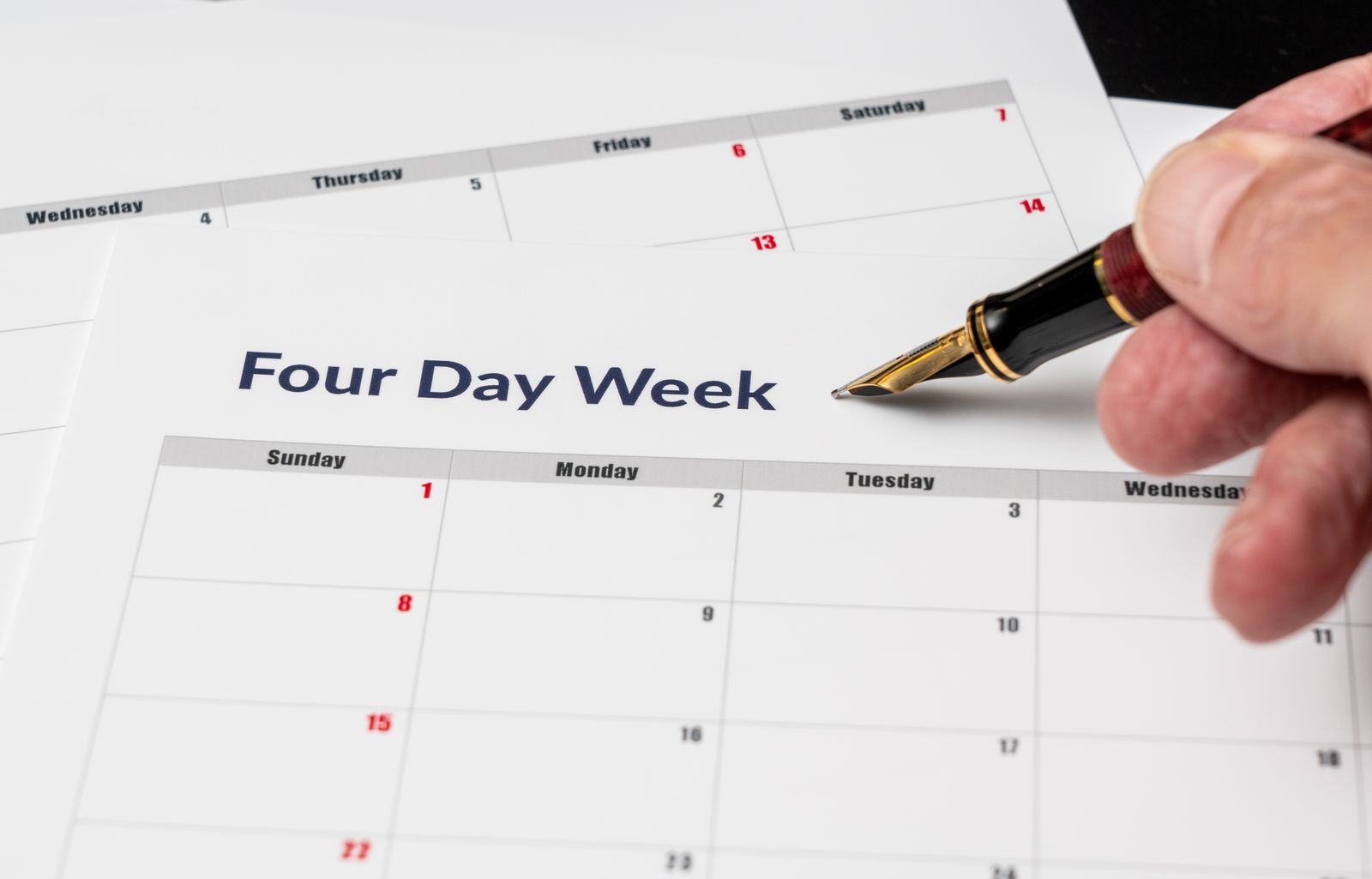
Over the last two days, we’ve learnt how The Mix, an insight agency with offices in the UK and USA adopted and operate a 4-Day Working Week (4DWW). Today, we’re going to understand their view on how they see the 4DWW developing in the future.
Consistent recommitment
Since they adopted a 4DWW The Mix have recommitted to it several times. But what does ‘recommitted’ mean?
During extremely busy periods, The Mix’s leadership have learned to notice when working patterns begin to shift and people slip into picking-up emails on Fridays. When this happens, they ask themselves: “is the 4DWW important to us?” The answer has always been yes. And because of this, The Mix remind people of the working patterns they’re committed to, in order to steady the ship and avoid habits slipping.
The Mix’s Managing Director Tash Walk doesn’t see these recommitments as a sign the 4DWW isn’t working. She accepts that the 4DWW is a way of working that’s impossible to execute perfectly. This means ensuring The Mix’s efforts in this area are tracking in the right direction and that they’re endeavouring to deliver their employees the right work life balance – not being anxious about the 4DWW’s imperfections.
Growing pains?
The Mix have grown considerably since they adopted the 4DWW. Critics would say that the 4DWW’s initial success at the agency was down to its size. And that a 4DWW can only work in small businesses. Walker disagrees with this. She says that operating a 4DWW:
“Isn’t about the size of an organization, it’s about the mindset of its leadership. It’s about wanting to make something happen and committing to it.”
The 4DWW beyond The Mix
Not many research agencies have publicly stated that they operate a 4DWW. I was keen to get Walker’s thoughts on why. She acknowledges that making such a shift is challenging for agencies who are part of bigger networks or private equity business, where making such a change to working methods may be hard to get approved. Especially given how economically bumpy recent years have been.
But she does note that there is no shortage of independent research agencies. And these agencies do have a chance to break the mould and try new things – especially as doing so is one of the most exciting parts of running a business.
“Yes, we’re all creatures of comfort and habit. But I certainly think that if you are an independent business and you are a business owner, one of the greatest luxuries of all is that you make the choices. So, you should use that as a gift and it’s a privilege to do things differently.”
Growing p-AI-ns?
One of the most remarkable parts of The Mix’s adoption of the 4DWW is that they did it pre-AI. And therefore, pre-umpteen efficiency tools becoming democratised. But has the advent of AI made running a 4DWW easier?
Walker doesn’t seem to think so. The early days of the 4DWW meant that The Mix had already doubled-down on working efficiency – with the biggest efficiency gains being made in reducing the amount and length of meetings.
What can we all learn from The Mix?
The Mix deserve huge praise for challenging and changing the status quo when it comes to working habits. Business owners and leaders should take inspiration from this. But there’s also a key learning for everyone who works in research.
Much of the skills The Mix deployed to adopt and operate a 4DWW are skills researchers use daily. Curiosity. Enacting change. Experimentation. Tracking. Understanding people. This means research and insight businesses should be at the forefront of testing out new ways of working – and should consider doing so. Look no further than how the client-side organisation AURA are tackling stress in the industry. Or research from 2022 which found that stress levels among US researchers are rising as a sign that it may be time for a new way of working.
Maybe a 4DWW can solve these problems. The very least we can do is ‘mix-up’ the status quo ways of working and find out. Because as The Mix have shown, doing so can be good ‘four’ everyone involved.
You can find out more about how The Mix adopted and now use a 4DWW via their ‘Four: What is it good for?’ report here.
Jack Miles
Editor in Chief at Research WorldJack specialises in quantitative research for international clients across an array of sectors. These studies have led him to work with brands such as Jaguar, Navistar and Volvo. His main research interests are brand research and consumer trends, with a focus on quantitative methods and the use of statistics to derive solid strategic planning for clients.
He has a particular focus on developing creative ad-hoc quantitative methods that use a range of data sources. He can also be found writing papers for a range of well-known publications such as Admap, Huffington Post and Research World.
Outside the office, Jack can be found training in martial arts, in which he holds a 3rd degree black belt in Taekwon-do, and partaking in various endurance sports.