AI Is Global. Adoption Is Local.
AI is moving too fast for organisations to learn only from their own experience.
In normal times, a company can experiment, fail, correct and improve.
In this super-fast AI shift, that becomes expensive and unnecessarily repetitive. Someone in India is discovering something today that could help someone in Europe tomorrow. Someone in LATAM has already made the mistake another company is about to make.
So, what does AI adoption look like across our industry?
Are we experimenting, adopting, or transforming?
Are the challenges in Asia the same as those in Europe, Africa, or LATAM?
Where is AI genuinely improving research and insights, and where are we simply adding AI to existing processes?
How do we learn from each other, rather than every company and every region reinventing the wheel?
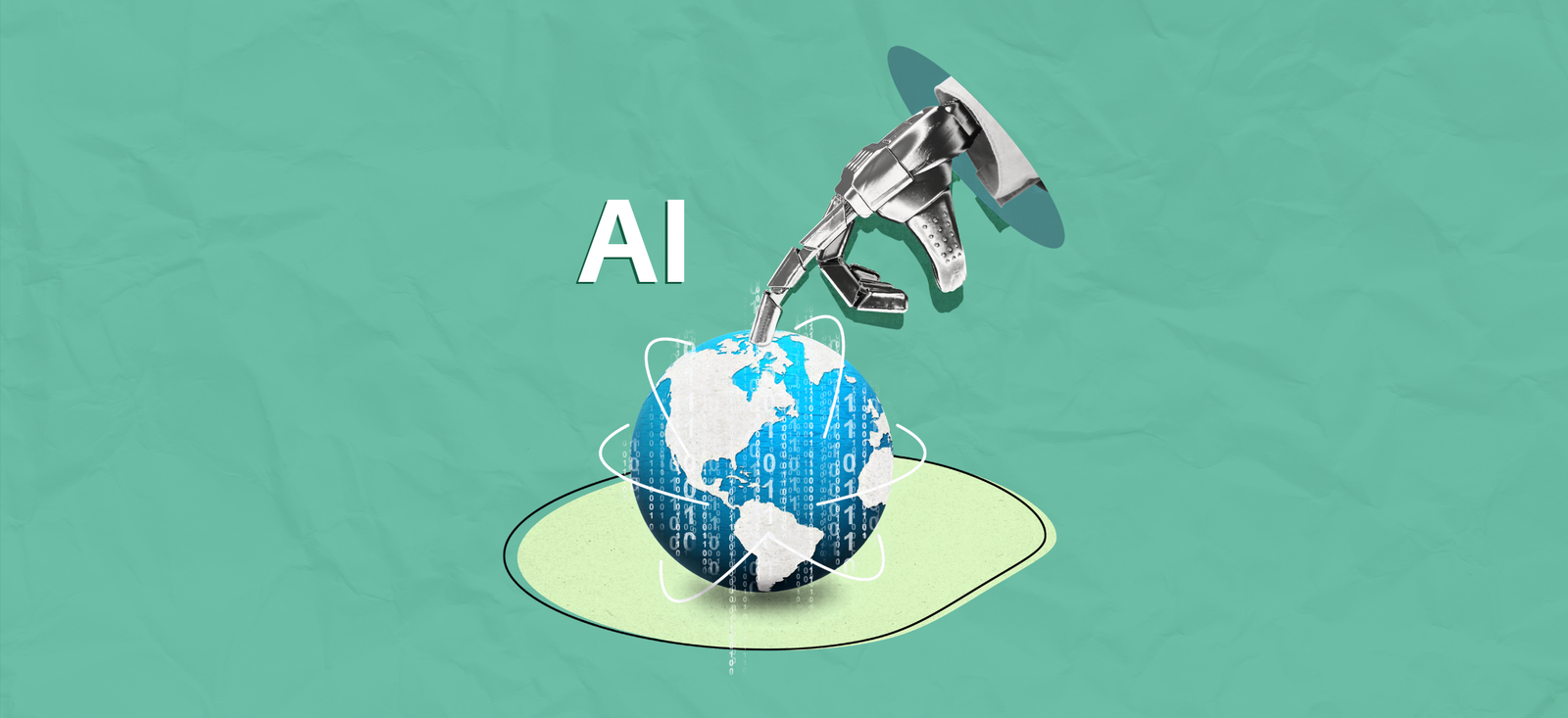
One aspect is clear: AI is global. Adoption is local.
We still need to know what’s happening around the world.
What are CEOs telling us?
The Esomar CEO Survey 2026, presented by Jean-Marc Leger prior to the Esomar Congress, gives us some clues. Conducted online, the global survey gathered responses from 224 research agency CEOs and directors, including Esomar members and non-members who had previously participated in Esomar events, webinars or CEO dinners. Three things stood out for me.
AI adoption is almost universal. AI maturity is not.
The proportion of research firms currently using AI for any research activities within their company has risen from 56% in 2023 to 93% in 2026. However, among CEOs already using AI, only 15% say they operate it at scale across multiple workflows, while 10% describe their organisations as AI-first.AI is producing operational value, but the business-value equation remains unresolved.
In 2026, 40% of respondents said AI contributes to cost reduction, up from 29% in 2025. Meanwhile, 15% said AI contributes to revenue growth, down from 22% in 2025
This underlines that we need to shift the conversation from AI adoption to ROAI, measurable value, organisational capability, and learning what actually works.The industry is not moving together. Asked how their organisations compare with competitors in their use of AI for research, delivery and operations, 32% feel ahead, 32% about the same, and 37% behind. At the same time, 69% of CEOs see AI as an opportunity, versus only 10% who see it as a threat.
The interesting story is not whether AI is coming. It is the unevenness of adoption.
There Is So Much to Learn. And Even More to Share.
This is where the Esomar AI Alliance comes in.
The Alliance is a member-driven initiative to help the global insights community understand, adopt and govern AI responsibly.
FROM TALKING AI TO DOING AI
We have organised ourselves into three workstreams.
What are we doing?
We are developing practical guidance. From helping buyers ask better questions before choosing AI solutions to applying the Code to Synthetic Data. Because responsible AI needs to work outside the PowerPoint too.
We are building an AI Adoption Maturity Index. A way for organisations to look in the mirror and ask, “Where are we, really?” And importantly, “What do we do next?”
And then there is learning. Events. Courses. Conversations. AI Mythbusters podcasts. Places where we can question, disagree, experiment and learn from people actually doing the work.
Thought leadership. Ethics and guidelines. Events and learning.
Three workstreams. One underlying idea.
Learn what works. Share what we learn. Help each other move forward.
Who is Doing What with AI?
What are they experimenting with? What worked? What failed?
And where do we get leaders to talk openly about both?
Tony Costella from Heineken, who leads our Events and Training workstream, is very clear on this. We need to talk openly about our AI failures. Not just showcase the successes.
This is where some of the most useful learning sits.
If one experiment fails and fifty people learn from it, that failure has value.
Save the Date: INDIA. APRIL 2027.
In April 2027, Esomar and the MRSI come together in Mumbai for an event focused on AI and what we are learning from its adoption. Expect real use cases, experiments, successes, failures and conversations with people actually working with AI. Less about what AI could do. More about what it is doing, and what we are learning along the way.
The real value comes when the industry shares its learning.
Look around. Ask who is doing what with AI. Share what you are trying. Talk about what worked. More importantly, talk about what did not.
Learn from someone else's experiment.
Let someone else learn from yours.
AI is moving too fast for any of us to learn alone.
AI may be global. Adoption is local. Learning must travel both ways.
The advantage will not belong to those who know everything.
It will belong to those who learn together.
Pravin Shekar
Kreator-in-chief at Krea, Council lead for the Esomar AI Alliance at EsomarPravin Shekar is an Outlier Marketer and a raconteur. He is the CEO of Krea eKnowledge, a leading healthcare panel research company and an active investor in other firms. Pravin is an ESOMAR India representative and served at the Council earlier. Pravin is the Immediate Past President of the Market Research Society of India.
When the world moves one way, you need to move another way: that’s his philosophy. This going-against-the-grain attitude helps him find opportunity in every crisis. A recipient of the American Marketing Association’s “Emerging Leader” award, Pravin has written 8 books and is set to bring out 5 more, on various aspects of Marketing and Insights